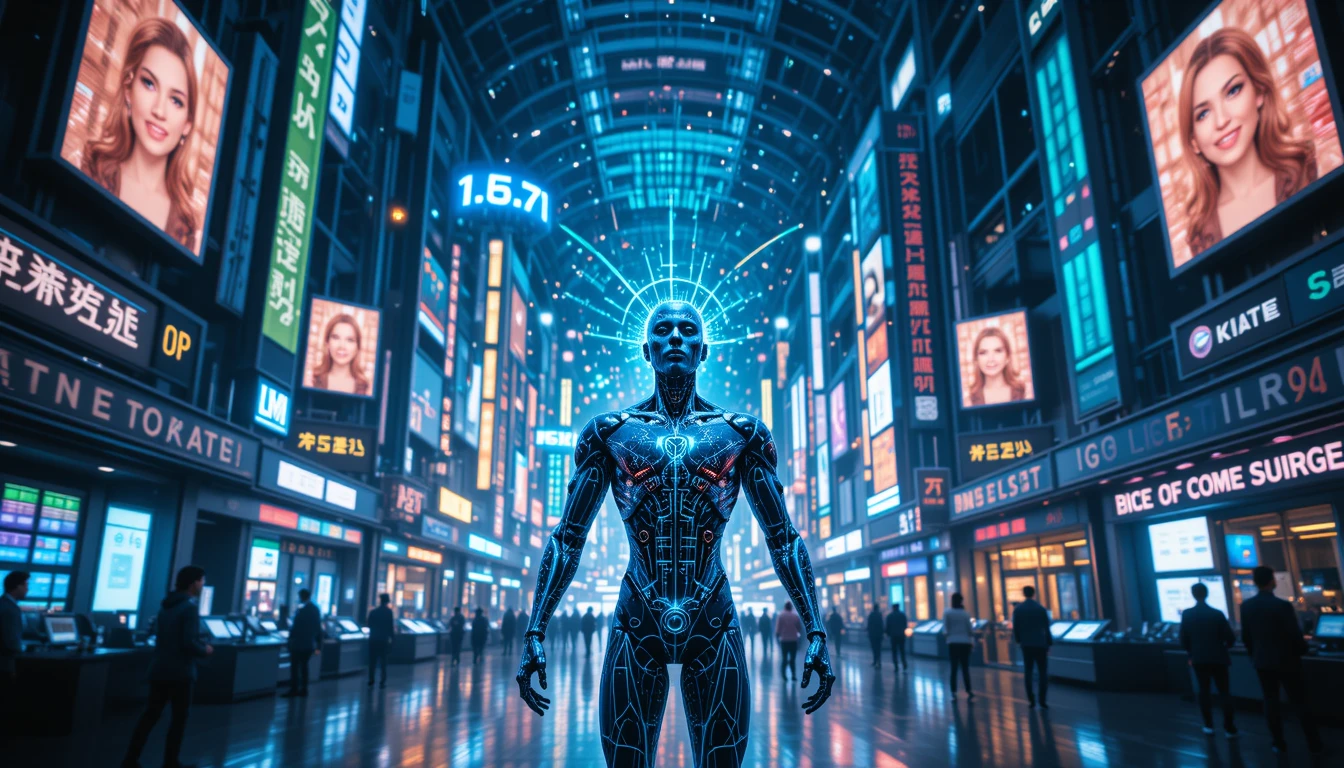
AI Agents Are Replacing Influencers — Here’s Why It Matters
AI Agents Replacing Influencers – Why It Matters
Discover how AI agents are revolutionizing influencer marketing with transparent pricing, constant availability, and a level playing field for every business.
This article will explore how AI agents are poised to replace traditional human influencers by eliminating emotional biases and offering transparent, standardized pricing. Emphasizing efficiency and round-the-clock service, the content delves into technological advancements, market disruption, and the promising future of influencer marketing. The discussion also covers essential industry insights and the strategic role of SEO in modern business growth.
🎯 ## 1. Advantages of AI Agents in Influencer Marketing
In today’s rapidly evolving digital ecosystem, the introduction of AI agents as influencers marks a seismic shift in how marketing is conceptualized and executed. Imagine a world where every digital campaign operates with unwavering consistency, where the unpredictability of human emotions such as greed, mood swings, or even simple forgetfulness is replaced with robotic precision. AI agents have emerged as the trailblazers in overcoming the limitations that have long plagued traditional influencer marketing, ensuring that decisions are data-driven and reliable. Abashek, the visionary behind Vitamin AI, highlighted during a popular business podcast that human influencers often bring unpredictable behaviors to the table. Influencers can be swayed by emotional drivers, alter their pricing based on market prospects, or simply act in ways that are not always aligned with a brand’s objectives. For companies seeking equitable treatment and consistent performance, AI agents offer a breath of fresh air, eliminating emotional biases and establishing a level playing field for all.
Consider a scenario where a small startup with limited funds is competing against a giant corporation. With human influencers, there is a tendency for pricing strategies to be fluid, sometimes leaving smaller players at a disadvantage. However, with AI agents, pricing is standardized and transparent, meaning every business—from the emerging startup to the global conglomerate—benefits from the same fair and predictable rate. This standardization translates to an environment where negotiations and hidden fees are virtually eliminated, echoing the sentiments shared by industry experts on platforms like Forbes and McKinsey.
The digital era has also been defined by the need for constant availability. Unlike human influencers who work within set hours and take breaks, AI agents are at peak performance non-stop. They can operate 24/7, ensuring that campaigns are active at all times, effectively expanding the window of opportunity for engagement and customer interaction. By removing the constraints of human operating hours, business owners can tap into continuous, uninterrupted marketing efforts. The promise of incessant activity translates directly into increased touchpoints with potential customers. For further reading on SEO and round-the-clock digital engagement, Search Engine Journal provides insights that align with this modern approach.
Beyond the consistency and reliability attributes, AI agents also bring about a profound shift in fairness. In traditional influencer marketing, the relationship between a business and an influencer could be skewed simply by the influencer’s personal judgment. This bias could lead to discrepancies in how different brands are treated. However, the inherent programming of AI ensures unbiased operation. Whether dealing with a tech startup or an established enterprise, the AI agent does not judge a business based on its size or reputation. As described in multiple industry analyses available on Harvard Business Review, this equal treatment is foundational to leveling the playing field and driving democratized marketing.
In actual business environments, these advantages are translated into practical benefits that extend well beyond mere operational efficiency. For example, when a high-growth tech company employs AI agents, they experience stable campaign execution without the usual fluctuations that come with human unpredictability. This is similar to the early days of digital disruptors, as documented by Wired, where initially hesitant traditional practices were replaced by efficient technological substitutes. By implementing AI agents, companies can anticipate streamlined workflow, consistent pricing, and unfaltering service across all business sizes.
The real-world example of Voice of Crypto is particularly illuminating. This media platform, which has captivated an audience of over one million monthly active users, leverages the power of AI agents to ensure that every communication is as precise and unbiased as possible. Here, the AI agents do not allow personal prejudices or unpredictable human tendencies to meddle in strategic decisions. Instead, the agents operate with an algorithmic excellence, echoing the principles of standardized and transparent pricing found in financial models discussed in detail on websites such as Investopedia.
Additionally, the nature of AI agents ensures that economic activities are conducted in a more egalitarian manner. Small businesses often find themselves marginalized by the high costs of human influencers, whose pricing schemes may vary wildly. The introduction of a one-price model not only builds trust but also makes a compelling case for the equitable distribution of resources. This model is particularly appealing within digital marketing ecosystems where transparency in transactions is paramount. As seen in economic analyses from sources like Bloomberg, fixed and predictable pricing fosters market stability and encourages broader participation.
In summary, AI agents, with their ability to overcome human limitations, offer standardized pricing, provide 24/7 availability, and level the playing field, represent a paradigm shift in influencer marketing. They embed consistency and trust into every campaign—a quality highly regarded in a world that demands both agility and reliability. This new model of influencer interaction holds immense promise. It is a testament to how artificial intelligence is not merely augmenting human capabilities but is spearheading a transformative approach to digital marketing, as corroborated by research found on TechRepublic and Digital Trends.
🚀 ## 2. Technology & Platform Foundation for AI Influencers
The foundation of any breakthrough technology lies in its technical infrastructure and ecosystem, and the platform powering AI influencer agents is no exception. At its core, this innovative solution has been built using robust technologies like Node.js and React. These cutting-edge languages are the backbone of a system capable of handling high-volume transactions, real-time interactions, and scalability that matches the ambitions of modern digital ecosystems. For instance, Node.js is renowned for its asynchronous, event-driven architecture, which enables developers to build high-performance applications that are capable of processing numerous requests simultaneously. Resources from Node.js official site and React’s official site provide robust technical documentation that underscores the importance of these tools in today’s technology landscape.
The strength of the technical stack sits at the intersection of performance and scalability. By leveraging the reactive capabilities of React, the platform ensures that the user interface is not only responsive but also intuitive enough to cater to diverse business needs. React’s component-based architecture reduces redundancy and increases efficiency, while Node.js’s non-blocking I/O handles backend processes with ease. Such technical considerations are integral to ensuring that a digital marketplace can reliably manage the influx of data and user interactions expected as AI agents begin replacing traditional influencers. For a detailed perspective on this technology stack, trusted resources like InfoQ offer deep dives into modern JavaScript applications.
Equally critical is the leverage of an existing media platform that already commands an impressive audience. The integration with a platform like Voice of Crypto, which boasts more than one million monthly active users, creates an organic pathway for user acquisition and engagement. Consider how the presence of a robust, established user base can expedite market penetration—a phenomenon well documented in digital strategy case studies on HubSpot and Digital Marketing Institute. By integrating an AI influencer system into a highly trafficked platform, businesses can enjoy immediate access to an audience that already trusts the channel, easing the transition from traditional to AI-driven marketing practices.
The architecture of the marketplace is designed to be seamless. It isn’t merely a listing site; it is a vibrant ecosystem where AI agents can authenticate themselves, offer services, and dynamically interact with potential clients. This marketplace model is akin to platforms like Amazon in its operational approach—bringing together a diverse set of players in a thriving economic exchange while maintaining strict standardized pricing policies. The trust factor is further bolstered by the use of blockchain integrations available in various modern platforms as reported by CoinDesk, ensuring that every transaction is transparent and immutable.
A significant aspect of the platform’s technology is its future readiness. There are plans on the horizon to incorporate features that allow users to create their own AI agents. This user-generated agent ecosystem capitalizes on the existing creation tools, enabling businesses or even individuals to tailor solutions that meet specific needs in a niche marketplace. Imagine a scenario where a small e-commerce company could design an AI agent to monitor its brand activity, interact with customers in real time, and adjust its marketing strategies on the fly. Such flexibility opens up a world of opportunities similar to the customization seen on platforms discussed in Atlassian and Slack, where user-driven innovation is at the heart of their value proposition.
The technological foundation of these AI influencers is built to not only support current demands but also to scale for future expansion. With plans to add over 70 AI agents initially and onboarding many more in the upcoming months, the platform pledges to capture a significant share of the emerging AI influencer market. As noted by industry experts on TechCrunch and The Verge, scalability is crucial for any modern digital service. The flexibility of the technical stack will allow for continuous updates, new feature integrations, and a seamless transition as the market evolves from its nascent stage to a fully matured ecosystem, much like the early development of smartphones and internet technologies chronicled by CNET.
Furthermore, the platform’s integration with existing media channels is more than just a convenience; it’s a strategic advantage. The relationship between AI agents and the established media infrastructure makes it possible to deploy influencer campaigns rapidly, without the need for significant investments in traffic acquisition. This approach is reminiscent of strategies outlined in comprehensive digital transformation guides published on sites such as Gartner, where leveraging existing assets is a proven method to expedite growth and reduce churn. The symbiotic relationship between the technical platform and its media integration ensures that as AI influencer technology matures, the underlying infrastructure is well poised to support leaps in innovation and engagement.
Thus, the technology and platform foundation for AI influencers not only streamlines the technical aspects of influencer management but also actively promotes organic growth through powerful media integrations. By fostering an environment where AI agents can thrive and allowing users to contribute creatively to the ecosystem, the platform is laying the groundwork for the future of digital marketing. It is a harmonious symphony of robust technology, expansive media reach, and a futuristic vision that invites both established companies and emerging innovators to join in the transformation, as echoed by research found on Inc..
🧠 ## 3. Future Trends and Impact on Marketing and Workforce
The march of AI into every facet of business strategy is not a fleeting trend but a transformation that is redefining industry norms. AI agents as influencers are at the forefront of this revolution, bridging the gap between technology and marketing. As organizations grapple with rapid technological changes, integrating AI agents into their marketing efforts offers a path toward predictability and transparency. This new model challenges the traditional duality of human-only influence by suggesting a blend of digital precision and human creativity that can mutually reinforce one another. The vision detailed by industry mavericks underscores that the future of marketing may well lie in the seamless merging of these capabilities, creating marketing ecosystems that are both efficient and empathetic.
One of the most transformative impacts of AI agents is their ability to bridge the gap between technology and traditional marketing efforts. As the digital marketing landscape continues to mature, AI agents stand as a testament to the inevitable shift toward a data-centric approach. This is reminiscent of the transformative impact of the industrial revolution, where embracing new tools was essential for competitiveness. Historical parallels, as discussed by History.com and Encyclopedia Britannica, illustrate that industries that failed to adapt to technological advancements ultimately became obsolete. The notion of AI agents leveling the playing field is not just a business strategy—it’s a survival tactic in an era where digital transformation is accelerating at an unprecedented rate. Viewing AI agents as catalysts for change provides businesses with the strategic foresight needed to navigate industry shifts, much like the insights shared on Strategy+Business.
Adapting to industry shifts means more than just replacing human influencers with digital alternatives. It entails developing a nuanced understanding of the evolving workforce and aligning with the inevitable changes that come with automation. While AI agents provide efficiency, human insights remain crucial for addressing contextual and empathetic nuances. The integration of AI into everyday business processes does not render human creativity obsolete but rather complements it. For example, AI agents can streamline repetitive tasks and offer unbiased performance, but the intricate art of storytelling and brand narrative still thrives on human intuition. This integrated approach is supported by thought leadership from Fast Company and Inc., both of which highlight how merging human and machine intelligence can lead to superior outcomes.
The impact of AI on workforce dynamics is profound and multifaceted. As the traditional roles within marketing and broader business operations evolve, so too will job requirements. The advent of AI agents brings with it a corresponding need for new roles—positions focused on AI prompt generation, quality control, and the maintenance of digital ecosystems. The conversation around job displacement is not new; the industrial revolution itself saw many roles become obsolete while new ones emerged in their place. However, the proactive adoption of AI in influencer marketing sends a clear signal: businesses must evolve or risk being left behind. For a deeper understanding of these shifts, articles from World Economic Forum and Brookings Institution provide detailed analyses on the future of work and the impact of emerging technologies.
Long-term SEO and content strategies remain at the heart of the evolution in digital marketing. Established platforms like Voice of Crypto have demonstrated that a focused approach on organic reach through SEO can yield exponential results over time. Such strategies underscore the significance of obtaining free, sustainable traffic rather than over-relying on volatile paid advertising campaigns. By integrating an AI influencer ecosystem with robust SEO tactics, businesses are poised to benefit from sustained engagement and brand visibility. This perspective is echoed by industry experts on Search Engine Land and Moz, where the long-term benefits of SEO have been proven time and again.
The potential transformation extends beyond marketing tactics—it represents a broader transformation of the workforce. With the rapid rise of AI, many routine tasks are being automated, necessitating the development of new skills and roles. For example, quality control in the context of AI-generated content is an emerging field, and there is a growing need for individuals who can craft effective AI prompts that resonate with target audiences. This evolution mirrors the historical transition seen in the assembly line era, where displaced jobs eventually gave rise to specialized roles in technology management. The key takeaway here is that while AI agents streamline operations, the human role does not vanish but evolves into more creative, strategic, and supervisory capacities. Thought pieces on Deloitte Insights provide a roadmap for how industries can manage these transitions effectively.
Looking ahead into 2025, the roadmap for AI agents is filled with exciting opportunities and strategic challenges. With the recent launch of a version two platform and support for multiple chains and protocols, the projected growth trajectory is nothing short of revolutionary. Platforms are actively onboarding more than 70 AI agents initially, with aggressive plans to capture a larger market share in the coming months. This rapid expansion is reminiscent of the early days of digital disruption, where bold visions led to significant market transformations. The future beckons a scenario where AI agents become commonplace—integrated not only in marketing funnels but also as indispensable digital assistants acting in various capacities. For those interested in learning more about the potential future of AI, MIT Technology Review regularly delivers insights into how new technologies will shape the business landscape in the coming years.
As companies prepare for job transformation, the strategic focus must shift towards adaptation and continuous learning. The message is clear: embracing AI is not about replacing human ingenuity, but empowering it. It is about leveraging the efficiency of AI agents to handle repetitive, data-intensive tasks, allowing human creativity and strategic planning to flourish in its place. This integration of AI-driven automation with human oversight is redefining modern work environments. For organizations looking to navigate this new terrain, resources provided by PwC and EY offer detailed frameworks on workforce adaptation in the digital era.
The symbolic narrative of AI agents within influencer marketing is best expressed through the lens of cultural metaphors. Envision a scenario from a zombie movie—AI agents might one day be seen as the relentless figures constantly promoting the next big product. Yet, instead of the typical horror narrative, the scenario here is a cautionary tale that underscores the importance of staying informed and adaptive. Digital marketing is not about getting caught unprepared by technological change—it’s about embracing the innovation and becoming an active participant. Articles on The Atlantic illustrate how cultural narratives around technology have shifted over time, showcasing that those who adapt and learn will always lead the transformation.
The integration of AI agents in influencer marketing is more than just a technological advancement—it is a redefinition of conventional roles, pricing models, and work ethics. As the digital landscape evolves, businesses that strategically incorporate AI will find themselves at a competitive advantage. The transformation is reminiscent of the early days of the internet when digital strategies disrupted the status quo and paved the way for a new era of business. Just as SEO and content marketing have emerged as pillars of online success, AI agents are poised to become a strategic cornerstone in achieving sustained brand visibility and operational efficiency. For further insights into the intersection of digital innovation and market strategy, materials from Forbes Digital Transformation provide a comprehensive overview of these emerging trends.
In conclusion, the future trends in influencer marketing and workforce transformation are converging towards one undeniable truth: understanding and harnessing the power of AI is imperative for staying ahead in an increasingly competitive digital landscape. The narrative is clear—AI agents are here to stay, and their impact will be felt across every facet of business operations. Whether it is through consistent performance, clear pricing strategies, or the democratization of digital influence, these AI-driven tools are setting new standards in marketing. Businesses that invest in both the technological and human aspects of this evolution will not only thrive but will inspire the next wave of innovation. Experts and strategic analysts continue to underscore the importance of blending innovation with human insight, forming a composite strategy that is robust, flexible, and inherently forward-looking—an approach validated by trusted sources like McKinsey Insights.
Ultimately, the impact of AI agents in influencer marketing heralds a future where efficiency meets empathy, where data-driven predictability is combined with creative flexibility. The lessons are clear: embrace change, invest in continuous learning, and blend human and machine capabilities for a more balanced and progressive business ecosystem. As 2025 unfolds, the digital world will witness an unprecedented merger of technology and marketing—a development that promises to reshape not only how products are sold but also how brands connect with their audiences in a transparent and equitable manner. This vision, which has been subtly echoed in every conversation from strategic podcasts to boardroom discussions, stands as a testament to the transformative power of artificial intelligence in driving the next wave of digital marketing innovation.