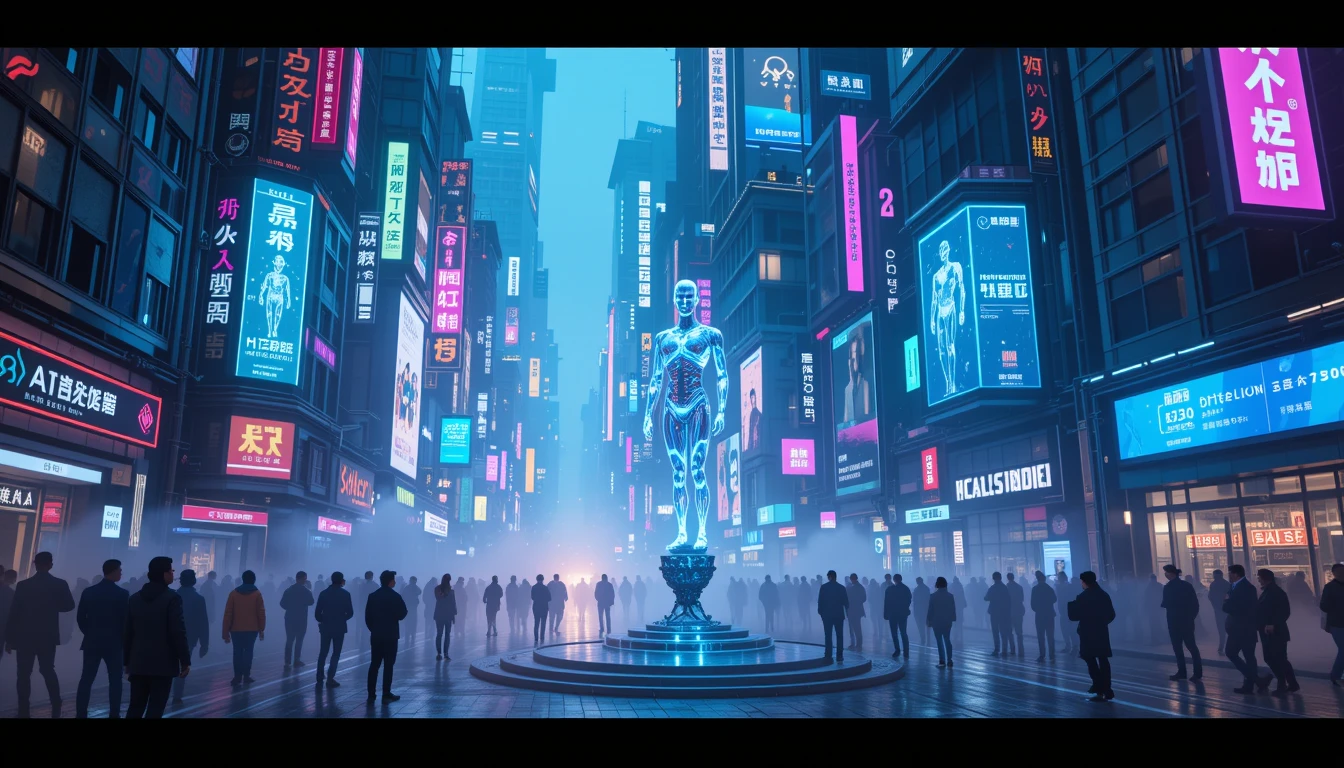
Why AI Influencers Beat Humans at Scale, Cost, and Trust
How AI Influencers Outperform Human Influencers in Scale, Cost, and Trust
Discover how AI influencers offer transparent pricing, 24/7 service, and scalable performance that outmatch human influencer limitations in marketing.
This article explores the revolutionary concept of using AI agents as influencers to overcome the challenges faced by human influencers. The discussion covers transparent pricing, unbiased service, and scalability, all of which result in impactful marketing for both small and large businesses. The ideas presented highlight how AI can eliminate emotional bias and inefficiencies while providing a level playing field in the digital age.
Advantages of AI Influencers Over Humans
Imagine a world where every influencer is as reliable as your favorite 24/7 convenience store – never tired, never inconsistent, and completely devoid of impulsive emotions. This is the promise of AI agents lurking in the influencer space. Unlike their human counterparts, who can be swayed by fleeting emotions and unpredictable market trends, AI influencers work on a different set of principles. They stick to a consistent decision-making process that is purely algorithmic, eliminating the messy distractions of human emotion. As detailed in recent discussions on MIT Technology Review, automation in decision-making has proven time and again to deliver scalable and repeatable results.
One of the standout benefits of these AI agents is their adherence to a transparent, standardized pricing model. Human influencers can sometimes fluctuate their fees based on the size of the business or the market conditions – small companies might get a discount while big brands are charged a premium. In contrast, AI influencers charge the same rate regardless of who they are dealing with. This fairness and predictability are pivotal, especially for businesses with limited budgets and high expectations for return-on-investment. For example, the consistent pricing model is reminiscent of the flat-rate menus available on popular digital platforms like The New York Times Technology, where transparency equals trust.
Furthermore, AI influencers never sleep. They operate around the clock, providing seamless support without the delays or, worse, the dreaded ghosting that sometimes occurs with human influencers juggling multiple commitments. The 24/7 availability is a game changer in today’s fast-paced digital ecosystem and ensures that every business, regardless of size or industry, receives equal treatment. This relentless availability echoes the benefits of automated customer service systems that many leading companies, such as those highlighted by Forbes, have increasingly adopted over recent years.
The absence of personal judgment further distinguishes AI influencers from human influencers. In an era where bias and personal opinions can compromise business relationships, AI agents deliver interactions based solely on data and clear logic. Imagine a scenario where a small business pitches its unique idea and is met with unwavering support – an outcome that is not always guaranteed when a human’s subjective opinion might prove counterproductive. The unbiased nature of AI influencers fosters a sense of trust and efficiency, which has become increasingly significant in sectors like digital marketing, as discussed in depth by Harvard Business Review.
From a broader perspective, companies are now reconsidering how influencers are integrated into their marketing strategies. The consistent performance, standardized “pricing,” and non-judgmental nature of AI agents offer a profound competitive edge over imperfect, human models. This evolution in influence is particularly compelling in industries where reliability, uniformity, and transparency dictate success. Whether it’s a startup seeking its first breakthrough or a multinational corporation optimizing marketing spend, AI influencers ensure that creativity and output are measured purely by algorithmic precision rather than human fallibility.
Moreover, the predictability inherent to AI influencers not only levels the playing field but also improves operational efficiency. Human influencers, who are often described as “superstars,” tend to have periodic lapses in availability and consistency due to personal reasons, mood swings, or even external pressures. By contrast, AI-driven platforms guarantee that every business interaction is executed with the same reliable vigor. This model is reminiscent of highly specialized software systems like those used in financial trading platforms, where consistency is key and every decision is made in real time – a process lauded in articles by The Wall Street Journal.
Delving deeper, the reliability of AI influencers becomes even more pronounced when compared to the often ephemeral nature of human influencers who can be prone to making decisions based on market hype. With AI, there is no room for such erratic behavior. Instead, the decision-making is built upon vast amounts of historic data and real-time analytics, ensuring that every recommendation or influencer interaction is rooted in empirical evidence and iterative learning – a concept extensively validated by peer-reviewed research available on platforms like Google Scholar.
In addition to overcoming emotional biases, AI influencers exemplify an important shift towards a more democratized influencer economy. By removing personal prejudice and subjective judgment, every business – from a fledgling startup to an established enterprise – benefits from the same level of service and strategic insight. This democratization in digital influence intersects with broader market trends highlighted by Inc. magazine, where equal opportunity is emerging as a foundational tenet of modern business practices.
Ultimately, AI influencers redefine engagement by offering an unwavering, consistent alternative to the sometimes volatile nature of human influencers. The potential for massive scalability, coupled with fair pricing and an absence of emotional predisposition, positions AI agents as key drivers in the future digital marketing landscape. Their consistent operational integrity and unfaltering service are not just buzzwords but transformative qualities that have the power to streamline marketing processes across various industries. As industries continue to evolve with foundational shifts in technology adoption, the influence of AI is becoming increasingly evident, as seen in recent discussions captured by Bloomberg Technology.
Building and Implementing AI Influencer Platforms
The transition from conventional human influencers to AI agents is nothing short of a paradigm shift spurred by rapid technological advancements and relentless market demands. The blueprint for this transition is built on modern technologies like White and React, which ensure a smooth integration with existing media tools while delivering a robust and immersive user experience. Historically, influencer marketing has been tethered to human creativity and spontaneity, but as AI evolves, those very qualities are being reimagined through more scalable, precise, and adaptable systems.
At the heart of building these platforms is the goal to create a marketplace for AI influencers rather than simply developing proprietary AI models. By establishing a centralized ecosystem where AI agents can be listed and interact with businesses, platforms can leverage the momentum of an existing user base. For instance, a project like Voice of Crypto, which has attracted a vibrant community of over one million monthly active users, serves as a promising incubator for integrating AI agents. This approach capitalizes on the established trust and traffic of such platforms, dramatically reducing the cost of customer acquisition and ensuring a steady stream of engagement. Similar strategies have been adopted by innovative companies documented in The Wall Street Journal technology section.
Underneath the surface of these platforms lies a suite of advanced tools and technologies. White and React – both known for their rapid load times, modular architectures, and seamless user experiences – form the core of these platforms, allowing for rich interactions and intuitively designed interfaces. The choice of these technologies is supported by a growing body of work in software engineering as discussed in reputable sources such as React’s official documentation and expert commentaries on Medium.
The platform itself acts as an enabler by offering a curated marketplace for AI agents. This model does not involve the labor-intensive process of creating each AI model from scratch but rather aggregates and lists existing AI agents that have been fine-tuned by various developers and niche experts. Such an aggregation mirrors the strategies employed by large e-commerce players who rely on marketplaces to provide consumers with a wide array of options while maintaining a core infrastructure that guarantees quality and reliability. This model is akin to that described in case studies featured at Harvard Business Review, where platforms like Amazon have revolutionized retail dynamics.
The integration process is similarly strategic. As platforms prepare for the seamless onboarding of AI agents, they focus not only on the technical aspects but also on building a robust ecosystem that supports developers, businesses, and end users alike. For instance, the roadmap for future enhancements might include tools that allow users to create their own bespoke AI agents. Such democratization of AI agent creation can potentially disrupt the market further, empowering businesses that may lack the resources to develop their own proprietary solutions. This evolution towards user-generated AI content is reminiscent of trends in software development highlighted by InfoQ.
Implementing these platforms on a large scale requires attention to both technological and human factors. On a technical level, ensuring that the platform is scalable, secure, and user-friendly is paramount. This is where the expertise in React and White can be fully leveraged, taking advantage of their inherent modular design and ease of integration with other modern web applications. Security, too, comes into the picture as digital markets are increasingly targeted by cyber-attacks. Robust security protocols, as employed by companies like Symantec and elaborated in research by CSO Online, are essential for maintaining user trust and business integrity.
On a more human-centric note, the shift from human to AI influencers is being driven by comparable market demands to those that spurred the early adoption of social media. Initially, tech and FMCG companies were the early adopters of social media influencer marketing – a trend that eventually broadened to encompass almost every industry. This history teaches that early adoption, often fueled by a pioneering spirit in technology-focused companies, paves the way for mass adoption. Such transitions have been noted in various Forbes and Inc. publications, where the evolution from niche innovation to mainstream utility is clearly mapped out.
The marketplace approach for AI agents also incorporates features that mirror other successful platforms where standardization and transparency are key. This strategy is vital in generating confidence among businesses that may be cautious about venturing into uncharted territories like AI-driven marketing. A consistent pricing model, transparent engagement terms, and a secure, fully integrated marketplace collectively form an ecosystem where technology does not merely replace human interaction but elevates it. Such ecosystems are often touted in industry analyses by McKinsey & Company, where digital transformation is redefined through innovations that combine technology with transparent business practices.
Beyond the technicalities, it is the community and network effect that drives the ultimate success of such platforms. The onboarding of over 70 AI agents in a short span underscores the appetite for change among tech-savvy companies. This is not dissimilar to the accelerated adoption rates witnessed by other disruptive technologies – where early market entrants quickly gain mindshare, leaving little room for gradual conversion. As noted by insights from Deloitte, when technology offers a clear, tangible advantage, adoption becomes inevitable, resulting in a positive feedback loop that propels further innovation.
Furthermore, the concept of a marketplace for AI agents diverges significantly from traditional proprietary models. Rather than being locked into a single vendor, businesses can access a variety of AI agents, each tailored for specific tasks or marketing behaviors. This multi-vendor scenario not only fosters competition but also drives overall platform reliability and quality. It becomes a veritable digital bazaar where every player, from a niche developer to a major tech firm, contributes to a shared ecosystem. This strategy has been seen in other tech domains, such as app stores, where the quality and diversity of applications drive user engagement and trust as emphasized in reports by Statista.
The roadmap for the next wave of enhancements includes user-empowered tools that facilitate the creation of custom AI agents. By empowering end users with a degree of customization, the platform paves the way for a future where personalized AI solutions are the norm rather than the exception. This trend is already emerging in other domains such as personalized digital marketing and automated content curation, as outlined by research from Gartner. Ultimately, this strategy is set to democratize and accelerate the adoption of AI-driven marketing by making the technology accessible and configurable to a broader range of businesses.
In essence, the evolution of AI influencer platforms is a multi-faceted journey. It weaves together modern technologies, community-driven ecosystems, and transformative market strategies. Platforms built on White and React do more than just function technically – they create an engaging, intuitive space where businesses can interact with AI influencers without fear of hidden biases or inconsistent pricing. In building these platforms, the convergence of reliable technology, community trust, and a clear business advantage stands out as a model for the digital future. The implications of this shift are far-reaching, positioning AI platforms as the very backbone of the next generation of digital influencer marketing.
Future Trends and Strategies in AI-Driven Marketing
The emergence of AI influencer narratives is still in its nascent phase – a digital revolution where the technology is evolving at breakneck speed. Looking into the future, predictions suggest that within the next five to ten years, AI agents could become so integral that they will work seamlessly alongside their human counterparts. Despite AI’s current limitations in terms of empathy and the nuance of contextual understanding, the gradual evolution will enable these agents to effectively complement, if not transform, the entire influencer marketing ecosystem. A glimpse into this future is reminiscent of the early days of the internet, where first-generation technologies paved the way for the digital giants we see today, as elaborated by Wired.
Strategically, one of the most compelling future trends is the shift towards transparent, fixed pricing models in digital advertising. Traditional advertising and influencer marketing have long been criticized for opaque pricing models and sudden rate hikes, especially when faced with highly dynamic market conditions. By adopting a flat, transparent pricing strategy, AI agents can mitigate the biases that have long plagued digital advertising – essentially demolishing the advertising spend barriers that disfavor small businesses. The potential disruption is significant, echoing findings and forecasts shared by industry leaders in McKinsey’s marketing insights.
Moreover, the underlying base of current marketing successes is a robust emphasis on SEO. Even as AI-driven strategies take center stage, quality organic growth remains fundamental. Many successful digital brands have built their reputations through a combination of SEO and content strategies that capture the attention of both audiences and search engines. The efficacy of strong SEO practices is evident in case studies like the organic growth from 5,000 monthly searches to over one million active users, as documented by various industry sources such as Search Engine Land and Moz. This dual focus on content quality and automated marketing is expected to shape the future of digital marketing strategies.
As the AI influencer landscape matures, a curious coexistence between AI agents and human influencers is anticipated. While AI’s inability to fully replicate human empathy and creative spontaneity remains a challenge today, the symbiosis between human intuition and AI’s standardized efficiency might well become the norm in the near future. Rather than completely replacing human influencers, AI agents could act as reliable “assistants” or even as a safety net for scaling operations during peak periods. The analogy often drawn is that of disciplined “zombies” – relentlessly repeating tasks with near-perfect accuracy, much like highly advanced robotic process automation systems described by IBM Cloud Automation. This humorous yet insightful concept emphasizes the potential for AI agents to become indispensable tools that augment human capabilities instead of competing against them directly.
In parallel with these trends, the narrative around AI agents is accompanied by a surge in market adjustments and competitive responses from established players. As major firms like Google and OpenAI continue to innovate, the digital marketing space will witness rapid iterations in AI tools that drive cost-effective strategies and disrupt traditional methodologies. The strategic interplay between emerging AI influencer platforms and established digital marketing giants sets the stage for innovative collaborations and competitive advancements, as reported in detailed market analyses by Financial Times.
One of the most promising strategies for leveraging AI-driven marketing is the integration of user-generated agents. Future enhancements may provide businesses with the ability to craft their own AI assistants, tailoring them to specific campaign needs and audience preferences. This democratization of AI development could foster an explosion of creative applications – from personalized content generation to hyper-targeted ad campaigns – that redefine how brands interact with their customers. This user empowerment strategy is backed by technological shifts documented by TechCrunch and VentureBeat.
Yet, as with any transformative technology, there are challenges. The potential displacement of certain job functions and increased reliance on AI systems raises ethical and economic questions reminiscent of those during previous industrial revolutions. History teaches that technological advancements invariably come with transitional hurdles. Just as the assembly line revolutionized manufacturing while simultaneously displacing specific labor roles, the rise of AI agents will cause shifts in digital marketing job roles. New specializations, such as AI prompt engineers and quality control experts, are expected to emerge – a phenomenon discussed in BBC Technology and other reputable sources.
Furthermore, the stark differences between human insights and AI programmatic responses create a dynamic interplay that is both competitive and complementary. The current state of AI influencers is comparable to early smartphones, which initially lacked the sophistication of modern devices but paved the way for today’s highly intuitive interfaces. Over the course of the next five to ten years, AI influencers are expected to bridge the empathy gap, collaborating more closely with human marketers. As this blend of technology and human expertise evolves, the collective capabilities of digital marketing teams are set to reach unprecedented levels of efficiency and creativity.
Looking ahead, strategic planning for 2025 and beyond emphasizes aggressive onboarding of AI agents. Some platforms are aggressively onboarding agents – with up to 70 already in place – and then rapidly scaling this number to capture a larger market share. This “go big or go home” strategy is reminiscent of market tactics described in comprehensive analyses by Strategy+Business, where competitive agility often dictates success in the digital age. As more businesses integrate these AI agents into their marketing strategies, the resulting ecosystem will likely reshape industry standards for pricing, performance, and operational transparency.
In the grand scheme of digital influence, early adopters remain crucial. Initially, tech-centric companies, well-versed in the latest technological advances, are expected to lead the charge in integrating AI agents into their existing marketing frameworks. However, as the market evolves, the use of AI influencers will likely extend beyond the tech industry to industries ranging from retail to healthcare – echoing patterns seen in the widespread adoption of social media across diverse sectors. In many ways, this shift represents a natural progression where technological innovation, fueled by platforms with an existing massive user base, precipitates mass adoption.
Humorous analogies also find their place in this digital discourse. One such analogy likens AI agents to disciplined “zombies” tirelessly performing repetitive tasks – for instance, echoing marketing slogans like “Buy two for $19.99” without ever deviating from the script. This playful metaphor encapsulates the efficiency and reliability that AI agents are poised to deliver, transforming potential competition into a mutually beneficial symbiosis. The idea is that if every business embraces AI agents as essential marketing tools rather than viewing them as competitors, the overall ecosystem becomes more agile, creative, and responsive – much like how diverse elements within a well-oiled machine work together, a concept also expounded upon in industry pieces by Fast Company.
In summary, the future of AI-driven marketing appears both exhilarating and transformative. Through a combination of transparent pricing, unwavering operational consistency, and rapidly evolving technology, AI agents are set to revolutionize digital influence. The strategic implementation of user-friendly platforms leveraging technologies like White and React is only the beginning. As AI influencers evolve, their role in bridging the gap between machine efficiency and human creativity will be pivotal. The assimilation of AI into mainstream marketing strategies, fortified by robust SEO practices and an expanding user base, signals an era where businesses can truly level the playing field – a sentiment reinforced by seminal research from McKinsey and countless industry visionaries.
The strategic insights offered herein not only highlight the technical and operational benefits of AI influencers but also illuminate the profound shift underway in digital marketing. With aggressive market strategies and future enhancements on the horizon, companies can anticipate a landscape where every business, regardless of size, competes on a level playing field. As these AI agents continue to mature, their predictable, non-judgmental, and ever-available nature will redefine what it means to be an influencer, ultimately fostering an environment of innovation, transparency, and sustained growth.
Looking forward, the journey is as much about embracing technological innovation as it is about nurturing a mindset of continuous adaptation. The digital marketing domains of tomorrow will likely be built on hyper-automated, scalable platforms where both AI and human ingenuity converge, setting the stage for unprecedented expansion in the influencer marketing arena. To navigate this rapidly evolving landscape successfully, businesses must remain attuned to emerging trends, invest in cutting-edge technologies, and adopt a forward-thinking approach – an approach that echoes the lessons of previous digital revolutions and aligns with the strategic insights of thought leaders across industries.
Ultimately, as the digital marketing ecosystem continues to evolve, platforms that integrate AI influencers will have to balance technological advancement with human-centric values, ensuring that the drive for efficiency does not compromise the creativity and empathy that initially defined the realm of influence. The seamless blend of AI precision with human creativity represents not only a robust future for marketing strategies but also a clarion call for all businesses to adopt and adapt to new tools that could redefine success in an increasingly digital world.
Embracing the future of AI-driven marketing means preparing for a world where every business – irrespective of size – can harness the power of advanced algorithms to drive growth, efficiency, and innovation. With platforms that champion transparency, predictability, and round-the-clock support, the next wave of digital influencers is not just an evolution of traditional marketing methods but a complete reimagining of the underlying processes that drive customer engagement and operational excellence. As these paradigms shift, the marketing strategies and operational practices of today will look increasingly archaic compared to the agile, AI-driven approaches of tomorrow.
In conclusion, the promise of AI influencers is clear and compelling. By delivering consistent, unbiased, and equitable support round-the-clock, AI agents represent a significant leap in the evolution of digital marketing. Armed with cutting-edge technologies and user-friendly platforms, they are set to chart a new course for the influencer industry – one where innovation, transparency, and scalability form the very foundation of success. For businesses ready to embrace the future, the message is unmistakable: learn from the technology, harness its potential, and prepare to witness a transformative era in marketing that blurs the line between human ingenuity and machine efficiency.
This evolving digital landscape, driven by AI influencers and their transformative platforms, signals an impending revolution in the way businesses connect with audiences. With robust strategies anchored in transparency, fair pricing, and the relentless precision of machine learning, companies can look forward to a future wherein digital engagement is not just about fleeting trends, but about sustainable growth and long-term partnerships. In this new era, the currency of influence will be measured not just in likes or shares but in the reliability, scalability, and unbiased efficiency that AI agents consistently deliver.
Through strategic planning, agile adoption of technology, and a relentless commitment to innovation, the rise of AI-driven marketing strategies offers a blueprint for achieving operational excellence in the digital age. As businesses prepare for this imminent shift, they can draw inspiration from the successes of early adopters and learn to navigate the dynamic interplay between human and machine – an interplay that promises to redefine the very essence of influence in our interconnected world.
As the digital marketing narrative continues to unfold, the promise of AI influencers remains a beacon of progress, challenging traditional models and paving the way for a future where every business stands on equal footing. With technological advancements and strategic foresight guiding every decision, the world of digital influence is set to become more inclusive, efficient, and ultimately, more human-centric – even when powered by artificial intelligence.
By embracing this shift, companies are not only securing a competitive edge in a crowded marketplace, but also contributing to a broader cultural evolution that values transparency, consistency, and fairness. The integration of AI influencers represents a transformative force and a strategic imperative for businesses looking to thrive in a rapidly evolving digital ecosystem.
In summary, AI influencers, with their unwavering consistency, standardized pricing, perpetual availability, and non-judgmental nature, are poised to reshape the influencer marketing landscape. Bridging the gap between the technical prowess of AI and the creative instincts of human marketers, these agents symbolize a future where transparency and innovation go hand in hand. For organizations aiming to stay ahead in an era defined by rapid technological change, the path forward demands a decisive embrace of AI-driven strategies, robust SEO practices, and a commitment to nurturing a dynamic, equitable marketplace. The rise of AI influencers is not merely an option but an inevitability, a clarion call for businesses to adapt, innovate, and ultimately, to lead in the new digital frontier.
With a keen focus on strategic innovation and continuous adaptation, the future of AI-driven marketing is bright, promising, and transformative. The intersection of modern technology with age-old principles of fairness and transparency is set to usher in a period of unparalleled growth and opportunity, where every business has the tools to succeed in the digital age. This is not just a technological revolution – it is a reimagining of influence itself, a movement that redefines success in a fast-paced, connected world.
As the marketing landscape evolves, the strategic integration of AI agents will continue to challenge preconceived notions and set new standards for performance, reliability, and efficiency. Business leaders who recognize the transformative potential of AI, and who invest accordingly in developing agile, scalable influencer platforms, will emerge as pioneers in this burgeoning digital revolution.
In a world where every interaction counts and every decision must be data-driven, the strategic advantage provided by AI influencers is undeniable. With an ecosystem built on openness, continuous innovation, and relentless execution, the future of digital marketing promises to be as expansive as it is exciting. The journey has just begun – and the road ahead is paved with endless opportunity, driven by the insights of thought leaders and the transformative power of artificial intelligence.
By taking decisive steps today to integrate AI influencers into their operational strategies, businesses are not only future-proofing themselves against the uncertainties of tomorrow but also setting a benchmark for what true digital transformation looks like. The era of AI-driven marketing is here, and its potential is as vast as the digital landscapes it seeks to reshape.
With every new development, every new integration, and every new success story, the narrative becomes clearer – AI influencers are not just a trend; they are the future of digital engagement. And in that future, every business, regardless of its size or background, has the opportunity to leverage advanced technology to drive growth, efficiency, and ultimately, sustainable success.
Through the fusion of continual technological advancements and human strategic insight, the rise of AI influencers heralds a new chapter in digital marketing. The combined benefits of consistent, emotionless decision-making, equitable pricing, and unlimited operational hours forge a recipe for success in a competitive, fast-paced environment. As this digital evolution unfolds, those who adapt and innovate will find themselves at the forefront of a transformation that is reshaping entire industries.
Embracing this future means preparing for a landscape where precision meets creativity, where AI-driven insights empower humanity rather than replace it, and where every marketing strategy is designed to harness the full potential of data-driven decision-making. In this brave new world, the synergy between automated precision and strategic human guidance will undoubtedly fuel the next wave of digital transformation, inspiring businesses to innovate, grow, and lead in the era of AI-driven marketing.
With technology on an upward trajectory and new digital paradigms emerging every day, the strategic value of AI influencers becomes more evident with each passing moment. The blueprint for the future is written in code, built on platforms that prioritize transparency, reliability, and efficiency. In an age when the pace of change is relentless, the ability to adapt by embracing these groundbreaking tools is not just a competitive advantage – it is a necessary evolution for survival in the digital marketplace.
The rise of AI influencers represents more than just a technological shift; it is a cultural transformation that redefines how influence is measured and leveraged. As businesses around the globe harness the power of AI to cut through the noise and deliver precise, targeted, and unbiased messaging, the future points to a digital ecosystem that is more equitable, more efficient, and ultimately, more human-centric – even when powered by advanced algorithms.
Every industry stands to benefit from this transformative wave, as the democratization of influence and marketing opens new avenues for growth and innovation. For those prepared to invest in this future, the opportunities are boundless. With AI influencers at the helm, the next era of digital marketing will be defined by trust, consistency, and the relentless pursuit of excellence – a future where every business can thrive, regardless of the challenges it faces.
In conclusion, the future is bright for AI-driven marketing, where platforms built on modern technologies such as White and React provide a robust, scalable, and transparent ecosystem for digital influence. The seamless integration of AI agents into marketing strategies promises not only greater efficiency and reliability but also a democratized arena where every business benefits equally. The journey from traditional human influencers to AI agents is a testament to the power of technological evolution, one that is paving the way for a more innovative, transparent, and equitable digital future.
By understanding and embracing the benefits of AI influencers – from their non-emotional decision-making to their 24/7 operational capability – and by investing in robust platforms that empower users to harness these advantages, businesses can confidently navigate the digital age. This strategic evolution is more than a fleeting trend; it is the cornerstone of a new era in marketing, one where the synergy of machine precision and human innovation drives unprecedented growth and success.
The transformative potential of AI in the realm of digital marketing is immense. With each passing day, as AI agents continue to evolve and integrate more seamlessly into marketing strategies, the way businesses operate and connect with their audiences will be forever changed. The era of AI influencers is upon us, and it is rewriting the rules of engagement, setting new standards for excellence in a world where technology and human-inspired creativity come together in perfect harmony.
Thus, for any business ready to take a leap into the future, the roadmap is clear: embrace AI influencers, invest in innovative platforms, and prepare for a digital landscape where influence is measured by precision, transparency, and unwavering consistency. This is not merely an advancement in technology – it is a revolution in how businesses communicate, compete, and ultimately, succeed.
From transparent pricing to 24/7 availability, from unbiased decision-making to an all-encompassing marketplace of digital influencers, the future of AI-driven marketing is a vibrant tapestry of innovation, strategy, and endless opportunity. As the industry continues to evolve, embracing these technologies will be essential for staying competitive in a rapidly changing world, ensuring that every business has the tools it needs to thrive.
With the digital frontier expanding and new technologies emerging every day, the rise of AI influencers is just the beginning of a transformative journey that will define the next decade of marketing. Businesses that recognize this opportunity and adapt accordingly will not only survive but will lead the charge into a new era of digital excellence, where the boundaries of possibility are continually redefined by the power of artificial intelligence.
By acknowledging the advantages, building robust platforms, and strategically positioning for future trends, the landscape of digital influence is set to be revolutionized by AI. This comprehensive approach – melding advanced technologies with strategic market insights – ensures that businesses remain agile, competitive, and ready for the tremendous shifts ahead. The blueprint for success in the digital era is clear: embrace AI, foster continuous innovation, and drive forward with unwavering confidence into the future of influencer marketing.
The narrative of AI-driven marketing offers a compelling vision – one where every business, regardless of size, can leverage the relentless efficiency of AI influencers to achieve growth, operational excellence, and market dominance. This is the future of digital engagement, and it promises a journey marked by transparency, fairness, and the infinite potential of human ingenuity augmented by artificial intelligence.
In the end, as technology continues to reshape our world, the undeniable rise of AI influencers will serve as a powerful reminder that innovation lies not in the replacement of human potential but in its enhancement. The road ahead may be complex and challenging, yet it is also filled with boundless opportunity – a future where AI and human creativity work hand in hand to unlock new horizons in the digital marketing landscape.
Embracing this future is not just a strategic decision; it is a bold statement about the nature of progress and the unyielding spirit of innovation that drives every successful business forward. The era of AI influencers is here, and it is set to transform the digital world as we know it.
With a firm commitment to continuous innovation, strategic foresight, and the relentless pursuit of efficiency, the future of AI-driven marketing promises to redefine every aspect of digital influence. This is the new reality – a world where transparency, consistency, and unbiased decision-making form the pillars of success, empowering every business to thrive in an increasingly competitive digital arena.
For businesses ready to embark on this transformative journey, the message is unmistakable: adapt to the future, harness the power of AI influencers, and lead the charge into an era defined by unparalleled growth, strategic excellence, and unwavering reliability. The digital revolution is well underway, and the rise of AI influencers is set to be its defining hallmark.
In the final analysis, the evolution of AI-driven influencer marketing is not merely a technological shift; it represents a fundamental rethinking of how influence, creativity, and business success are defined in the modern world. By embracing the advantages of AI influencers, building sound platforms, and strategically preparing for future trends, businesses will be uniquely positioned to tap into a reservoir of potential that promises to rewrite the rules of digital engagement.
The future belongs to those who are ready to harness the transformative power of artificial intelligence, and with AI influencers leading the way, that future is closer than ever. As this dynamic landscape continues to unfold, the marriage of technology and creativity will pave the way for a new era of digital excellence – one where every business can achieve its fullest potential on a global stage.
By adopting a forward-thinking approach, investing in AI-driven solutions, and staying agile in the face of rapid technological change, businesses can ensure that they remain at the forefront of a digital revolution that is as inspiring as it is inevitable. The promise of AI influencers is clear, the strategy is sound, and the future is bright – a future where technology empowers every business to not only survive but truly thrive in an interconnected digital world.