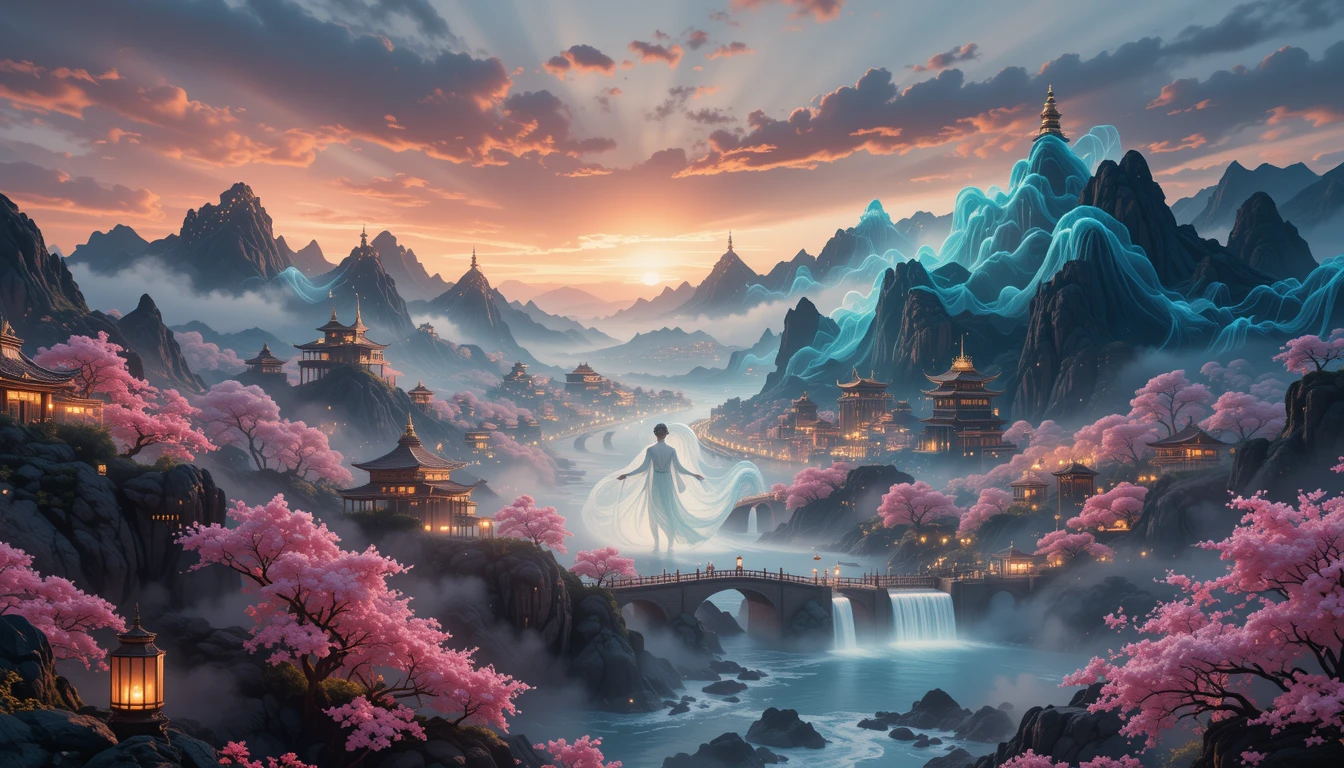
Tencent’s AI Art Tools Are Redefining Digital Creativity
Tencent AI Art: A New Wave of Digital Creativity
Discover how Tencent’s cutting-edge AI art tools are revolutionizing digital creativity—from traditional Chinese painting to innovative gaming and metaverse applications.
This article will explore the groundbreaking ways Tencent’s AI art tools are transforming digital expression. It covers the dynamic integration of traditional art techniques and state-of-the-art machine learning, revealing how platforms like Tencent AI Art are redefining visual creativity in gaming, social media, and the metaverse. Read on to uncover how these innovations blend cultural heritage with futuristic design, all while tackling challenges like copyright and censorship.
🎨 1. AI Painting: The Digital Artist’s Canvas
Imagine a tool that transforms simple text into a breathtaking visual masterpiece—a technology that takes the delicate sensibility of traditional Chinese ink landscapes and infuses them with the power of AI. Tencent’s AI painting platform is doing exactly that. By converting brief, poetic prompts into detailed artwork, it has become an indispensable asset for the digital artist and creative professional. Unlike generic graphic design programs, this platform perfectly marries classic aesthetics with cutting-edge technology, offering a bridge between epochs. For those familiar with the world of traditional art, think of it as a grand digital repainting of the timeless Chinese scrolls, reinterpreted by an advanced algorithm that captures not just the colors but the very soul of the scene.
This digital canvas utilizes state-of-the-art machine learning technology that analyzes text and translates it into rich visuals reminiscent of serene ink landscapes—a hallmark of Chinese art. The platform excels in rendering natural elements: mountains shrouded in mist, tranquil rivers flowing beneath ancient bridges, and the soft diffusion of ink on paper. For creative professionals in advertising, gaming, and social media, this tool has opened up avenues to generate original, culturally nuanced art on demand. Its seamless integration with Tencent Cloud ensures not only speed and reliability but also scalability and accessibility to a global audience. The cloud integration is more than a technical detail; it represents a shift towards creative decentralization, where high-quality art production is no longer the exclusive domain of traditional studios.
A closer look at the technology reveals that behind every stroke of digital ink is a sophisticated algorithm working in real time. This platform leverages vast datasets, deeply infused with the historical and cultural nuances of Chinese art, to remain authentic in its output. Its application goes far beyond mere replication—it actively enhances and reinvents traditional styles. Creative professionals now have the ability to generate dynamic artworks for varied uses:
- Gaming: Crafting immersive environments that echo ancient landscapes.
- Advertising: Designing culturally enriched visuals for brand campaigns.
- Social Media: Creating shareable, high-impact imagery that resonates on platforms like WeChat and QQ.
Tencent’s approach not only streamlines the creative process but also democratizes high-quality art production. The ease of converting text prompts into stunning visuals removes barriers for emerging artists and professionals alike. It’s a tool that empowers creativity without sacrificing authenticity. More details on the intersection of artificial intelligence and digital art can be found in articles from Wired and The Verge.
Moreover, the platform’s design and operational framework resonate with the current trends in AI-driven art applications. As detailed on Forbes, the integration of cloud computing with creative software paves the way for scalable, on-demand artistic production. For the gaming sector and advertisers seeking cultural authenticity in their designs, Tencent’s innovative solution is setting new benchmarks. The fusion of old-world charm with modern technological efficiency is not just a feat of programming; it’s a demonstration of how digital evolution can preserve and even elevate traditional art forms, making them more accessible and engaging in the digital era.
✨ 2. Dreamina: High-Resolution AI Magic
Deep in the heart of Tencent’s suite of art tools lies Dreamina, an AI engine that delivers high-resolution, stylized digital art with precision. Far from being just another automated tool, Dreamina has emerged as a creative powerhouse—an assistant that never runs out of ideas. It offers creators the ability to generate high-quality artwork suitable for concept art, influencer posts, and even custom illustrations that are as unique as the finger on a muse’s hand.
Dreamina stands out due to its versatility and seamless integration within Tencent’s expansive ecosystem. The platform’s compatibility with popular social media applications like WeChat and QQ ensures that the art it creates can be effortlessly shared, promoted, and even monetized. By breaking down traditional silos between creative production and distribution, Dreamina is reshaping how digital art circulates across networks. Its high-resolution outputs mean that every detail is captured precisely—whether it’s the vibrant hues of a city at dusk or the meticulous depiction of a fantastical creature.
🔍 Key Features and Ecosystem Integration
- High-resolution capabilities: Dreamina’s outputs are not pixelated or abstract; they are crisp, clear, and detailed, making them suitable for a variety of applications from digital marketing materials to concept art for blockbuster games.
- Ecosystem synergies: Thanks to close integration with platforms like Tencent and its ecosystem, along with WeChat and QQ services, Dreamina has transformed content creation into a fluid, interconnected process.
- User-friendly interface: Even technical novices can harness the power of AI for art creation. The intuitive design of Dreamina means that a creative idea can be recorded as a brief prompt and then developed into a stunning piece of art, ready for immediate use in media or promotion.
The impact of Dreamina on the creative industry can be likened to that of a modern muse coupled with a supercomputer. It accelerates the creative process in a way that once took teams of artists weeks, now reducing it to mere minutes. This agility allows companies to remain agile in fast-paced markets, responding to trends and consumer demands almost instantaneously. The transformational nature of Dreamina is highlighted in tech reviews like those found on TechCrunch and Engadget, where the emphasis is on how AI tools are redefining media production and creative workflows.
For digital artists and content creators, Dreamina is revolutionizing the process of visual storytelling. Its capabilities extend to generating art that not only intrigues the viewer but also carries a unique artistic signature, combining the spontaneity of human imagination with the precision of machine learning. This essential blend creates outputs that feel both innovative and steeped in the rich tapestry of traditional artistry. Additional insights into high-resolution AI technologies can be explored through comprehensive reviews on CNET and Digital Trends.
The synergy between art and technology represented by Dreamina also signals a broader shift. Traditional methods of art creation often rested upon slow, iterative processes involving manual refinement over days or weeks. In contrast, Dreamina’s capacity to produce a polished piece in a fraction of the time encapsulates the promise of AI-assisted creativity—forging a new realm where speed does not compromise quality but rather complements it. It is a dynamic that is particularly resonant in today’s fast-evolving creative industries, where the demand for both quality and quantity is ever increasing.
🎮 3. AI in Gaming: Revolutionizing Virtual Worlds
Tencent’s innovations are not confined to static art alone; they have a profound impact on the gaming industry. Gaming is an ever-evolving landscape that thrives on immersive experiences, and AI-generated art is rapidly becoming a cornerstone in creating these digital worlds. Working behind the scenes in some of the world’s most popular games such as Honor of Kings and PUBG Mobile, Tencent’s AI tools are designed to accelerate the development of complex digital assets, breathe life into intricate character designs, and even generate procedural textures that enhance visual narratives.
Gaming traditionally has relied on a combination of hand-drawn concept art and iterative design processes to achieve the look and feel demanded by modern consumers. With the power of AI, game developers can now produce a vast array of assets with unprecedented speed and consistency. Imagine needing a mythical creature for a boss battle or a sprawling futuristic cityscape for the next open-world saga. The AI systems work like an electronic alchemist—turning creative prompts into dynamic visuals that enrich gameplay and storytelling.
🧩 Detailed Integration in Gaming
- Character and environment design: Tencent’s AI tools generate detailed concept art that informs character development, environment aesthetics, and game storytelling. Whether it’s the mystical aura of ancient warriors or the sleek design of futuristic robots, AI acts as the initial sketchpad to fuel inspiration.
- Procedural texture generation: The algorithms can create textures and effects that mimic natural phenomena—rain, mist, and fire—with intricate detail, ensuring that each frame of gameplay is as immersive as it is visually captivating.
- Rapid prototyping: By harnessing AI, development cycles can be drastically shortened. What traditionally took weeks of conceptual work now takes minutes, enabling developers to iterate faster and bring minutely detailed worlds to life with agility.
For instance, in the case of Honor of Kings—a game that demands both mythic storytelling and visually striking imagery—Tencent’s integration of AI-generated concept art has allowed for richer character backstories and more inventive in-game settings. Similar insights on how AI transforms gaming can be found at GamesIndustry.biz and Gamasutra. These platforms detail how rapid visual iteration contributes to richer game experiences and increased market competitiveness.
This transformative effect of AI in gaming isn’t just about speeding up production. It opens new channels for creative exploration. In scenarios where human artists might hit creative blocks, AI-generated imagery can serve as a creative jumping-off point, inspiring innovative designs that marry fantasy with futuristic technology. It is reminiscent of a digital renaissance—a period when speed, precision, and creative breadth converge to produce worlds that captivate and entertain. For further technical background on procedural content generation in gaming, refer to expert analyses on IGN and Polygon.
Moreover, the economic and creative efficiencies gained through AI integration in gaming have wide-ranging implications. Smaller studios now have access to tools that were once the preserve of large-scale developers, thereby leveling the playing field. That democratization of creative assets means that innovation is now coming from more diverse corners of the creative industry, paving the way for a richer, more varied digital universe. This trend is not merely a technical upgrade but a fundamental reshaping of how creative digital worlds are conceived, built, and experienced worldwide.
🖌️ 4. Traditional Meets Modern: The Chinese Art Advantage
While Western AI platforms often push a certain universality in design, Tencent’s AI tools distinctly emphasize the beauty and depth of traditional Chinese art. This focus on cultural authenticity becomes especially significant in a world increasingly reliant on homogenized, mass-produced digital images. Tencent’s commitment to reinforcing traditional art forms—from the expressive strokes of ink wash painting to the intricate precision of calligraphy—positions its AI as the guardian of a venerable artistic heritage that is both enduring and deeply influential.
This unique cultural advantage is more than aesthetic; it carries historical resonance and authenticity that deeply appeal to lovers of classic art. It reintroduces elements of Chinese philosophy and storytelling into contemporary digital media—elements that often go overlooked in the rush toward Western-centric digital design trends. From historical dramas to modern festival promotions, Tencent’s AI art tools imbue projects with a genuine Chinese artistic touch. That blend of old-world artistry with modern digital methods is both a nod to tradition and a bold leap into the future, striking a chord with audiences and brands seeking originality and cultural depth.
🎭 Bridging Two Worlds
- Cultural authenticity: Unlike many Western AI art tools such as Midjourney, which largely cater to a more generic visual palette, Tencent’s technology draws from a rich repository of Chinese artistic traditions. Detailed research and curated data sets ensure that every generated stroke of digital ink echoes centuries of art history.
- Diverse applications: The platform is not limited to static art. It has found productive applications in historical narrative projects, branded festival campaigns (such as Lunar New Year promotions), and even in the cinematic reimagining of ancient Chinese myths. Its outputs provide culturally resonant visuals that are essential for creating a narrative atmosphere that is both authentic and compelling.
- Enhanced brand storytelling: Companies looking to connect with a culturally-aware audience often turn to Tencent’s AI art to bring historical and aesthetic depth to their marketing materials. The integration of digital and traditional art creates advertisements that feel unique and storied, elevating brand identity.
The methodology behind this cultural emphasis is well-documented in academic circles and art critique journals. For example, detailed explorations of the intersection between traditional Eastern art and modern technology can be found through publications like Smithsonian Magazine and ArtNews. These sources underscore the importance of preserving cultural legacies while embracing new tools for creative expression.
Furthermore, the approach of blending traditional methods with contemporary digital techniques has profound implications. In a globalized world, maintaining cultural distinctiveness becomes a competitive advantage. The ability to evoke a strong sense of heritage while delivering modern aesthetics is not just artistically appealing—it drives economic value in a crowded digital marketplace. Strategic campaigns that require a nuanced portrayal of cultural identity are now empowered by AI that understands the subtleties of both the past and the present. Analysts and strategists have frequently pointed to such dualities as central to contemporary creative successes, as discussed in frameworks provided by Harvard Business Review and McKinsey & Company.
In practice, the power of this hybrid approach is evident in its application across multiple digital art projects that require both modern vibrancy and historical gravitas. For instance, a promotional campaign for a historical drama may employ subtle ink wash aesthetics to evoke a bygone era, while simultaneously incorporating modern graphic elements to attract contemporary audiences. It is this careful balancing act that ensures Tencent’s tools remain unrivaled in their capacity to deliver culturally resonant, impactful visuals.
🚦 5. The Challenges: Copyright and Censorship
Every innovative leap in technology brings to the fore a set of ethical and legal challenges. Tencent’s AI art platforms, despite their immense creative potential, are not without controversy. The very algorithms that power these platforms rely on vast datasets comprising countless works of art, which naturally raises pressing questions about copyright infringement and originality. In an era where digital reproduction is ubiquitous, the debate around who truly owns a piece of art generated by artificial intelligence becomes a tangled web of legal, ethical, and creative concerns.
🔒 Navigating Copyright Complexities
One of the major challenges faced by Tencent’s AI art tools is the heavy reliance on existing art data. In order to create authentic and detailed imagery reflective of traditional Chinese art, the systems are trained on historical artworks, modern reproductions, and an array of digital images. This training process, while crucial for generating realistic outcomes, brings risks related to the appropriation of artistic styles and protected content. Critics argue that even though the AI generates something new, it still stands on the shoulders of countless artists who may not have consented to having their work used as training material. Thoughtful discussions on this issue are presented in opinion pieces on BBC News and The Guardian.
⛔ Censorship and Content Regulation
Alongside copyright issues, Tencent’s platform must also navigate the labyrinth of censorship and stringent content regulation. Given the political sensitivities and cultural considerations inherent in digital art, the platform maintains strict guidelines to preemptively filter out content deemed inappropriate or offensive. This regulatory framework aims to ensure compliance with regional laws and content policies, particularly in China where censorship is rigorous. However, this necessary oversight also imposes creative constraints, potentially limiting the full breadth of artistic expression compared to more open, less restricted platforms. Strategic overviews on the implications of censorship in digital media, along with detailed examinations of policy impacts, are available on Reuters and Financial Times.
⚖️ Balancing Freedom and Regulation
- Ethical obligations vs. creative freedom: The inherent need to manage a vast pool of digital art data creates a tension between ethical sourcing and the freedom to create. This is particularly relevant in creative industries where the line between inspiration and infringement is continually negotiated.
- Transparent policies: Tencent’s compliance with regulatory frameworks underlines a commitment to responsible AI use. Even though these restrictions might occasionally hinder unfettered creativity, they ensure that content produced remains within accepted legal and ethical boundaries.
Balancing intellectual property rights with innovative technology is a challenge that many tech companies have grappled with over recent years. In this context, Tencent’s approach is both cautious and pragmatic, aiming to secure the trust of artists and regulators alike. In-depth explorations of these challenges and the corresponding legal debates can be found on esteemed platforms like Law.com and The Economist.
While the potential limitations on creative freedom are a point of contention, they also serve as a checkpoint for quality control and legal compliance in an age of rampant digital reproduction. This balancing act between innovation and incarceration is a story not just of technology but also of society’s evolving relationship with intellectual property and freedom of expression. The reliability and longevity of Tencent’s platforms will be largely determined by how gracefully they can navigate these turbulent ethical waters.
🚀 6. The Future: AI Art in the Metaverse and Beyond
Looking forward, Tencent’s strategic vision for AI art extends far beyond static images and game design—it is set to redefine the way creativity is conceived, shared, and monetized in the digital age. As the digital world continues to evolve, the intersection of AI art with metaverse projects and NFT generation represents a provocative yet promising frontier. The future envisioned by Tencent is one where AI not only assists in the creative process but collaborates with human ingenuity, thereby enhancing artistic output through a hybrid model of creation.
🌐 Expanding into the Metaverse
The integration of AI art with metaverse projects is perhaps one of the most groundbreaking trajectories laid out by Tencent’s roadmap. In this emerging digital universe—where immersive experiences redefine human interaction—AI-generated art will become the aesthetic fabric that stitches virtual realms together. From designing avatars with culturally nuanced details to crafting digital landscapes that defy the limitations of physical reality, Tencent’s approach is geared towards creating environments where art meets interactive technology. The metaverse represents a canvas far larger than traditional media, and in this context, AI art becomes not just decorative but narrative—a medium that tells stories through every pixel and polygon. For extensive insights into the metaverse and its rapidly expanding role in media and entertainment, resources like Vanity Fair and Wired provide compelling analyses.
🤝 Collaboration Between Human and Machine
Tencent’s plans include deploying advanced collaborative tools that blur the lines between human artistry and machine precision. In the near future, platforms may allow artists to co-create with AI—where the machine suggests iterative design elements based on initial sketches, and human creativity refines them into polished masterpieces. This symbiosis elevates the creative process from one of replacement to one of augmentation. The concept of AI-assisted co-creation has been explored in depth on sites like Fast Company and Inc., which mark it as a trend that stands to reshape the entire creative ecosystem.
🌟 NFT Generation and Global Expansion
Another frontier in Tencent’s strategic plan is the generation of NFTs—unique digital assets that are verifiable on blockchain ledgers. NFTs have taken the art world by storm, and Tencent is poised to integrate its AI art capabilities into this booming market. This would not only offer new revenue streams for artists and digital creators but also cement Tencent’s role as a pioneer in digital ownership and creative autonomy. Furthermore, global expansion, particularly the launch of English-friendly versions of its AI art platforms, is designed to challenge the dominance of competitors like DALL-E. Detailed market analyses on the rising influence of NFTs in art can be found on Cointelegraph and Decrypt.
The anticipated rollout of these tools signals a future where creative projects are not merely one-dimensional products but complex, interactive experiences that span multiple dimensions of technology and art. In this dynamic digital era, Tencent’s AI art initiatives could redefine how art is created, consumed, and monetized. The integration into the metaverse will likely set the stage for an entirely new mode of interactive creativity, elevating both user engagement and narrative depth. Further details on how NFTs and the metaverse are converging can be found in trend reports published by Forbes and Business Insider.
🔮 A Glimpse into Tomorrow’s Digital Creative Landscape
Tencent’s bold vision for the future, marked by seamless human-AI collaboration and a profound commitment to cultural authenticity, is sure to redefine global digital creativity. With mounting investments in AI technology and cloud infrastructure, the company is well positioned to become a dominant player in the nascent universe of the metaverse. This forward-looking approach encapsulates a pivotal shift: from isolated works of art to an interconnected, immersive digital tapestry that spans continents and cultures. As technology and creativity continue to intertwine, Tencent’s strategy offers a blueprint for a future where art is not static but a vibrant, ever-evolving entity.
Key takeaways for this visionary leap include:
- Collaborative creativity: By enabling AI to complement human ideas rather than replace them, Tencent paves the way for richer, more nuanced art, an approach detailed in industry analyses on Harvard Business Review.
- Interactive experiences: The merging of AI art with immersive environments within the metaverse promises an era where art transcends traditional boundaries.
- Cultural expansion: With plans to launch English-friendly versions and extend its reach beyond domestic markets, Tencent is preparing to champion a global narrative that celebrates both innovation and cultural heritage.
In conclusion, Tencent’s approach embodies the potential of artificial intelligence to serve as both a catalyst and a collaborator in the realm of art and digital creativity. By thoughtfully integrating traditional aesthetics with modern technology, maintaining rigorous standards on copyright and censorship, and boldly venturing into metaverse and NFT territories, Tencent is not only responding to the demands of today’s digital age—it is actively shaping the future of art. The conversation about digital art is evolving, and Tencent’s strategies provide a provocative roadmap that invites further exploration into the uncharted territories of the digital canvas.
The journey ahead is filled with both promise and challenge, but it is precisely this landscape of dynamic innovation that defines the future of digital creativity. It is a future where every brushstroke of AI-generated art tells a story—a story of fusion, evolution, and the endless human quest for creative expression. To keep abreast of these developments, regular updates and thoughtful analyses from sources such as The New York Times Technology Section and Bloomberg Technology provide invaluable perspectives on the rising tide of AI innovation in art.
By fostering a dialogue between the past and the present, between human and machine, Tencent is leading the charge in what could be the most significant artistic revolution of our time. As the digital art space continues to expand, so too does the potential for creative expressions that are as deeply rooted in tradition as they are reflective of a bright, interconnected future.
The convergence of traditional aesthetics, high-resolution AI art, dynamic gaming visuals, and innovative metaverse strategies represents not just an evolution of art creation but a reimagination of what art can be in the digital age. Tencent’s suite of AI art tools—ranging from the evocative capabilities of its painting platform to the versatile magic of Dreamina, and onward to their transformative impact on gaming and global cultural narratives—stands at the forefront of this revolution. With an eye firmly on ethical practice and strategic global expansion, Tencent’s innovations signal a new era where every digital artifact is a vibrant, living testament to the power of artificial intelligence in empowering human creativity.
This evolving landscape, as chronicled by reputable outlets like ScienceDirect and detailed analyses on MIT’s research publications, demonstrates that the dialogue between technology and art is only just beginning. In this brave new world, creative expression is as much about the journey as it is about the destination—a journey that Tencent’s AI art platforms are uniquely qualified to navigate.
As digital creativity continues to evolve and expand, every innovation, every challenge overcome, and every new collaboration will etch its mark on the tapestry of human expression. With Tencent at the helm, the future of art—one that flourishes at the intersection of traditional beauty and digital ingenuity—is not only bright; it is boundless.