How Generative AI Is Revolutionizing Art and Creativity
Revolutionizing Creativity Through Generative AI
Explore generative AI’s transformative impact on art, music, writing, and design while addressing productivity boosts, copyright challenges, and future creative trends.
This article uncovers how generative AI is reshaping the creative landscape. By blending advanced algorithms with human ingenuity, the piece explores transformative technology trends that are revolutionizing visual arts, music, writing, and design. The exploration highlights tools like DALL-E and ChatGPT, innovative workflows, and challenges including copyright and algorithmic bias, setting the stage for a creative future enriched by smart technology.
Generative AI’s Impact on Visual Arts and Design
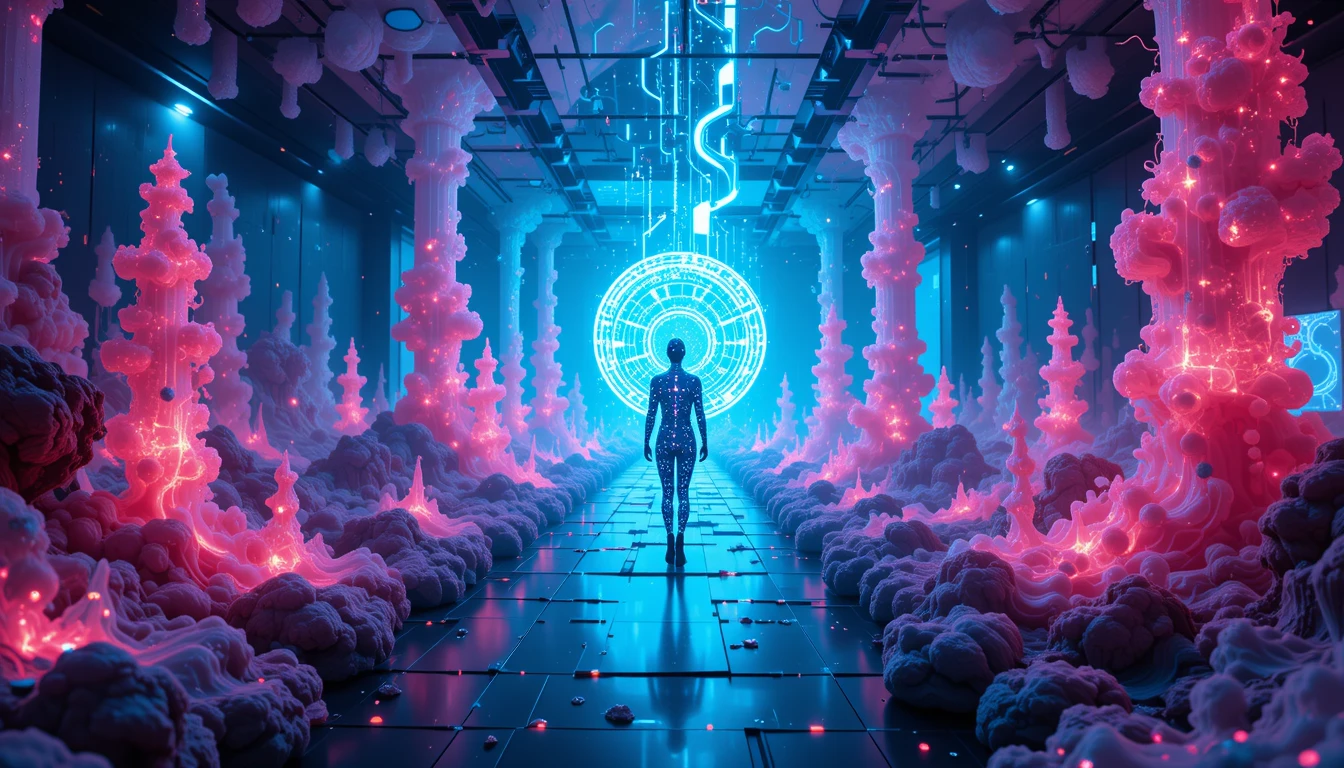
Imagine a world where a simple text prompt – “a cyberpunk cityscape at dusk” – instantly conjures up a breathtaking digital masterpiece. This isn’t science fiction; it’s the power of generative AI revolutionizing how visual art is created and experienced today. Once relegated to futuristic fantasies, algorithmic art has rapidly evolved into a daily, indispensable creative tool for artists, designers, and even casual creators. What had once been a subject for speculative films and novels now occupies the studio, the auction house, and the digital gallery. Deep learning models, including GANs (Generative Adversarial Networks) and Transformers, aren’t simply replicating traditional techniques – they’re co-authoring new visual languages with humans. For a detailed understanding of GANs, consider this IBM overview.
The Evolution from Futuristic Concept to Daily Practice
Historically, the idea of machines creating art was met with skepticism, even amusement. Early prototypes often produced images with uncanny distortions, such as extra fingers or a touch of surrealism that evoked both admiration and horror. However, as the technology matured, AI art generators began to produce work so polished and refined that even seasoned human artists found themselves in awe. Today, platforms such as DALL-E 3, Midjourney, and Google’s Imagen 3 are at the forefront of this creative renaissance. They allow users to generate high-resolution images that often rival works produced by human hands after years of training.
The transformation has been so swift that by early 2024, up to 65% of organizations were already leveraging generative AI to spark new creative ideas and streamline content production. This rapid adoption mirrors the explosive growth seen in social media phenomena, where even a whimsical cat video can secure millions of views in a matter of hours. As AI art becomes more mainstream, critical breakthroughs are emerging that showcase both technological prowess and unprecedented artistic expression.
Visual Art Breakthroughs in the Auction Houses and Galleries
An exemplary case is that of Refik Anadol’s data sculptures. By harnessing the power of AI, his work translates massive datasets into immersive, dynamic art installations that literally pulse with data-driven energy. These pieces are not only visually arresting but also prompt profound questions about the relationship between technology, data, and the human experience. Auction houses such as Christie’s have taken notice, dedicating entire sales to AI-generated art. This signifies an important pivot where collectors and curators acknowledge that digital creations can hold the same cultural and monetary value as traditional artworks.
Auction trends like these are not isolated instances but a testament to evolving collector sensibilities in the digital age. With digital art now crossing the boundaries of niche communities, masterpieces are not confined to gallery walls but are showcased in virtual environments. Platforms like Sotheby’s have also begun to explore digital art, setting the stage for a broader reevaluation of what constitutes “valuable” art in the modern era.
The Evolving Role of Human Artists
Far from signaling the obsolescence of human creativity, the rise of generative AI has given birth to the role of the “prompt engineer” or “AI whisperer.” Rather than casting artists aside, AI positions them as curators and co-creators, refining machine outputs with distinctive human insights. In this new creative ecosystem, artists no longer solely depend on their technical skills; they are also adept at communicating with and guiding algorithms. This innovative collaboration bridges the gap between raw computational power and the nuanced human touch. For further exploration into this dynamic, refer to this insightful article on Harvard Business Review.
Unlike traditional art forms where the artist’s brush strokes directly depict their vision, generative AI art depends on carefully designed prompts. These prompts evoke a conversation between the artist and the machine, resulting in a symbiotic process that amplifies creativity. The human artist’s role shifts from being the sole creator to becoming the visionary director, sculpting not just what is seen on the canvas but the very directions in which machines may extrapolate and reinterpret their ideas.
Design Innovation in the Age of AI
In the realm of design, innovation is equally transformative. Platforms like Adobe’s Sensei platform have begun integrating AI into everyday design tools. From automating mundane tasks to enabling complex image adjustments with a click, AI is reshaping how visual content is produced. For instance, Adobe’s integration of intelligent features into Photoshop dramatically reduces the time designers spend on repetitive tasks, allowing them to focus on higher-level creative challenges. Tools like Canvas Magic Resize and various Figma plugins are streamlining the design process by translating designs into functional prototypes or even code. This democratizes the design process, putting advanced creative capabilities in the hands of a much wider audience.
Not only does this innovation make design more accessible, but it also opens up exciting new possibilities in user interface and user experience (UI/UX) design. Consider a scenario where a designer initiates a creative concept on a blank canvas. With AI, the software can instantly suggest layout modifications, color palettes, and even generate responsive web code. This convergence of design and technology is not just saving time – it’s expanding the very toolkit available to designers. The synergy between human aesthetics and computational precision promises to drive a new era of digital experiences that are both functional and strikingly beautiful.
Expanding Creative Toolkits: From Video to 3D Environments
The creative toolkit powered by AI is expanding at an unprecedented rate. In addition to transforming static art and design, AI is propelling advancements in video and three-dimensional (3D) art. Consider video virtuosos like OpenAI Sora whose experimental projects have yielded stunning music videos; the transformation of text into moving, immersive experiences is just the tip of the iceberg. For those passionate about gaming and virtual environments, tools such as Mesh and Google’s Genie 2 are building 3D worlds from simple prompts, enabling creators to architect entire digital landscapes without traditional coding or sculpting methods.
This democratized creative ecosystem effectively turns the creative process into a candy store where every digital asset – from a simple sketch to an elaborate, hyper-detailed virtual world – is at the creator’s fingertips. The barrier between professional studios and individual enthusiasts is rapidly dissolving, offering a glimpse into a future where creativity is no longer limited by technical expertise. An intuitive interface coupled with AI capabilities means that anyone with a vision can bring their digital dreams into vibrant reality, regardless of their formal training. For a deeper dive into how these tools are transforming creative industries, see this comprehensive analysis on Forbes.
In summary, the world of visual arts and design has undergone a seismic shift. Generative AI is not an ominous imposter but a powerful enabler that works in tandem with human ingenuity. Whether it’s generating captivating images from simple prompts, redesigning entire user interfaces, or crafting intricate 3D models, AI is acting as an accelerator for creative expression. The fusion of algorithm and artist is rewriting the rules of visual storytelling, heralding an exciting, democratized future for the creative industries.
Transforming Music and Writing Through AI
What if the next great symphony or groundbreaking novel wasn’t fully penned by a human, but was instead co-created by an AI? In today’s creative landscape, this isn’t a wild speculation – it’s rapidly becoming a reality. Just as AI has revolutionized visual art, it is quietly but powerfully transforming music and writing into domains of boundless exploration. The creative process, which once depended solely on human inspiration and raw talent, now benefits from sophisticated AI tools that act as both collaborators and accelerators of creative thought.
AI in Music Composition: From Text-to-Tune to Full-Scale Symphonies
Consider the remarkable journey of AI in the realm of music composition. Platforms such as AIVA (Artificial Intelligence Virtual Artist) are enabling musicians and composers to generate intricate, emotionally rich scores based solely on text prompts or initial motifs. AIVA’s technology leverages deep learning to understand musical structures, orchestration, and even mood – resulting in compositions that blur the line between machine-generated and human-composed music. In parallel, tools like Google’s Music FXDJ allow users to translate descriptive language into fully-fledged musical tracks. These developments have opened the door to personalized soundtracks for diverse moods and occasions – imagine an AI composing a soulful melody to accompany a reflective walk in the park or an upbeat tune for a rainy day.
The transformation in audio production goes beyond merely automating a melody. Previously relegated to generating simple tunes or background scores, modern AI can now produce full-scale musical compositions that rival traditional works. Tools like Hook are pushing boundaries further by remixing, reinterpreting, and even reimagining entire musical tracks. A striking example occurred when Sony’s AI generated a song in the style of the Beatles – a novelty that inspired both wonder and debate on what constitutes genuine musical talent. In this emerging landscape, AI is not only an auxiliary tool but an intelligent partner that enriches the canvas of sound.
Redefining Audio Production and Musical Innovation
The way music is produced is undergoing a profound metamorphosis. Traditional music production has long been a meticulous process involving hours in the studio, manual adjustments, and countless revisions. Now, with AI’s assistance, many of these tasks are automated without sacrificing the artistry inherent in composition. Musicians can rely on AI to manage repetitive tasks such as mixing, equalizing, and even mastering tracks. This shift has allowed artists to dedicate more energy to creative exploration rather than technical troubleshooting. An article on Rolling Stone explains how AI is increasingly used in studios around the globe to boost production quality while saving valuable time.
By integrating AI into audio production pipelines, creators can experiment with innovative soundscapes and complex layering techniques that were previously either too time-consuming or technically challenging. The result is a richer, more diverse auditory landscape where personalized storytelling meets algorithmic precision. The emergence of AI in music often leads the way in creative experimentation – where the blend of human intuition and machine precision spawns compositions that resonate on multiple emotional frequencies.
AI-Powered Writing Assistants: Overcoming Writer’s Block and Sparking Creativity
The writing world is also experiencing an AI renaissance. Tools like ChatGPT and PseudoRite have become indispensable in lifting the burden of writer’s block and streamlining creative processes. Writers now have access to advanced brainstorming tools that can suggest new narratives, help generate nuanced dialogue, or even co-author sections of experimental novels. No longer confined to rudimentary idea generation, these AI companions bring a depth of understanding to the storytelling process, ensuring that the work retains a genuine human touch.
Imagine an aspiring novelist struggling with a narrative twist. Instead of racketing their brain for hours or consulting a thesaurus ad nauseam, they feed a few key ideas into an AI writing assistant. In moments, the AI serves up an array of potential directions, each brimming with inventive possibilities. This isn’t about replacing the author’s voice but rather augmenting it. For further insights into how AI tools are streamlining the creative writing process, check this comprehensive overview on Wired.
The transformation is more than just technical acceleration – it represents a creative synergy where human intuition merges seamlessly with algorithmic collaboration. With AI handling the routine aspects of writing, creators can allocate more time to developing deeper narrative structures, cultivating nuanced characters, and exploring thematic intricacies. Writers can now approach storytelling as a more fluid, dynamic conversation with technology, one that consistently pushes the boundaries of what is possible in the literary arts.
The Creative Synergy: Balancing Algorithmic Output with Human Insight
At the heart of the AI revolution in both music and writing lies a profound balance between the raw, algorithmic output and the irreplaceable insights of the human mind. While AI can churn out melodies or generate plot frameworks with remarkable speed, it is the infusion of human emotion and experience that contextualizes and crowns these creations with authenticity. This creative synergy means that writers and musicians are not ceding control to machines – instead, they are leveraging AI as a co-pilot, one that handles the heavy lifting of initial ideation and leaves the deeper narrative to human artistry.
Reflecting on the creative process reveals an intriguing analogy: think of AI as a master chef’s sous-chef. The sous-chef handles the preliminaries, from chopping vegetables to pre-measuring ingredients, while the chef, with years of experience and intuition, infuses the meal with a personal, signature flavor. This partnership, very much like AI’s role in creative endeavors, allows the human creator to focus on that which only they can deliver – emotion, context, and authenticity. For a deeper examination of this evolving partnership, explore the insights shared in this article on The New York Times.
Ultimately, the melding of AI with music composition and creative writing catalyzes a transformation that democratizes creative expression. The algorithms provide a scaffold upon which the nuanced brushstrokes of human insight add detail, depth, and passion. Together, they create a collaborative process that is not only more efficient but also capable of producing richer, more diverse artistic expressions – a powerful testimony to the potential of human-AI collaboration.
Challenges, Legal Considerations, and Future Opportunities
While the creative leaps enabled by AI spark excitement and revolutionize industries, they are accompanied by a host of challenges and ethical quandaries that merit careful navigation. Just as a revolutionary tool can transform art and literature, it can also unsettle traditional notions of copyright, bias, and job security. Understanding these complexities is essential not only for technologists and creatives but for society as a whole.
Productivity and Creativity Gains: The “Creativity Dividend”
Studies indicate that generative AI can boost creativity by as much as 26% and save professionals several hours each week – a benefit now being dubbed the “creativity dividend.” This boost is well-documented in various sectors, where tools streamline routine work and free up time for more conceptual and interpersonal tasks. For example, McKinsey has reported that AI can automate mundane tasks in industries ranging from design to content creation, thereby increasing productive capacity and fostering creative exploration.
This productivity gain is not merely about saving time – it transforms output quality. When professionals can reclaim hours previously spent on repetitive tasks, they have more freedom to refine complex ideas, experiment with innovative storytelling methods, and even learn new skills. The enhancement in creative performance, empowered by AI, creates a virtuous cycle where better ideas lead to improved AI outputs, which in turn inspire even greater human creativity. In this new economy, efficiency and creativity work hand in hand, catalyzing progress across multiple industries.
Addressing Emerging Challenges: Navigating Algorithmic Bias
Despite its promise, AI is not without its pitfalls. One significant challenge is algorithmic bias – where the data fed into AI systems reflects and perpetuates existing societal prejudices. This issue is particularly pressing in creative sectors, where diversity of thought and representation is crucial. Bias in AI-generated outputs can lead to skewed artistic expressions, reinforcing conventional norms and sidelining underrepresented voices. For a detailed examination of algorithmic bias, readers are encouraged to consult this report from the World Health Organization.
To counteract this risk, experts stress the importance of diverse data and stringent human oversight. The inclusion of varied cultural perspectives during the creation and training phases can help mitigate unintended consequences. This approach is supported by research from groups like the Association for Computing Machinery, which advocates for ethical data practices and robust algorithmic evaluation. A continuous process of review and adjustment is essential to ensure that AI remains a tool for inclusive, broad-based innovation rather than a mechanism that amplifies existing biases.
The Copyright Conundrum: Who Really Owns AI-Created Art?
Perhaps the most contentious debate swirling around AI-generated content involves copyright and intellectual property. Traditional copyright laws are predicated on human authorship, and as AI begins to produce works that are often indistinguishable from human-made creations, a legal gray area emerges. According to current statutes in regions like the United States, works generated solely by AI are generally not granted copyright protection unless substantial human creative input is evident. This legal framework is explored in further detail by Library of Congress discussions.
This debate has profound implications for artists, businesses, and policymakers. On one hand, AI-generated artwork that meets certain thresholds of originality might be considered a collaborative human-machine effort deserving of protection. On the other, if an AI operates autonomously without meaningful human intervention, the resulting work may fall into the public domain. The conversation around these legal nuances is ongoing, with more robust guidelines expected as courts and legislative bodies catch up to technological advancements. As this evolution unfolds, stakeholders across the creative spectrum must remain proactive in shaping policies that both reward innovation and uphold ethical standards.
Future Collaboration: Embracing the Human-Machine Partnership
The narrative around AI is rapidly shifting from one of oppositional threat to one of productive collaboration. Rather than pitting humans against machines, the emerging paradigm positions AI as a co-pilot – a partner that augments human creativity and refines artistic processes. This new model of collaboration envisions a creative loop: the AI generates an initial concept, the human refines it with emotional and cultural context, and the AI iterates further based on this feedback. Such a dynamic partnership draws upon the strengths of both entities and echoes the findings of research from the World Economic Forum, which projects that new roles in the creative industries will continue to emerge as AI is increasingly integrated.
This symbiosis is not just a theoretical framework – it is already evident in practical applications. Whether it’s a musician using AI to experiment with new sound textures or an artist employing generative models to explore color dynamics, the collaborative process is making creative practices more dynamic and responsive. In this model, the concept of originality becomes a shared space where human intent and machine efficiency coalesce to produce works that are distinctly greater than the sum of their parts.
Preparing for Evolving Roles in the Creative Industries
The impact of AI goes beyond the immediate creative output – it is reshaping job structures and skill demands across various industries. Rather than replacing jobs, technological advancements are transforming roles and spawning new positions, such as prompt engineers, data ethicists, and AI-assisted creative directors. These emerging roles require a blend of technical expertise and creative vision, emphasizing the need for continuous learning and skill adaptation. This trend is well-documented by industry analysts at Bain & Company, who forecast that the integration of AI will create more specialized and versatile positions, ultimately driving a more innovative work environment.
As job roles evolve, continuous professional development becomes paramount. Disruptive industries that once appeared threatened by AI must adapt and harness its potential, transforming challenges into opportunities for growth. Educational institutions and professional bodies are beginning to integrate AI literacy into their curricula and training programs, ensuring that the upcoming workforce is well-equipped to collaborate with advanced technologies. The transition is not without its hurdles – rethinking traditional job descriptions and upskilling workers demands significant effort and vision – but the potential payoff in creativity and productivity is immense.
Responsible Innovation: Charting a Course for the Future
Responsible innovation lies at the intersection of creative advancement and ethical governance. As AI blurs the lines between human and machine-generated works, there is an urgent need for robust regulatory frameworks and ethical guidelines that safeguard both creators and consumers. Initiatives by organizations such as IEEE emphasize the importance of transparency, accountability, and fairness in the use of AI. These guidelines aim to address algorithmic bias, data privacy concerns, and the ethical use of intellectual property, all while ensuring that AI remains a force for positive change.
The path ahead requires a delicate balancing act. On one side lies the promise of unprecedented creative breakthroughs and efficiency dividends; on the other, the challenges of navigating legal uncertainties and ethical dilemmas. This balancing act asks all stakeholders – artists, technologists, legal experts, and policymakers – to engage in continuous dialogue, ensuring that the transformative potential of AI is harnessed responsibly. For further depth on emerging ethical frameworks, refer to the insights offered by ScienceDirect.
Embracing a Future of Co-Creation
If there is one clear takeaway from the transformative journey of AI in creative industries, it is this: the future is not a stark competition between human talent and machine efficiency. Rather, it is a vibrant canvas upon which both can contribute to crafting art, music, and literature that resonates on multiple levels. The evolving roles of creative professionals, from prompt engineers to AI-assisted composers and designers, exemplify a shift toward a more collaborative, dynamic future.
In this future, AI is not replacing the creative spirit – it is amplifying it. The human hand continues to guide the vision, imbuing technology with emotion, context, and meaning. Meanwhile, the machine serves as a reliable, innovative partner, capable of generating new and unexpected ideas based on vast reservoirs of data and refined algorithms. This partnership heralds not only a new era of creative production but also an unprecedented “creativity dividend” that enriches society as a whole.
The transition towards such a hybrid model of innovation requires robust investment in education, ethical oversight, and policy reform. Stakeholders must remain vigilant against potential risks such as algorithmic bias or the erosion of intellectual property rights. The conversation around these topics is dynamic and evolving, as seen in the ongoing debates in legal journals (Law360) and academic publications.
In conclusion, the integration of AI into creative realms – from visual arts and design to music and writing – is forging a future where technology amplifies human ingenuity. As AI continues to render the previously unimaginable into accessible reality, the creative potential of our society is set to expand exponentially. The challenges are real, but the opportunities far outweigh them. The narrative is shifting from one of competition to one of collaboration, where AI serves as a transformative ally, co-authoring the next chapter in human creativity.
For creators, business leaders, and policymakers alike, the time to engage with these innovations is now. Embracing this new world means championing continuous learning, ethical practices, and a shared vision where both human and machine paint the ever-evolving picture of our future. To further explore how these shifts are being implemented across industries, this in-depth report on McKinsey’s analysis offers valuable insights.
The transformation powered by generative AI is undeniably reshaping every facet of the creative process. From sparking innovative visual art that redefines aesthetics to composing symphonies that echo with digital nuance, and from generating dynamic narratives that challenge conventional storytelling norms to urging society to navigate the complex ethical landscape – AI stands as the catalyst for this new era of human-machine collaboration.
As industries continue to harness AI for its vast creative potential, the role of the human artist becomes ever more central, serving as the guiding force behind these algorithm-driven outputs. In embracing AI as a co-pilot rather than an adversary, the creative community is positioned to unlock a future where the only limits are those of our imagination. The integration is subtle yet profound, a reimagining of the creative enterprise where both machine efficiency and human intuition coalesce to form something truly extraordinary.
The journey ahead is as much about embracing the transformative benefits of AI as it is about addressing the challenges it presents. The “creativity dividend” of saving time and boosting innovative output must be balanced with the responsibility to confront algorithmic biases and navigate an evolving legal framework. This dual mandate requires thoughtful engagement from all quarters, ensuring that the future of AI-enhanced creativity is one of inclusion, empowerment, and ethical stewardship.
Creative professionals are now called to master the art of prompt engineering, to refine the interplay between digital and analog processes, and to use AI not as a crutch but as a launching pad for even more daring artistic ventures. Industry leaders, too, must invest in continuous learning and in the frameworks needed to support this symbiosis. The policy landscape, in turn, must evolve to offer clear guidelines that protect both intellectual property and the rich tapestry of human creativity.
In summary, the rise of AI in the creative fields is not a harbinger of obsolescence for human talent; on the contrary, it is an empowering tool that magnifies the unique attributes that only human creators can bring to the table. It is an invitation to reimagine creativity in a way that synergizes computation with emotion, precision with passion, and efficiency with expression. This reimagined creative landscape is rich with potential and ripe for thoughtful exploration, offering a path forward that honors both the legacy of human ingenuity and the promise of algorithmic innovation.
For more perspectives on the interplay between technology and creativity, consider this engaging piece from MIT Technology Review and a forward-looking report from Deloitte on the future of AI in creative sectors.
In the final analysis, the fusion of AI with the creative arts heralds a profound evolution in the very nature of artistic production. The implications extend far beyond the confines of a digital canvas or a musical score – this is a cultural transformation that is redefining creativity itself. As AI continues to mature and integrate ever more seamlessly with human insight, the resulting creative synergies promise to reshape our cultural, technological, and economic landscapes in ways that are as exciting as they are unpredictable.
This brave new world of human-AI collaboration invites us all to be both creators and custodians of a future where technology enriches our lives, not by replacing the human touch, but by amplifying it. The time for creative co-piloting is now, and the potential for groundbreaking innovation is only limited by the scope of our collective imagination.
For further reading on the future of creative industries and the evolving role of AI, this detailed analysis on PwC’s report on AI trends provides additional context and projections, reinforcing the notion that the future of creativity is a tapestry woven from both human passion and machine intelligence.
As society adapts to this paradigm shift, the roles, responsibilities, and rewards of being creative in the age of AI will continue to evolve. By investing in both technological literacy and ethical innovation, humanity is poised to harness the full potential of this digital renaissance. The collaboration between human and machine is not a fleeting trend – it is the dawn of a new era where art, music, and literature converge into a shared space of endless possibility, a space where creativity knows no bounds.
With each new algorithm and every innovative tool that emerges, the future of art and storytelling grows richer and more inclusive. The transformative power of generative AI in music, writing, and visual arts is a beacon for the potential that lies ahead – a future where creativity is democratized, where every idea can flourish, and where the human spirit remains at the very core of every masterpiece.