How Generative AI Is Revolutionizing Creative Careers
How Generative AI Is Transforming Creative Careers
Discover how generative AI is revolutionizing art, music, writing, and design, enhancing creativity and productivity while preserving the human element.
This article explores how generative AI is reshaping creative careers across various fields. It examines how tools are redefining visual arts, music, writing, and design, allowing artists to evolve into skilled prompt engineers and digital curators. With a blend of advanced algorithms and human creativity, generative AI boosts productivity without losing the human touch. The discussion covers tools, ethical concerns, and evolving job roles within the creative industry.
🎨 ## 1. Generative AI Redefining Creative Processes
Generative AI is not merely an accessory to the creative process – it is a revolutionary co-creator. Picture a painter who no longer starts with a blank canvas but with a cascade of suggestions from an ingenious collaborator who has studied every art movement from the Renaissance to modern abstract art. Generative AI functions in a similar manner. It ingests massive libraries of data – from the textures of classical paintings to the rhythms of modern symphonies and even the narrative arcs of bestselling novels. This transformative approach empowers creative professionals in art, music, and literature in ways that reimagine the very concept of creativity.
🎯 Advanced AI Techniques in Art and Design
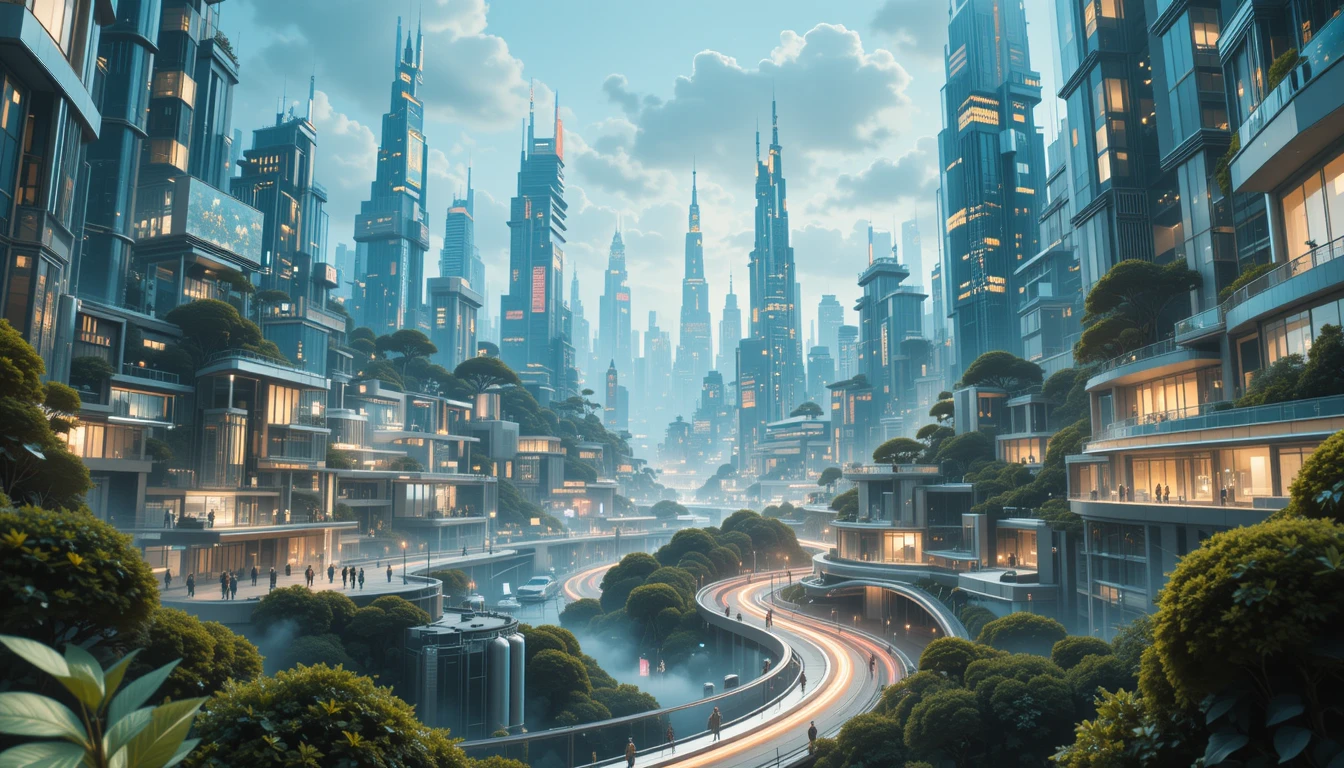
At the heart of this revolution are advanced AI techniques that mimic, remix, and innovate using large datasets. Rather than simply replicating existing art, these systems have been trained to go beyond mere imitation. They absorb the essence of styles and techniques and then generate something entirely new. For example, tools like DALL-E 3 by OpenAI, Midjourney, and Imagen 3 by Google are at the forefront of this evolution. These platforms can turn a text prompt like “a futuristic city carved out of glass and moss” into a work of art with astounding detail and innovation.
This transformation is akin to what happened when photography first emerged – while initially seen as a mechanical exercise, it eventually revolutionized visual art. Today, generative AI tools push the boundaries further by not just capturing reality but by creating alternative realities. They can form data sculptures where visual elements dynamically change based on user interaction or even generate images that supplement live auctions at prominent houses like Christie’s, as reported by Christie’s.
🚀 AI in Music Creation
The same creative dynamism is evident in the music industry. AI platforms such as Music FX DJ, AIA, and Hook illustrate how music generation has leaped from simple background scores to sophisticated, full-fledged compositions. Imagine turning a text prompt into a complete musical arrangement that can evoke deep emotions or set an ambiance for a film score. This evolution is not just a technical triumph but a cultural one – echoing the impact of digital synthesizers in the 1980s. A notable instance of AI’s progress in music was when an AI-generated remix captured a style reminiscent of iconic bands like The Beatles, a testament to how algorithms can challenge and amplify human creativity.
🧠 Augmenting Writing and Design
Writers and designers have also witnessed a seismic shift in their craft. Tools like Adobe Sensei and Figma AI empower creatives to break old molds. They provide AI-generated plots, dialogues, and even design elements, which help overcome traditional writer’s block and streamline design workflows. When faced with the challenge of conceptualizing a novel or a groundbreaking campaign, creative professionals can now rely on these tools to generate unique ideas, much like brainstorming sessions with a highly knowledgeable colleague.
This integration of AI in writing is not about replacing human nuance but about elevating it. Consider the case of experimental novels – works co-authored with AI that still demand refined human editing to capture emotional depth and narrative resonance. It reminds one of how early computers were initially met with skepticism yet later became indispensable in tasks requiring high computational speed, as argued by The New York Times.
✨ The Rise of Prompt Engineers and Curators
In this brave new world, traditional roles are evolving. The concept of a “prompt engineer” has emerged – a professional whose expertise lies in crafting the ideal input to coax creative output from an AI engine. This new role is not so dissimilar from that of a conductor guiding an orchestra. Prompt engineers and digital curators are the unsung heroes behind stunning AI-generated visuals and narratives, blending technical savvy with an innate sense for artistic composition. Organizations report that as many as 65% of enterprises began harnessing generative AI by early 2024, indicating that the role of the creative professional is transitioning rather than diminishing, according to insights from MIT Technology Review.
The creative landscape is being democratized, meaning that anyone with a vision and access to these advanced tools can produce art that rivals traditional masterpieces. This shift turns the spotlight on the human element of creativity – the emotional, cognitive, and contextual interpretations only humans bring to the table. The AI acts as a catalyst, accelerating the creation process while deepening the layers of human input.
🚀 ## 2. Benefits and Opportunities Offered by Generative AI
Generative AI presents a fertile landscape of benefits and opportunities that stretch far beyond the allure of technological novelty. As creative workflows evolve, these tools are not just enhancing productivity – they are rewriting what it means to be creative in a digital age. The melding of human imagination with artificial processing power creates an efficiency dividend that offers both time savings and the freedom to explore more ambitious creative endeavors.
🎯 Enhanced Productivity and Experimentation
One of the primary benefits of generative AI is its profound impact on productivity. In creative disciplines where ideation can be a painstaking process, AI tools can generate multiple alternatives in seconds. This rapid iteration allows creatives to experiment without the fear of failure because each experiment generates new ideas for further refinement. A recent study showed that AI assistance can boost creative productivity by up to 26%, a figure echoed by reports in Forbes and Bloomberg. As professionals save countless hours on routine tasks, they can focus on the value-adding aspects of their work – the deep, nuanced creativity that truly resonates with audiences.
Beyond mere time savings, generative AI enhances creative experimentation. With tools that can instantly produce various creative outputs from a single text prompt, the risk of creative stagnation diminishes dramatically. This environment fosters innovation where each artistic iteration feeds into a larger cycle of ideation and refinement. The process is reminiscent of rapid prototyping in engineering, where each failed attempt provides critical insights that guide the next design iteration. High-profile examples, such as the AI-powered remixing tools that enabled DJs to create personalized soundtracks on the fly, have shown that the incorporation of AI in music production is not about supplanting human talent but rather igniting a new era of creative possibility. Detailed explorations of how AI is reshaping productivity in creative fields can be found in pieces by Wired.
🧠 Democratizing Creativity: A New Era of Inclusive Art
Generative AI is fundamentally democratizing creativity. Historically, high-end creative outputs were the preserve of those with access to expensive tools and extensive training. With AI-powered platforms accessible via the cloud, a wider range of individuals can now produce high-quality art, music, and literature without needing years of specialized training. This evolution mirrors the advent of digital photography and editing tools in the early 2000s, which expanded the creative possibilities for millions.
For instance, when platforms like DALL-E 3 or Midjourney offer intuitive interfaces, even amateurs can try their hand at creating something visually compelling. Similarly, AI models that generate music or text empower a new wave of creators who bring fresh perspectives to traditional fields. This democratization opens doors for underrepresented voices, connecting to broader trends in cultural and creative diversity as noted by The Verge.
The democratization is not just beneficial for individual creators; it also has economic implications. As creativity becomes more accessible, the market for creative products expands, leading to economic growth. New job roles and avenues for income emerge, driven by the need for creative direction, ethical oversight, and technical expertise in the realm of AI-driven art. This inclusivity not only nurtures innovation but also equips communities with the tools they need to thrive in a digital economy.
✨ Personalized Outputs: The Harmony of Human and Algorithm
Perhaps the most engaging benefit of generative AI lies in its capacity to produce personalized outputs that reflect both the algorithmic efficiency of machines and the emotional depth of human creativity. Imagine a scenario where an artist collaborates with an AI to paint a portrait that not only captures the physical likeness of the subject but also integrates subtle elements that echo the subject’s personality and life story. Such a synthesis – where every brushstroke is fine-tuned to reflect individual nuance – is a tangible testament to the potential of AI-human partnerships.
Companies like Adobe Sensei and Figma AI are at the forefront of offering these capabilities. They enable designers to create marketing materials that are not only visually stunning but also tailored to the nuances of their target demographics. The personalization benefits extend to the music industry, where tools that generate tracks from text inputs – such as those provided by platforms like AIA – are already transforming how we experience audio content. A deeper analysis of how personalization through AI is shaping consumer experiences can be explored in research reported by McKinsey.
🚀 Economic Growth and Expanding Job Roles
While there is often an initial fear that automation might displace jobs, generative AI is, in fact, creating new roles and driving economic growth. The narrative is shifting from one of job loss to one of transformation, where the nature of work is dynamically evolving. According to predictions by the World Economic Forum, more roles will be created in the coming years than displaced. This shift is most evident in the emergence of positions such as prompt engineers, digital curators, AI ethicists, and creative strategy consultants.
The role of a prompt engineer, for example, is a clear demonstration of this shift. This professional is responsible for crafting the optimal inputs to yield the desired creative outcomes from an AI system. These roles require mastery over both creative thinking and technical knowledge. As the sectors of art and design become further intertwined with digital tools, these new positions will continue to evolve, similar to the rise of digital marketing experts in the early days of social media. This increasing convergence of technology and creativity is well-documented by sources like BBC News.
Furthermore, the economic ramifications are palpable in how AI-assisted creativity opens avenues for entirely new art forms. Think of experimental novels co-authored with AI, multimedia installations that integrate real-time data, and interactive exhibits that blend physical and digital realities. This explosion of creative output does more than just enrich the cultural landscape – it injects vitality into local economies, supports emerging businesses, and catalyzes a broader innovation ecosystem. Insights on the economic impact of creative AI applications have been highlighted in reports by Harvard Business Review.
🧠 Experimental Art Forms: Opening New Frontiers
The marriage of AI and creativity is fostering the birth of novel art forms that push the boundaries of what we traditionally consider art. Platforms now empower artists to create data sculptures, interactive digital installations, and even dynamic auction visuals that change in real-time. This convergence of art and technology is creating an entirely new category of creative expression, where the process of creation is as much a part of the artwork as the final product. For example, data sculptures using algorithmically generated graphics not only visualize information but evoke emotional responses that spark dialogue and debate, much like Artforum has observed in contemporary art circles.
In the literary domain, experimental novels and multimedia installations are being produced by a fusion of human text and AI-generated narratives. These works challenge conventional narrative structures by integrating interactive elements, user-generated content, and real-time data inputs that evolve as the story unfolds. Such experimentation is transforming literature into an immersive experience, blurring the line between author and audience. Detailed explorations of how AI is revolutionizing literature can be found at Smithsonian Magazine.
Moreover, the emphasis on personalization ensures that the final artistic product is never a one-size-fits-all creation. Instead, it reflects a unique collaboration where machine precision meets human emotion. This synthesis is raising new questions about the definition of originality and the nature of creative authorship. As artists continue to harness these new tools, the conversation about what constitutes art is evolving, prompting a reexamination of longstanding cultural values and legal frameworks – an issue currently under active debate in academic circles and reported by ScienceDirect.
💡 ## 3. Navigating Challenges and Ethical Considerations
Even as generative AI ushers in a new era of creativity, it does not come without its share of challenges and ethical dilemmas. The conversation around AI in creative industries is not solely about the bright prospects of innovation – it is also about addressing the inherent risks, biases, and regulatory hurdles that accompany rapid technological advancement. As AI systems become increasingly sophisticated and capable of outputs that rival human craftsmanship, society is compelled to grapple with the implications on ethics, copyright, and authenticity.
🎯 The Transformation of Employment: Evolving Roles Rather Than Job Loss
One of the most compelling debates is whether AI displaces human jobs or transforms them. Historical trends in technology suggest that new tools historically create more opportunities than they render obsolete. In the context of generative AI, this transformation is evident – while routine tasks may become automated, the nuanced roles of human creativity are evolving. The emergence of roles such as prompt engineers, AI curators, and digital strategists underscores how AI is not replacing creative minds but augmenting them. These positions require a blend of artistic intuition and technological savvy, positioning skilled individuals as invaluable mediators between human vision and machine-generated output.
This transformation mirrors past technological shifts. For instance, the rise of digital photography did not eliminate the need for photographers but instead required them to master new techniques and digital tools, a transition documented by National Geographic. In a similar vein, the integration of AI into the creative process is expanding job roles rather than contracting the creative workforce. The key is continuous learning and adaptation – attributes that have always defined the most resilient professionals.
🚀 Addressing Algorithmic Bias: The Need for Diverse Data and Oversight
While the promise of efficiency and innovation is enticing, it is crucial to confront the issue of algorithmic bias head-on. AI models learn from existing data, and if that data is skewed in any way, then the outputs may inadvertently perpetuate those biases. For example, if an AI tool is trained predominantly on Western art, its creative expressions might lack the diversity and richness found in global cultures, leading to a narrow representation that does not truly reflect the full spectrum of human creativity.
Addressing this issue requires a dual approach: first, curating diverse and representative datasets is paramount; and second, ensuring strong human oversight is essential. This dual strategy has been advocated by experts featured in journals such as ACM and discussed extensively in ethical guidelines proposed by institutions like the Institute of Electrical and Electronics Engineers (IEEE). These institutions emphasize the importance of transparency in data sourcing and the continuous evaluation of AI outputs to mitigate any inadvertent biases.
Moreover, the responsibility of addressing bias does not rest solely on developers. Creative professionals must be vigilant and critical, serving as ethical gatekeepers who ensure that AI-generated content upholds values of inclusivity and fairness. Balancing algorithmic efficiency with human judgment is the cornerstone of responsible AI development, as explored by thought leaders in MIT Sloan Management Review.
✨ Copyright and Authorship: Redefining Originality in the Age of AI
Perhaps one of the most contentious issues in the generative AI landscape is copyright. Because current laws require human authorship for copyright claims, the question looms large: who owns a piece of work predominantly generated by AI? Copyright laws in regions like the United States stipulate that significant human creative input is necessary to claim authorship. Therefore, if an artwork or piece of writing is produced entirely by AI, it often fails to qualify for copyright protections.
This legal and ethical conundrum brings into focus the need for ongoing discussions and potential revisions in intellectual property law as the boundaries between human and machine-made art continue to blur. Several experts have called for updated frameworks that account for the collaborative nature of AI-generated works, a debate that is regularly featured in publications such as Lawfare Blog and WIPO (World Intellectual Property Organization). The crux of the matter rests on the definition of “meaningful human creative input” – a concept that must evolve alongside technological advances.
This issue is not merely academic. As AI tools produce outputs that rival human quality, the legal system must grapple with standards of authenticity and originality. It is not enough to simply reject AI-generated art on legal grounds; there must be a concerted effort to understand and integrate these new forms of creativity into existing legal frameworks. Balancing innovation with protection is a delicate dance, and the outcome will have profound implications for artists and industries alike.
🧠 Balancing Creativity and Ethics: A New Paradigm for Responsible AI
As generative AI continues to push creative boundaries, its integration requires a roadmap for responsible innovation. The focus must be as much on ethical oversight as it is on technological capability. The concept of a humanity premium – the idea that genuine human touch, emotion, and context remain invaluable despite AI’s prowess – is central to this discourse. This premium reinforces the notion that AI should serve as a co-pilot, one that augments rather than replaces human effort. Responsible AI development calls for transparency, ethical guidelines, and continuous adaptation of policies as the technology evolves.
For example, educational initiatives and industry standards are emerging to train creative professionals in the responsible use of AI. Workshops and certifications in prompt engineering and digital ethics are beginning to appear, underscoring the importance of combining technical acumen with ethical sensitivity. These initiatives are supported by institutions such as IBM and industry think tanks like PwC, which advocate for a balanced approach to technology adoption in creative fields.
Furthermore, ethical considerations extend beyond the domain of bias and transparency. They encompass broader societal impacts, including the potential for AI to inadvertently propagate misinformation or misrepresent cultural identities. As artists and technologists navigate this brave new world, they are compelled to internalize principles of accountability, ensuring that the tools they use do not undermine the integrity of creative expression. Discussions about the impact of AI on society are regularly featured in reputable sources such as Brookings Institution and RAND Corporation, highlighting the societal imperative for ethical AI practices.
In navigating these challenges, the overarching objective remains clear: to harness AI’s transformative power while steadfastly guarding against its pitfalls. Whether through rigorous data curation, revisiting outdated copyright laws, or fostering new interdisciplinary roles – the path forward must be paved with both innovation and responsibility.
The landscape of generative AI in the creative industry is a fascinating blend of technological innovation, artistic flair, and ethical complexity. It is reshaping how images are created, music is composed, and texts are written – a powerful testament to the role of technology in amplifying human creativity. Yet, as this technology matures, its greatest promise lies in the way it transforms roles, democratizes art, and opens new economic and cultural frontiers.
Generative AI, with tools like DALL-E 3, Midjourney, Adobe Sensei, and Figma AI, is redefining what it means to be a creative professional. These advancements ensure that artists, musicians, and writers can push past conventional boundaries and co-create with technology in ways that enhance their work. The value of human ingenuity, expressed through the art of prompt engineering and digital curating, has never been more prominent. Each creative endeavor becomes a collaborative dance between algorithmic precision and human passion, where the resulting synergy resonates far deeper than either could achieve alone.
However, as creative processes become intricately intertwined with AI, providing both unprecedented opportunities and disputable challenges, the new paradigm requires constant vigilance. Ethical oversight, the rectification of algorithmic biases, and the redefinition of legal parameters surrounding copyright are more critical than ever. The path forward must include robust discussions among technologists, legal experts, and creative professionals to ensure that as the boundaries of art expand, the core values of authenticity, human interpretation, and ethical creativity remain preserved.
Looking ahead to 2025 and beyond, the evolution of generative AI in the creative industries promises to deliver not just improved productivity and efficiency, but also entirely new art forms that we have yet to fully imagine. As businesses, educational institutions, and cultural organizations increasingly integrate these technologies, there is a symphony of collaboration unfolding between humans and machines. Everyone from established creative veterans to emerging digital aficionados has a role to play in this transformative journey, contributing to a vibrant ecosystem where AI is not the antagonist but the co-creator.
Through continuous innovation, strategic adaptation, and conscious oversight, generative AI is set to sculpt a future that balances the breathtaking opportunities of technological evolution with the timeless, innate qualities of human creativity. This journey, as dynamic as it is awe-inspiring, is just beginning – and its impact will be felt across creative domains, industries, and everyday cultural expressions.
The bustling intersection of art, technology, and ethics is now a canvas on which the future of creativity is being painted. As creative industries gain access to personalized, data-driven tools and democratized platforms, the entire ecosystem is set to flourish. With generative AI steering the ship alongside human ingenuity, we are witnessing the birth of a creative renaissance that redefines the limits of expression, challenges our perceptions of originality, and sets the stage for a future where technology and art coexist in a profoundly symbiotic relationship.
The promise of generative AI is vast – from crafting intricate visual masterpieces to composing immersive musical soundscapes, from authoring avant-garde literature to designing futuristic user interfaces. Each innovation is a step forward, not just in terms of productivity and economic growth, but also in unlocking new frontiers of creative possibility. As experts at Rokito.Ai continue to explore these convergences of art and technology, they champion a vision where AI is a thoughtful, ethical, and empowering companion on the journey of creativity.
In summary, the reimagining of creative processes by generative AI is an evolution that brings with it a host of benefits and challenges alike. Its ability to amplify human creativity, democratize art, and foster new economic opportunities is set to transform industries. However, the ethical considerations of bias, copyright dilemmas, and the imperative for responsible innovation require a careful, balanced approach. And as humanity adapts to and embraces these tools, the true beauty of our creative spirit remains irreplaceable – illuminated even more brilliantly by the intelligent spark of AI.
By embracing these advanced creative tools with a dual focus on innovation and responsibility, the future of artistic expression promises to be dynamic, inclusive, and rich with possibilities. The journey into this new era of AI-powered creativity is a call to action for educators, technologists, policymakers, and creative professionals alike, inviting them to shape a future where the transformative potential of AI is harnessed not to replace human endeavor, but to augment and elevate the creative process.
Ultimately, as this fusion of human emotion and machine logic deepens, generative AI is poised not only to redefine the mechanics of art creation but also to reshape our understanding of what it means to be creative in a technology-driven age. The new canvas is vast, the tools are innovative, and the ethical challenges are as significant as the opportunities – a reality that calls for informed dialogue, ongoing education, and collective responsibility. As society moves forward, the creative revolution led by AI offers both a beacon of inspiration and a reminder that the true art lies in the interplay between intelligent innovation and the irreplaceable spark of human imagination.