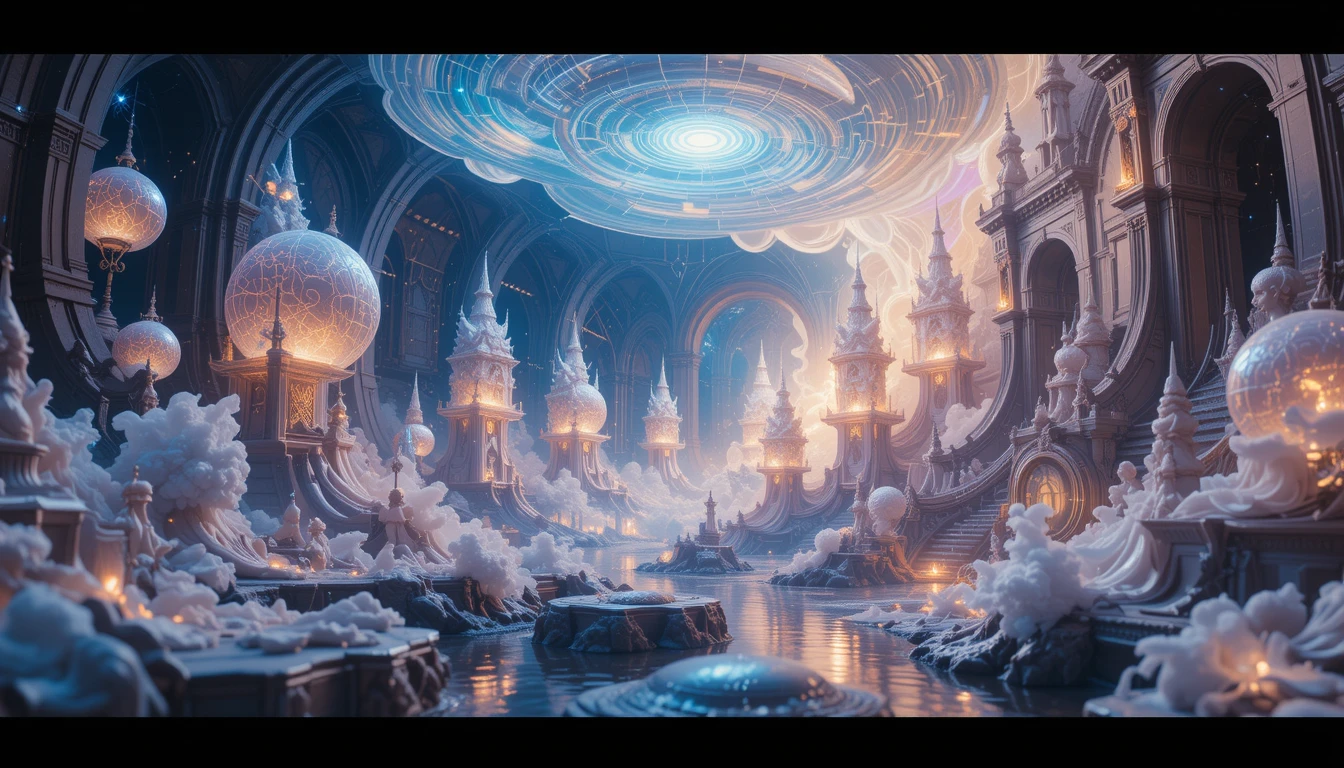
How AI Is Redefining Art, Music, and Human Creativity
AI Transforming Art, Music, and Creativity
Explore how AI is revolutionizing art, music, and human creativity through innovative techniques, applications, and a fresh look at ethical debates.
This article presents a deep exploration of the groundbreaking influence of artificial intelligence on creative fields. The discussion spans from AI art innovations and music compositions to the evolving collaboration between human creativity and digital intelligence. With a focus on history, innovative techniques, and ethical questions, the article offers insights into how AI transforms artistic expression and challenges conventional ideas of creativity.
🎨 Evolution and Techniques of AI Art
The evolution of AI art is much like watching a painter gradually break free from the traditional brush and palette only to embrace an entirely new spectrum of possibility—a digital renaissance powered by algorithms and neural networks. One might imagine the journey as a progressive symphony of innovation, where every note—be it early experiments or cutting-edge techniques—builds on the last to create an ever-more complex and beautiful melody. Here, AI art doesn’t merely replace traditional creation; it transforms the creative process in ways both subtle and revolutionary.
The Humble Beginnings and 1960s Visionaries
In the 1960s, early experiments in computer-generated imagery were akin to the first tentative sketches of a master art form just beginning to whisper its secret potential. Researchers and pioneers in the field laid the groundwork for what would eventually culminate in an entirely new form of creative expression. These early digital canvases, though primitive by today’s standards, established a foundation that would allow computers—not as tools, but as collaborators—to interpret and create visual art. For an in-depth look at how computing and art first intersected, see insights from History.com on early computer experiments.
Deep Dream and the Rise of Revolutionary Algorithms
A seminal moment in modern AI art came with the advent of Google’s Deep Dream algorithm. This technology turned image recognition on its head by generating dreamlike, almost surreal images through the enhancement of patterns it detected within existing visuals. The outcome was nothing short of mesmerizing—a cascade of interconnected shapes and colors that challenged both artificial and human boundaries of perception. Deep Dream marked a turning point, demonstrating that machines could not only replicate well-known artistic styles but could also transcend them by unlocking new realms of creative expression. For more technical details on convolutional neural networks and their impact, explore articles on ScienceDirect.
Fusion of Styles and Technology
Modern AI art has rapidly migrated from these early experiments to embrace an eclectic fusion of styles and technology. Algorithms such as those powering platforms like DeepArt and Runway ML can take the essence of a renowned painting—a Van Gogh, for instance—and superimpose it onto an entirely different image, creating a completely new artistic interpretation. These tools leverage deep learning techniques to blend content and context in visually arresting ways. Imagine a digital canvas where the past and present of art converge; users can combine archival aesthetics with contemporary imagery, exploring new compositions without the constraints of traditional mediums. Detailed explorations of these digital techniques are available at Wired’s exploration of deep learning in art and Forbes on the future of art.
Moreover, artists and programmers continue to push the envelope by training AI models on vast datasets representing centuries of artistry. This training not only encapsulates historical styles but also allows the synthesis of new aesthetics that owe as much to learned patterns as to spontaneous algorithmic strokes—blurring the lines between human intention and machine-derived innovation. The result is a vibrant landscape where creativity is democratized and continuously redefined, inspiring newcomers and experts alike to see art in an entirely novel light.
🚀 Innovations in Sculpture, Music, and Creative Writing
While AI art is often celebrated for its revolutionary digital paintings and interactive installations, its narrative is impossibly broader—extending into three-dimensional sculpture, evocative music compositions, and even the profound world of literature. This rapid expansion across creative domains is reminiscent of a polymathic renaissance, where discipline-specific boundaries dissolve into an interconnected web of technological and artistic ingenuity.
AI in Three-Dimensional Art and Digital Sculpture
Sculpture—traditionally a realm of tactile materials and physical form—has been profoundly transformed by AI. Artists like Ben Snell are now using generative adversarial networks (GANs) to explore the uncharted territory of digital sculpture. GANs operate through a competitive dance between two neural networks: one that generates images or structures, and another that critiques these creations, ensuring the final output is both compelling and coherent. In many ways, this technological interplay mimics the human creative process of iterative refinement—except at a pace and complexity that far exceed what is conventionally achievable. Interested readers might gain a deeper understanding of GANs and their art applications at MIT’s technology review and The Verge’s coverage on AI-driven sculpting.
These digital sculptures are not just limited to screen displays; they are transforming the boundaries of physical art design. Artists are using AI to generate intricate architectures and highly detailed forms that would be difficult—if not impossible—to conceive through manual techniques alone. Consider how contemporary designs in modern architecture, as highlighted in projects featured by ArchDaily, are increasingly incorporating algorithmic innovation to fulfill aesthetic and structural demands.
AI-Powered Music Composition and Performance
In the realm of music, artificial intelligence has become an invaluable co-composer, capable of generating entire symphonies based on vast databases of existing music across genres. Platforms like OpenAI’s MuseNet spotlight the immense possibilities when AI is used to compose music that straddles the classical, jazz, pop, and even experimental sectors. MuseNet’s complex networks process intricate musical structures, harmonies, and rhythms. Think of a scenario where an orchestra plays a piece that seamlessly transitions between Beethoven and contemporary electronic beats—a true amalgamation of histories and styles. More details about MuseNet and AI in music are available at OpenAI’s research page and Rolling Stone’s analysis of AI music trends.
Furthermore, AI-powered tools like Amper Music provide musicians and content creators with the means to produce custom tracks on demand. Whether it’s the background score for a cinematic masterpiece or an upbeat jingle for a commercial campaign, these tools offer flexibility and experimentation that push the traditional boundaries of composition. The capacity to specify parameters such as tempo, mood, and instrumentation underscores the technology’s potential to serve not just as an artistic collaborator, but also as a personalized creative assistant. For a glimpse into how digital assistants are transforming music production, visit Billboard’s tech features.
Literary and Poetic Creations by AI
Equally groundbreaking is AI’s venture into literature and poetry. Text-generating models, especially those from the GPT family, have redefined narrative construction. They can produce prose and poetry that is coherent, meaningful, and sometimes even profoundly moving. In a notable collaboration, the novel “One the Road” emerged from a melding of human insight and machine-generated text, showcasing the dynamic potential of AI in the literary world. This collaboration sparked discussions in literary circles worldwide, challenging the conventional boundaries of authorship and creativity. For more on how AI is shaping modern literature, sources like The Guardian’s cultural analysis and The New York Review of Books provide critical perspectives.
Additionally, projects like Google Arts and Culture’s Poem Portraits invite users to generate personalized poems in real time. By simply entering a word or phrase, the embedded AI can craft verses that encapsulate mood, tone, and emotion in a rapid, innovative display of literate magic. This approach not only makes poetry accessible to everyday users but also transforms the traditional relationship between the audience and the text—making the creative process both interactive and deeply personal. For further reading on AI in literature, explore discussions on Literary Hub and analysis on Vox’s cultural insights.
These interdisciplinary innovations are emblematic of a broader movement whereby technology and creativity converge, producing art forms that are as diverse as they are revolutionary. As AI continues to evolve, so too does its capacity to enrich human creativity—expanding the toolkit available to artists, musicians, and writers in unprecedented ways.
🔮 Future Directions and Ethical Considerations in AI Creativity
Peering into the future of AI creativity raises a potent mix of excitement, debate, and ethical inquiry—a veritable crucible in which the future of art will be forged. As artificial intelligence further permeates realms of creative expression, the conversation is not only about what is possible but also about what ought to be. This discussion touches the very core of creativity itself, questioning the authenticity of AI-generated works and the evolving role of human artists in a digitally driven era.
Debating the Authenticity of AI-Generated Art
At its heart, one of the central debates in AI art is whether creations conceived by an algorithm can truly possess the emotional depth, intentionality, and narrative resonance that characterizes human-made art. Critics often argue that while AI can mimic styles with impressive fidelity—echoing the gestures of generations past—it lacks the experiential essence that imbues artworks with soulful meaning. For example, although deep learning algorithms produce visually stunning outputs, questions remain about whether the resulting art can evoke the lived experiences and idiosyncrasies of a human artist. Those curious about the philosophical debates surrounding AI and creativity often turn to Stanford Encyclopedia of Philosophy and Aeon for nuanced discourse.
Some view AI-generated art as nothing more than a sophisticated remix of pre-existing patterns—a tool that amplifies human creativity rather than replaces it. Others assert that the algorithm’s ability to learn, adapt, and generate novel combinations makes it a legitimate collaborator or even a co-creator in the truest sense. This debate is critical not only for academic circles but also for collectors, museums, and the broader cultural landscape as the lines between human originality and machine output become increasingly blurred. Detailed explorations of these controversies are available in pieces from The Art Newspaper and Artsy.
The Democratization of Creative Processes
A remarkable and arguably transformative aspect of AI art lies in its capacity to democratize creativity. AI-powered tools are leveling the artistic playing field, enabling individuals without formal training or technical prowess to experiment with, and ultimately contribute to, the creative process. Platforms that offer access to image synthesis, music composition, and literary generation are opening the door to a previously inaccessible realm, making art creation more inclusive than ever before. With these tools, the spectrum of creativity broadens, welcoming voices from all walks of life to engage in artistic innovation. For context on this democratizing effect, BBC’s technology features and NPR’s discussions on technology and society offer compelling insights.
This shift towards inclusion is not without its challenges. As AI tools make artistic creation more accessible, questions arise about intellectual property rights, the valuation of art, and the potential for over-saturation of the art market. However, these challenges may ultimately lead to a renaissance in creative thinking. The ability to harness AI in art is fostering an environment where innovation is unbound, and fresh perspectives are encouraged. The collaborative environment is reminiscent of open-source movements in technology, resembling trends discussed in OpenSource.com and TechCrunch.
Ethical and Philosophical Challenges Ahead
The rapid, and sometimes unchecked, advancement in AI-driven creativity brings with it a suite of ethical and philosophical challenges. As AI algorithms become increasingly autonomous, stakeholders in the art world, as well as society at large, must grapple with questions about authenticity, ownership, and the inherent value of creative work. For example, if a machine generates a piece of art that is later sold in a high-end gallery, who is the true creator—the designer of the algorithm, the programmer who curated the training data, or the algorithm itself? Such questions are at the forefront of debates that span technology, law, and art. Thought-provoking pieces on this topic can be found at MIT Technology Review and The Economist.
Not only do these discussions cover legalities, but they also provoke deeper philosophical reflections. One central question is: Does creativity require a soul, or is it simply a series of patterns synthesized in novel ways? Critics of AI art contend that without a human heart pulsing behind every brushstroke or note, the resulting work may be devoid of a vital, intangible quality. Conversely, proponents argue that these new forms emerge as extensions of collective human creativity, enriched—and not diminished—by machine assistance. Perspectives on these ethical challenges stretch across academic treatises and opinion pieces alike, inviting readers to explore themes discussed on platforms like Smithsonian Magazine.
In addition to authenticity, there is also the pressing matter of sustainability and responsibility. As AI continues to develop and permeate creative fields, ensuring that the technology is used responsibly—without bias and with an eye towards social impact—is paramount. Developers, artists, and policymakers must work in concert to ensure that emerging technologies do not inadvertently reinforce existing inequalities or stifle genuine creativity. This dialogue is mirrored in the technology justice conversations on The Verge and Bloomberg’s tech ethics section.
The Road Ahead: Intersecting Realities and Boundless Potential
The expansive horizon of AI creativity is not a monochrome canvas; it is a vibrant tapestry weaving together diverse artistic practices and philosophical debates. As AI algorithms continue to learn and evolve, they promise not only to redefine what art is today but also to fundamentally alter how creativity is experienced, valued, and distributed. Here, technology intersects with human insight to catalyze innovations that transcend conventional boundaries, prompting a reevaluation of artistry itself.
A critical element of this creative reimagining is the synergy between human intuition and machine precision. In practice, AI supplements human creativity by offering unparalleled access to patterns, styles, and techniques that span cultural and historical vantage points. This convergence often results in art that is simultaneously rooted in tradition and blazing new trails. The collaborative process encourages artists to reinterpret their own creative paradigms, harnessing the predictive power of AI to uncover hidden connections and untold narratives. For an expansive look at these convergences, resources such as Culture Trip and TED Talks on creativity offer inspiring perspectives.
The transformative potential of AI is evident across all fields of creative endeavor—from the tactile intricacies of sculpture to the immersive soundscapes of music and the reflective depths of literature. This democratization of creativity promotes a world where every voice, regardless of background, has the opportunity to contribute to the cultural dialogue through art. With continuous advancements in technology and more accessible AI-powered tools, the barriers that once confined artistic expression are rapidly dissolving.
Yet, amid the boundless potential lies a call for mindful implementation. As these AI-driven processes gain traction, it is critical for innovators, policymakers, and cultural gatekeepers to engage in open, rigorous discourse regarding the ethical, cultural, and economic implications of this digital revolution. The path forward is not without its challenges. As history shows—with technological breakthroughs from the advent of photography to digital media—the art world must negotiate the delicate balance between innovation and tradition. Sources like National Geographic and New Scientist offer thoughtful commentary on how such revolutions shape our cultural landscapes.
Looking ahead, the fusion of human and machine creativity invites a future where art is not merely consumed but actively co-created. With every new algorithm and creative tool introduced, the definition of artistic expression shifts ever so subtly, challenging earlier notions of originality and authenticity. While there will always be debates over the value and soul of AI art, the undeniable fact remains that this new creative frontier is accelerating the pace at which artistic ideas develop and evolve. The conversations on platforms like BBC Culture continue to illuminate the expanding role of technology in art while guiding the ethical frameworks that must evolve alongside these innovations.
In Summary
The journey of AI art—from early computer-generated sketches to the complex orchestration of digital sculptures, music, and literature—illustrates how technology can serve as a powerful ally in the creative process. AI algorithms, once confined to basic pattern recognition, now possess the ability to reimagine and reconstruct the very fabric of artistic expression. Through innovative platforms, collaborations, and debates over authenticity and ethics, the landscape of creativity is being redefined for a new era.
Every stroke of digital ingenuity, every harmonious tune, and every carefully constructed verse is part of a broader narrative: one that celebrates the endless potential of human-AI collaboration. As society continues to harness the power of AI, it is imperative to consider both the technical marvels and the ethical dilemmas inherent in this transformation. By engaging in transparent discourse and adopting inclusive technologies, the cultural and creative industries can ensure that AI art remains a collaborative extension of human ingenuity rather than a replacement.
In this evolving ecosystem, art is no longer a solitary pursuit but a shared adventure—where the boundaries between human and machine, tradition and innovation, intent and output, are continuously redrawn. The revolution in AI art is a call to break free from preconceived limits and embrace a future where creativity is as boundless as the technology that fuels it.
The narrative of AI in art is still being written. As artists, technologists, and cultural commentators forge new paths together, the dialogue will only grow richer and more layered—reflecting deeper questions about authenticity, democracy, and creative synergy. This is not just a transformation in technique; it is a reimagining of the very role art plays in society.
For those seeking to delve deeper into this dynamic intersection of creativity and technology, extensive resources such as Springer and publications from JSTOR offer robust academic perspectives while industry outlets like Fast Company and Inc.com provide ongoing coverage of technological advancements in art and culture.
In embracing this journey, the future of AI creativity appears not as a replacement of human artistry but as its boldest extension—enriching the cultural dialogue and expanding the horizons of what art can be. The transformative power of AI is a testament to human vision and resilience—a beacon of innovation lighting the way toward a more inclusive and expansive creative future.