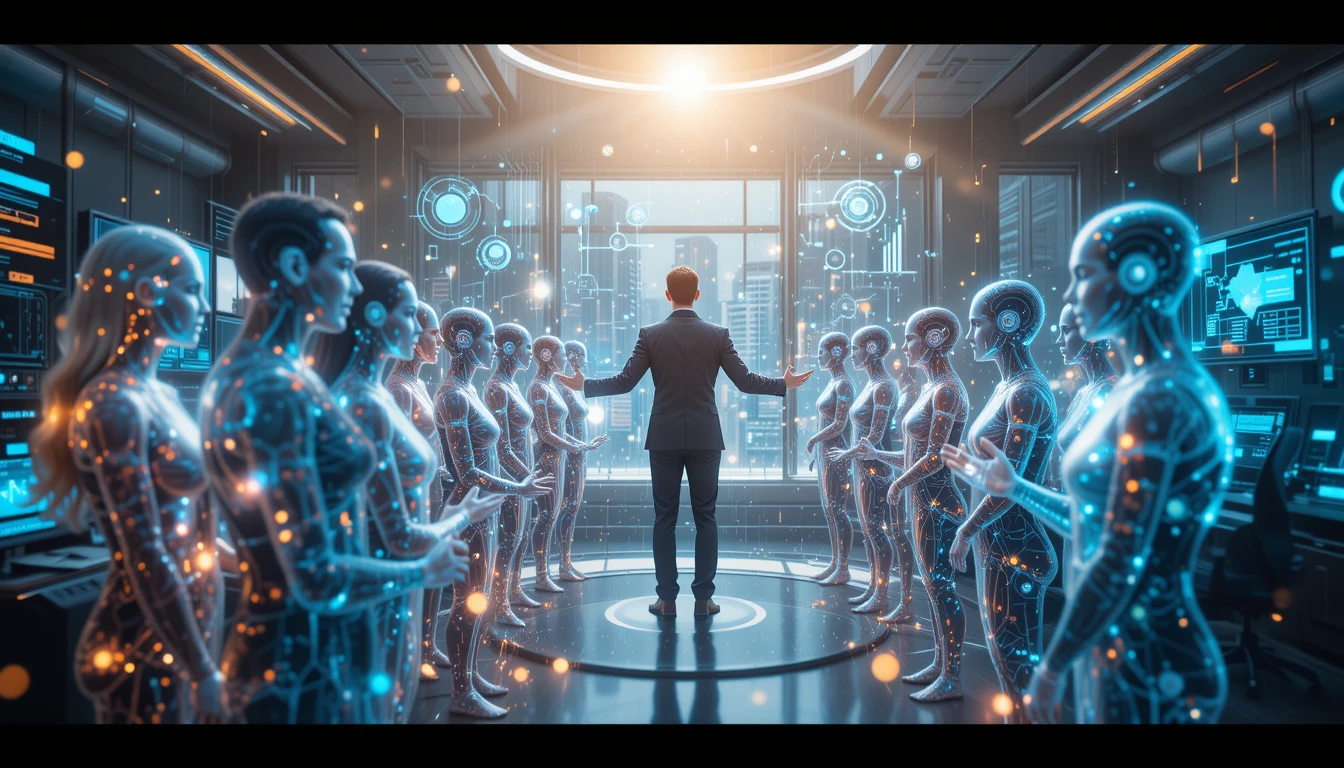
Boost Coaching Revenue with AI Lead Gen & Booking Agents
Accelerate Coaching Growth with AI Lead Gen & Booking Automation
Discover how AI agents can transform lead generation and appointment scheduling to boost recurring revenue for coaching businesses.
This article explores how integrating AI lead generation and appointment setting agents into a coaching business can drive recurring revenue and enhance efficiency. By leveraging no-code platforms like Make.com, coaching professionals can automate routine tasks—freeing up time to focus on delivering high-quality coaching. The article delves into the capabilities of these agents, practical implementation steps, and strategies for continuous improvement.
🎯 ## AI-Driven Lead Generation for Coaching Success
Imagine a high-energy coaching session where every potential client is already warmed up before the conversation even begins. Rather than drowning in a sea of emails and lost follow-up opportunities, visionary coaches now harness AI-driven lead generation tools to automate initial outreach and engage visitors in a strategic, personalized manner. At the forefront is the concept of integrating no-code platforms like Make.com into the business ecosystem, enabling the creation of sophisticated AI agents without requiring deep technical know-how. This isn’t just about technology for technology’s sake – it’s about reclaiming time, reducing human error, and focusing on delivering transformative coaching experiences.
These AI agents, far from being rudimentary chatbots, serve as the first point of contact for interested website visitors. They are programmed to ask in-depth qualifying questions, mirroring the coach’s unique brand voice and values. Whether the coach’s personality is direct and results-focused or empathetic and supportive, the AI agent adjusts its tone accordingly. This alignment not only builds trust but also ensures that the potential client feels understood right from the first interaction. In a digital landscape where immediacy is king, having an AI agent that can provide instant answers backed by a wealth of integrated content from your website, FAQs, and client testimonials is pivotal. The strategy is built on a simple premise – less time spent on initial filter and more time nurturing high-quality leads that are genuinely aligned with the coaching philosophy.
🧠 How AI Agents Engage and Qualify Leads
The secret sauce in modern AI-driven outreach lies in its ability to qualify leads through conversational interactions. For instance, as visitors land on the website, the AI agent springs into action, engaging them with pre-programmed questions that echo the coach’s expertise. These questions might delve into the visitor’s current challenges, aspirations, or readiness to commit to a coaching journey. In this way, the AI system functions as a silent yet efficient interviewer, gathering essential data points before passing on a warm, well-informed lead to the human coach. This system is supported by external research from McKinsey Digital and Harvard Business Review, both of which stress the importance of personalized customer engagement in boosting business outcomes.
Furthermore, the deeper the integration with website elements and marketing channels, the smoother the lead nurturing process. Consider a scenario where a website visitor downloads a free eBook on overcoming procrastination. Instead of relegating them to a generic email sequence, the AI agent triggers a tailored follow-up series that offers additional tips and gently nudges the lead towards a scheduled consultation. Such personalized engagement is not only efficient but also effective at guiding potential leads from mere interest to full conversion. Refer to insights from Forbes Tech Council to understand how the integration of AI in customer interactions can boost conversion rates dramatically.
🚀 Integrating AI With Marketing and Website Elements
Connecting AI agents to various digital assets is a game changer for any coaching business. With platforms like Mailchimp or HubSpot taking care of the downstream follow-up sequences, the lead generation process becomes a continuous cycle of engagement. When AI agents are fully integrated, they not only capture the visitor’s data but also draw insights that can be used to further optimize the messaging and follow-up strategies.
Results from leading business studies, such as those highlighted by Gartner, reveal that personalized automated nurturing can lead to an increase in conversion rates by as much as 50 percent in some cases. The beauty of this approach is in its ability to reduce the friction typically associated with manual outreach. Instead of the coach manually sifting through dozens of emails, the AI agent methodically guides each lead through a customized journey that aligns perfectly with the coaching service’s brand identity.
Bullet points can be very effective when used sparingly. Here are some tangible benefits seen from integrating AI-driven lead generation in coaching:
- Consistent Engagement: AI ensures potential clients receive prompt responses irrespective of when they visit the website.
- Customized Outreach: Tailored follow-up sequences resonate more deeply with visitors, boosting conversion likelihood.
- Efficiency Gains: Automation reduces manual labor, allowing coaches to focus on what they do best – coaching.
Moreover, these AI agents are not static; they learn from each interaction to improve the relevance and accuracy of responses. For example, if a prospective client shows hesitation or asks for clarification on membership benefits, the system can quickly access a deep repository of client testimonials and case studies to provide a well-informed answer. The underlying technology here is sophisticated, backed by ongoing artificial intelligence research from institutions like IBM Research and DeepMind. This makes the ongoing integration and improvement of AI systems a continually evolving art form that reflects not only technical proficiency but a deep understanding of human psychology and brand communication.
📝 Personalized Follow-Up Strategies
One of the standout features of AI-driven lead generation is its ability to customize follow-up experiences. When a lead interacts with the AI agent, data is collected that can trigger personalized email sequences, ensuring that the potential member receives content that speaks directly to their unique situation. For instance, if a fitness coaching website visitor expresses interest in weight loss management, the AI system might automatically trigger a series of tailored emails that offer advice, success stories, and ultimately an invitation for a free consultation. The seamless linkage between the initial engagement and a strategically curated follow-up campaign creates a pathway from initial curiosity to meaningful customer relationships.
This concept is supported by case studies available on Digital Doughnut, where personalized follow-ups have been shown to lead to higher engagement and retention rates. Additionally, insights from Marketing Land confirm that tailored messaging is essential in driving online conversions. AI systems thus help close the loop between marketing efforts and sales results by ensuring that the messaging remains consistent, empathetic, and information-rich.
In summary, the integration of AI in lead generation for coaching success is transformative. It replaces outdated, manual processes with a dynamic, automated system capable of handling hundreds of individual interactions with precision and empathy. This technology not only frees up valuable time for coaches but also ensures that each potential client feels recognized and supported from the moment they land on the website.
🚀 ## Streamlining Appointment Scheduling with AI
The next frontier in AI automation for coaching is the realm of appointment scheduling. In many coaching businesses, manually scheduling appointments is a major bottleneck that can deter prospective clients and reduce overall conversion rates. Endless email threads, back-and-forth calls, and calendar conflicts can sap valuable time from both the coach and the prospective client. With AI appointment setting agents, the process becomes as seamless as clicking a button on a smartphone, effectively eliminating friction and ensuring that every prospect is guided into the booking funnel with precision and ease.
🧠 Overcoming the Challenges of Manual Appointment Setting
Manual processes are inherently prone to error and inefficiency. A coach juggling multiple calendars and time zones can quickly find themselves overwhelmed with scheduling tasks – a challenge amplified by the growing demands of a thriving coaching business. AI appointment setting agents tackle this issue head-on by integrating directly with popular calendar platforms such as Google Calendar and Outlook. The automation provides a real-time snapshot of availability, allowing potential clients to select a time slot that works best for them without the need for manual intervention.
By automating this process, AI agents not only reduce scheduling errors but also minimize no-shows. Automated scheduling systems can send timely reminders – whether a day or an hour before the scheduled appointment – ensuring that leads remain engaged and committed. Insights from Inc. Magazine highlight that reducing manual communication and actively managing reminders can substantially decrease missed appointments, contributing to a higher overall booking rate.
🎯 Enhancing User Experience Through Intelligent Booking Systems
A profound benefit of AI-driven appointment scheduling is its ability to reflect the coach’s unique service style. Unlike generic booking platforms that feel impersonal, an intelligent booking system designed for a coaching business can be tailored to include various appointment types, each aligned with the business’s tone and brand. For example, a coach might offer introductory consultations, intensive coaching sessions, or follow-up check-ins, and each of these appointment types can have specific time slots, durations, and automated pre-appointment messages.
Consider the user experience: a potential client visits the coaching website and, impressed by the efficient AI-driven chat interaction, is seamlessly directed to book an appointment. The booking interface, which has been fully synchronized with the coach’s calendar via integrations with platforms like Zapier or IFTTT, displays real-time availability. This ensures that once a time slot is chosen, it is immediately added to the calendar, eliminating the risk of double bookings and the frustration of rescheduling. This seamless integration, reminiscent of the streamlined experiences highlighted in TechRepublic, not only enhances team productivity but also reinforces the coach’s commitment to efficiency and client convenience.
📝 Reducing Friction and No-Shows
A recurring challenge in appointment scheduling is the phenomenon of no-shows. Even when the booking process is smooth, potential clients may simply forget about their appointments, resulting in wasted time slots and a loss of momentum. AI appointment agents combat this by sending automated reminders and follow-up messages well in advance of the scheduled appointment. These reminders are not generic; they are adapted based on the type of appointment, ensuring that the client receives specific instructions or value propositions that reaffirm their desire to proceed.
Research from Business Insider and Statista supports the assertion that proactive scheduling strategies become a significant competitive advantage, with businesses reporting a noticeable decrease in no-show rates after implementing such systems. Automated reminders, combined with efficient calendar integrations, bring a level of professionalism and reliability that manual methods struggle to match. Although these systems are automated, they retain a human touch by ensuring that the messaging feels personal and aligned with the coach’s unique brand voice.
🧠 Seamless Calendar Integrations and Custom Scheduling Protocols
Behind the scenes, the true power of AI scheduling agents lies in their robust integrations with existing digital calendars. By syncing with major platforms like Google Calendar and Outlook, these agents ensure that every booking is accurately recorded and that scheduling conflicts are virtually eliminated. This synchronization is accomplished by real-time data updates that maintain accurate records across all platforms, leveraging API services and third-party synchronization tools like those highlighted by Microsoft Developer.
Furthermore, these intelligent systems allow coaches to maintain a high level of customization in their appointment scheduling. Coaches can set parameters to define available time slots for different types of sessions, ensuring that their schedule reflects their service style appropriately. The AI agent, once again, steps into the role of a sophisticated concierge by customizing responses, coordinating with client preferences, and even triggering calendar invites without manual intervention. This level of automation, as endorsed by VentureBeat, is revolutionizing the way service-based industries manage their bookings, ensuring that customer interactions remain frictionless and geared towards conversion.
In a nutshell, streamlining appointment scheduling with AI transforms what used to be a cumbersome, error-prone process into a strategic asset. The benefits of reduced friction, minimized no-shows, and a highly personalized booking experience coalesce into an operational model that not only saves time but also leaves a lasting impression on potential clients.
🧠 ## Implementing and Optimizing AI Automation in Coaching
Deploying AI automation in coaching involves a thoughtful balance between technology and the human touch. Implementing effective AI systems for lead generation and appointment scheduling requires a clear framework, transparency in client interactions, and continuous performance monitoring to ensure long-term success. This is not about replacing human expertise but rather augmenting it to free coaches to focus on what they do best – delivering unparalleled coaching experiences.
🚀 Step-by-Step Framework for Successful Deployment
The implementation process begins with a detailed strategic plan, ideally mapped out in comprehensive PDF blueprints that outline every step of the AI integration. These blueprints, available through resources such as Strategy+Business, provide a roadmap that coaches can follow to ensure a smooth deployment of their AI agents. The core steps include:
- Defining the business objectives and identifying the critical pain points in the current lead generation and appointment scheduling workflow.
- Selecting the appropriate no-code platform – like Make.com – to build and deploy intelligent agents without requiring extensive programming expertise.
- Mapping out customer journeys to determine where AI can intervene to offer maximum value.
- Integrating the AI agents with existing systems, including website elements, CRM platforms, and calendar applications.
- Launching a pilot phase to assess system performance and gather initial data on interactions and conversion rates.
- Iteratively refining the AI agents based on feedback and performance metrics gathered during the pilot.
This structured approach, supported by insights from MIT Press Journals, ensures that AI is not seen as an intrusive technology but rather as a natural extension of the coach’s operational capabilities.
🧠 Key Considerations for Transparency and Brand Authenticity
Transparency is paramount when introducing AI-driven tools into client-facing processes. In the early stages, it is crucial to clearly communicate to clients that a virtual assistant is handling initial outreach or appointment scheduling. This honest approach fosters trust and prevents misunderstandings. For example, a brief disclaimer on the website or during the initial interaction can set the right expectations, ensuring that clients know they are interacting with an AI-enhanced system designed to streamline their experience. Insights from Consumer Reports underline the importance of transparency, noting that clear communication about AI involvement leads to better customer satisfaction.
Maintaining brand authenticity also means that the AI system must adapt its language and tone to mirror the coach’s unique style. Whether the emphasis is on motivational intensity or empathetic understanding, the AI agent must consistently reflect that in its interactions. Advanced natural language processing models, as discussed in research by Nature, play a critical role in achieving this nuanced communication. The overall result is an AI system that augments the coach’s service delivery without compromising on the personal touch that clients value.
🚀 Continuous Improvement and Performance Monitoring
Implementing AI is not a one-time setup; it is a continuous process of learning and adaptation. Once the AI systems are live, coaches should routinely analyze interactions, measure conversion rates, and identify areas where the technology might require fine-tuning. Data-driven decision making forms the cornerstone of this optimization process. Utilizing tools like Google Analytics and Hotjar can help capture detailed user interaction insights, providing a feedback loop that continuously improves the AI performance.
For example, if data shows that a particular set of qualifying questions is not resonating with visitors, these can be updated promptly. Similarly, if appointment reminders are more effective when sent a day in advance rather than an hour before the scheduled call, these protocols can be adjusted accordingly. Consider the iterative improvement approach as championed by TED Talks, where continuous refinement is key to long-term success. This strategy not only ensures that the system remains effective but also underscores the coach’s commitment to excellence and innovation.
🧠 Balancing Automation With the Human Touch
While the allure of full automation is strong, it is essential to strike a balance between technology and human engagement. The most successful coaching businesses today leverage AI to handle the repetitive, time-consuming tasks – such as initial lead screening and appointment scheduling – while reserving personalized interactions and deep coaching for human experts. This collaboration between AI and human insight creates a sustainable model that is both scalable and deeply responsive to client needs.
For example, an AI agent might handle the initial lead qualification by gathering the necessary background information on a prospective client. Once sufficient data is collected, a human coach can step in for a more personalized consultation that thoroughly addresses the client’s specific challenges. This synergy is reminiscent of the model promoted by Inc. Magazine, where technology enhances human capabilities rather than replacing them.
🚀 Scaling the Business Through Systematic Lead Management
As a coaching business grows, the volume of leads and appointments naturally expands. Here, automation emerges as a significant enabler of scalability. By systematically managing leads through AI, coaches can focus on refining their core service offerings rather than getting bogged down by administrative tasks. A centralized AI system can segment leads, assign them to tailored follow-up sequences, and even prioritize high-value prospects for immediate human intervention – ensuring that every potential client receives the appropriate level of attention.
The systematic approach to scaling is supported by industry research from McKinsey and MIT Sloan Management Review, which detail how automation is not just a cost-saving measure but a strategic tool in creating sustainable growth trajectories. Coaches leveraging such systems have reported a boost in recurring memberships and enhanced client satisfaction, as both the technology and human experts work in tandem to deliver a seamless experience.
📝 Wrap-Up: Building a Future-Ready Coaching Business With AI
In conclusion, the integration of AI in coaching through lead generation and appointment scheduling is transformative. With platforms like Make.com and a strategic framework for implementation, coaches can unburden themselves from administrative drudgery and focus entirely on delivering impactful coaching sessions. The AI systems discussed here help streamline interactions, personalize follow-ups, and ensure that every step of the client journey is optimized for conversion.
By carefully balancing transparency, continuous improvement, and the personal touch crucial to coaching, AI becomes a powerful ally in modern business strategy. The result is a coaching business that is not only more efficient but also more capable of scaling sustainably while preserving the integrity of client relationships—ensuring that growth translates directly into lasting client impact.
For those seeking a competitive edge and a scalable blueprint for success, the detailed PDF plans and blueprints that accompany this strategic approach offer an invaluable guide. These resources, available from trusted partners and industry leaders such as TechRadar, provide a step-by-step roadmap to implementing and optimizing these AI agents.
As this landscape continues to evolve, the blend of AI efficiency and human expertise promises to redefine how coaching businesses interact with leads and clients on a global scale. With AI automation, what once was a labor-intensive process transforms into a strategic engine of growth, leading to enhanced productivity, fewer scheduling errors, and ultimately, a richer, more impactful coaching experience.
Drawing from insights shared across platforms like Bloomberg and Business Insider, the future of coaching is digital, dynamic, and decisively data-driven. The integration of AI into every stage of the client journey—from the initial spark of interest to the final appointment confirmation—illustrates the transformative potential of technology in liberating human creativity and strengthening client commitment.
In the final analysis, AI-driven lead generation and appointment scheduling agents are not mere trends but strategic investments in the future of coaching. They embody the principle that technology, when leveraged correctly, serves to amplify the strengths of human ingenuity, freeing up passionate coaches to focus on what they love: empowering clients to reach their highest potential. With the smart integration of digital tools, the future of coaching is poised not only for growth but for innovation that profoundly reshapes how successes are built and sustained in the modern era.
For more in-depth exploration into this groundbreaking strategy, the extensive PDF resources and blueprints available now in the show notes are highly recommended. This is the time for coaches to embrace a future where AI drives efficiency without compromising human connection—a future where every lead is nurtured, every appointment is seamless, and every client journey is a step toward lasting impact.
By implementing these strategies today, coaching professionals can position themselves at the forefront of innovation, setting new standards for what is achievable in the service industry. With AI as an integral part of the operational blueprint, the journey toward recurring revenue, enhanced client satisfaction, and scalable business success has never been clearer.