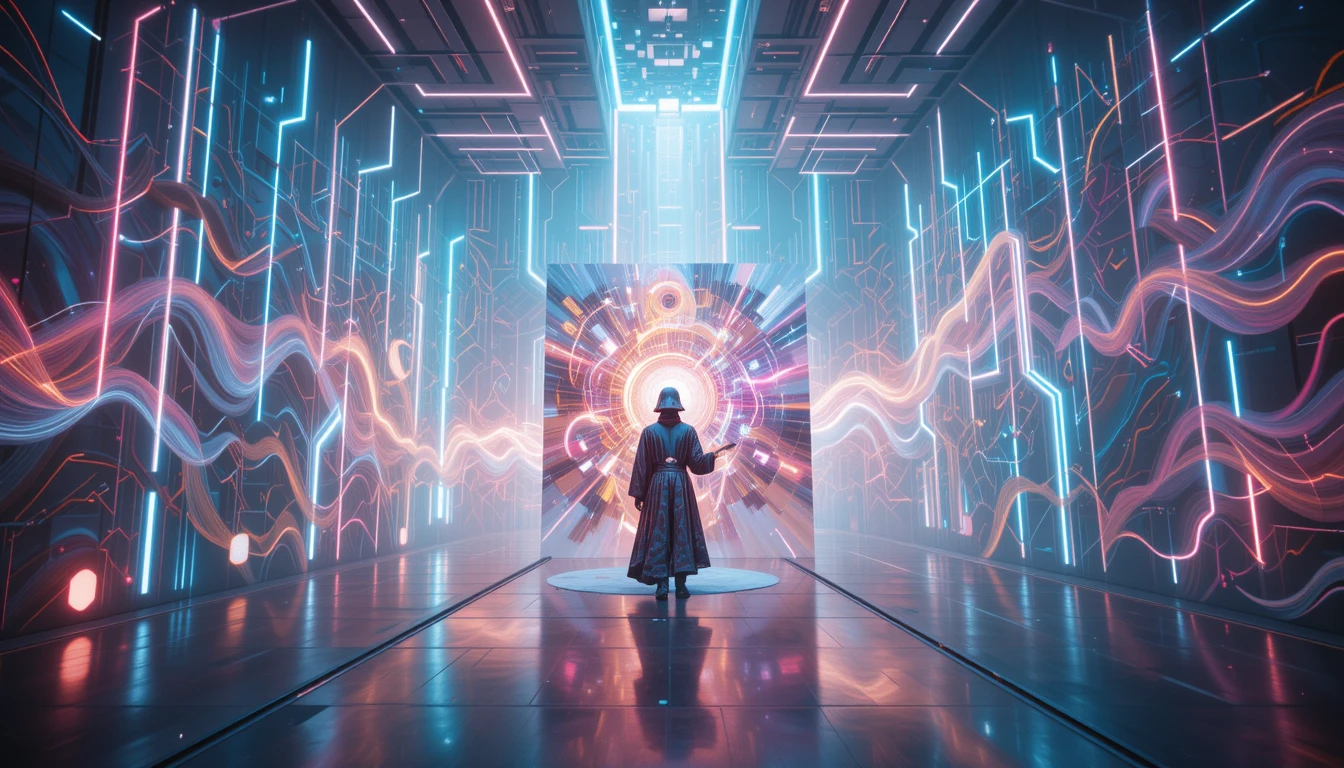
Can AI Truly Replace Human Creativity in Art and Music
AI and Human Creativity in Art and Music: Exploring the Future
Discover how innovative AI tools redefine art and music while emphasizing the irreplaceable essence of human creativity. Dive in now.
This article deep dives into the evolving landscape of creative technology where AI tools, such as ChatGPT, Midjourney, and Sora, enhance art and music production. It explores how rapid innovation in digital creativity contrasts with the unique, relatable experiences that only human creators can offer. The discussion weighs the efficiency of AI against the soulful, emotional depth in human expression, inviting readers to consider the future of collaboration in creative industries.
1. AI’s Impact on Creative Production
Imagine a painter handed a brush that can, almost instantly, capture the colors of a sunset and replicate the finesse of a seasoned artist’s hand. This is the dynamic change AI is bringing to creative fields – a rapid transformation reminiscent of the industrial revolution, but for art. The fusion of computation and creativity is fueling a seismic shift in how creative output is produced, evaluated, and experienced. With tools like ChatGPT for text, Midjourney for visuals, and Sora for video, the creative process is undergoing both a quantitative and qualitative transformation. As the creative landscape speeds up, professionals and hobbyists alike are prompted to explore the edges where human imagination meets machine precision.
In this brave new world, AI tools are not just adding a dash of efficiency; they are rewriting the very rules of creative production. These tools have been designed and refined to extract patterns, styles, and structures from massive datasets, allowing them to generate outputs that resemble human work exceedingly well. For example, Midjourney is praised for producing intricate visuals from a few descriptive words, while Sora elevates these images into short, coherent video narratives. The capabilities of these AI systems continue to amaze, evolving at a pace that is both exhilarating and, at times, bewildering. The transformation is not isolated; it’s woven into the fabric of creative industries, which includes music, video production, literature, and even game design.
Consider the viral phenomenon of the AI Drake song, which fooled millions by mimicking the iconic rapper’s style. The incident underscores a critical question facing creative industries today: Can AI truly replicate, or even surpass, the rich tapestry of human emotion and experience? The impressive technical proficiency of AI systems stems from their ability to analyze enormous datasets – everything from the stylistic elements in famous artworks to the subtle inflections in vocal performances. Yet, despite these technical marvels, a significant debate lingers: What happens to creative authenticity when a machine can generate art that is stylistically indistinguishable from human work?
Exploring these debates requires delving deeper into the nature of AI accomplishments. On one level, AI tools operate at breakneck speeds. They produce art in seconds that might take a human days or even months – a promising prospect for industries where time is money. For instance, filmmakers can use Sora to quickly storyboard scenes, thereby streamlining the pre-production process. Novelists and screenwriters can use ChatGPT as a brainstorming partner to overcome creative blocks. In music production, an AI-composed beat might serve as a foundational layer, upon which human producers build a richer, more textured arrangement. This seamless interplay of AI output and human refinement is reshaping how creative projects are conceived and developed.
The impact of these technologies is also evident when examining technical proficiency. AI systems are built using deep learning networks that enable them to detect nuances and patterns that are frequently invisible to the human eye. They can mimic brushstrokes, narrative arcs, and even the cadence of musical compositions. However, this technical excellence is achieved by processing and analyzing predetermined data, raising questions about originality. The technical marvels are, after all, redistributions of human-created content, advanced by algorithms designed to find the optimum statistical connections. This leads to intriguing parallels with other fields where technology creates efficiencies but still relies heavily on human input and context.
It is essential to recognize that while AI can generate works with admirable precision, they are also built on the legacy of human creativity. Every stunning visual render or sophisticated musical score produced by these systems is seeded in prior human achievements. According to MIT Technology Review, many of these tools are considered extensions of human creativity, providing frameworks for augmentation, not replacement. Similarly, Wired notes that the relationship between human and machine in creative endeavors is becoming increasingly symbiotic.
The ripple effects of these advancements extend beyond the realm of art and into how society perceives creativity. AI’s competency in producing art quickly and efficiently has led some critics to question if human dedication to craft may eventually be overshadowed by algorithmic capabilities. Yet, critics and enthusiasts alike acknowledge that there remains an ineffable quality in human-generated art that current AI, no matter how advanced, has yet to replicate seamlessly. This quality, often described in terms of genuine emotional connection and lived experience, adds another layer of debate about the true value of creativity. Understanding these dynamics is critical as we forge into an era where AI tools are not only employed to create art but also to define what art is.
The rapid evolution of AI in creative production presents both opportunities and challenges. On one hand, the technology democratizes creative processes – making tools accessible to those without traditional training yet capable of producing impressive work. On the other hand, it forces a reexamination of established norms and expectations within creative industries. As highlighted by Harvard Business Review, embracing AI in creative fields is as much about adapting to new technological capabilities as it is about redefining what it means to be creative. The debate is reminiscent of the early days of photography when painters questioned if the medium would devalue painting. Instead, photography eventually became a complementary art form, coexisting with traditional techniques and, in some cases, enhancing them.
Furthermore, AI’s ability to generate art that is technically flawless pushes the boundaries of innovation. The algorithms behind these tools not only mimic human creativity but also explore uncharted territories by recombining elements in ways that may not be immediately obvious to a human mind. This exploration can lead to entirely new artistic styles and methodologies that challenge longstanding paradigms. For instance, imagine a symphony composed partly by an AI – where patterns derived from centuries of classical music intertwine with spontaneous digital improvisations – resulting in a hybrid that redefines musical genres. Although this idea may seem futuristic, the seeds of such innovations are already planted today, as seen in the work of AI composers and digital artists.
Yet, as the technical achievements of AI come under scrutiny, it is crucial to acknowledge that these systems are not autonomous creators. They are tools designed to extend human capabilities, able to manifest what their users already envisage but at speeds and in quantities unimaginable in the past. The rapid pace of these technological advancements forces a recalibration of what constitutes creativity itself. Today, the conversation centers on whether AI-generated works are truly original art or simply elaborate mimics of human creativity. The answer remains multifaceted, highlighting the complex dance between machine precision and human sentiment.
In summation, AI’s transformative impact on creative production is a testament to human innovation, as much as it is a challenge to long-standing ideas about art and originality. The rapid technical evolution, access to vast creative databases, and the sheer speed of production herald a future where the role of AI is deeply intertwined with human ingenuity. For further insights into this fascinating intersection of technology and art, readers might explore articles on modern AI trends at Forbes or delve into recent debates on AI creativity at The New York Times.
2. The Inimitable Human Element in Art
At the heart of every masterpiece lies an ineffable human touch – a subtle interplay of emotion, history, and authenticity that no machine can fully grasp. Human creativity draws from a reservoir of lived experience, emotional depth, and personal history, elements that are difficult, if not impossible, to quantify. When an artist paints a portrait or sustains a melody, there is a transformative journey catalyzed by personal experiences, cultural contexts, and intangible feelings. As The Verge explains, intrinsic creativity stems from a deeply personal connection to the subject matter, something a machine cannot replicate.
Human creativity is defined by its explorative nature – the willingness to experiment, take risks, and embrace imperfection. Every brush stroke, every musical note, and every carefully chosen word carries the weight of an artist’s emotional landscape. For example, when examining art history, it is evident that some of the most celebrated works of art owe their enduring appeal to the vulnerability and authenticity of the creators. These works resonate because they are imbued with subtleties that arise from real-life triumphs, failures, and complexities. The creative outputs of AI, as revolutionary as they might be, still rely on predefined patterns and statistical models, lacking the rich tapestry of human context.
An essential discussion point here is the limitation of AI in replicating human nuance. While AI can analyze billions of data points and emulate recognizable patterns in art, literature, or music, it is inherently devoid of emotion. Consider the phenomenon of the AI-generated Drake song that captivated millions – technically impressive though it was, the song did not embody the personal narrative or emotional journey that a genuine human creative process might encapsulate. As noted by Scientific American, even if an AI can mimic style and structure flawlessly, it does not internalize the struggles, passions, or inspirations that shape authentic human expression.
The human element in creative work is vital not only because of its inherent quality, but also due to the way audiences perceive art. There exists a subconscious awareness among consumers that art carries the essence of its creator. This perceived authenticity evokes stronger emotional connections – something that is challenging for an AI output to instill, no matter how technically perfect it may be. Even when an AI-produced image or composition stands out for its visual or auditory excellence, it often leaves audiences with an inexplicable sense of detachment. This phenomenon is supported by research discussed in BBC articles where audiences reported that while AI works could be engaging, the emotional authenticity was perceived as less profound compared to human creations.
Defining human creativity goes beyond the ability to generate a product – it encapsulates story, emotion, and the layered histories that underpin an artist’s work. Human creativity is the outcome of countless micro-decisions shaped by a lifetime of experiences. An author who writes a novel, for instance, is not just stringing words together but is weaving together personal narrative threads, cultural influences, and existential musings. The result is an artwork that carries the indelible mark of its creator’s journey – a characteristic that current AI cannot simulate. As Fast Company underscores, the allure of human artistry lies in its ability to reflect lived reality in ways that resonate deeply with shared human experiences.
Additionally, the creative process for human artists is often messy, unpredictable, and spontaneous. That is where innovation thrives – within the unexpected twists that arise from a moment of genuine vulnerability or epiphany. AI, by contrast, operates within the confines of its programming. It can simulate spontaneity via randomization algorithms, but the result is a calculated reproduction of randomness rather than true unpredictability. This limitation is significant because art is not solely about aesthetic perfection; it is about conveying a narrative in which imperfections often tell a more compelling story. The human capacity to transcend technical boundaries and craft unique narratives is what distinguishes true artistry.
Audiences are also keenly aware of the difference between algorithmically derived art and creations borne out of life experiences. There have been several studies – cited by thought leaders in creative industries – that illustrate how even when AI-generated pieces are indistinguishable in quality from human-made art, the reception among audiences is subtly different. Viewers tend to value the storied background and emotional complexity behind human art. This phenomenon is akin to savoring a handmade meal versus a perfectly assembled dish in a fast-food chain; the ingredients are similar, but the heart and soul are missing. The human element imbues art with an authenticity that resonates in unique and indelible ways.
As society moves towards embracing AI in creative production, it is crucial to appreciate that human creativity cannot be replaced by technology. AI may function as a sophisticated and efficient tool, but it remains a reflection of human data, lacking the intrinsic passion and empathy that define the creative spirit. This debate, far from being a zero-sum affair, calls for a nuanced appreciation of the distinctive qualities that human artists bring to the table. Embracing this understanding is key to navigating a future where both AI and humans coexist in the creative ecosystem – a sentiment echoed by The Economist in recent discussions on the future of art and technology.
Enhancing the audience’s understanding of this topic involves acknowledging the role of context in art appreciation. Art is not just a visual or auditory artifact; it is an experience shaped by social, historical, and emotional contexts. When viewers engage with a piece of art, they are not merely observing colors or listening to melodies – but are connecting with the creator’s inner world. This connection is something that AI, by its very design, struggles to offer. Consequently, even the most sophisticated AI-generated outputs may fall short of evoking the same level of emotional engagement and personal connection that human-generated art can achieve.
To crystallize these ideas: human creativity is an amalgam of emotion, experience, and unpredictability – a synergy that AI, no matter how advanced, remains incapable of truly replicating. It is this distinct quality that continues to define the value of art in the modern age. For further reading on human creativity and its evolution amidst technological advancements, visit insightful resources like The New York Times and Forbes.
3. Collaboration Between AI and Human Creators
In the brave new era of creative production, the narrative is no longer about AI versus humans – it is about collaboration. The future of creative partnerships is poised to leverage the best of both worlds. AI systems, equipped with immense speed, precision, and analytical power, serve as effective co-pilots for human creators who bring emotion, intuition, and an unrivaled sense of context to every project. This blend of machine efficiency with human ingenuity heralds an era of productive symbiosis.
Picture a world where a director uses Sora as a high-speed sketchpad to visualize cinematic sequences in minutes rather than days. A novelist, grappling with the notorious blank page, finds that ChatGPT offers myriad plot twists and character arcs that spark bursts of inspiration. In the world of music, producers begin with an AI-generated beat – a technical marvel of algorithmic prowess – and layer live instruments and vocals to create a composition that is both novel and deeply personal. These instances highlight how creative collaboration between AI and humans works not as a competition, but as a powerful partnership more akin to a well-synchronized dance.
This collaboration is redefining workflow dynamics across creative industries. By automating repetitive or technically challenging aspects of creation, AI frees up human creators to focus on what they do best: innovating, experimenting, and telling compelling stories. For example, use cases in film and television production show that AI tools are speeding up the pre-production phase. Storyboards can be generated within minutes, enabling directors and producers to iterate ideas rapidly before embarking on the elaborate process of filming. Such practical applications not only shorten production cycles but also open up new avenues for artistic risk-taking and experimentation. Industry leaders noted by Fast Company have shared insights on how these partnerships are scaling creativity while maximizing resource efficiency.
There is also a significant economic dimension to this collaboration. By harnessing AI, creative professionals can reduce costs associated with time-intensive manual processes. A designer who uses AI to generate initial concepts can allocate more time to refining ideas and adding a personal touch, thereby elevating the final product’s value. Similarly, musicians can experiment with different arrangements on an AI-generated base – as reported by BBC – before deciding on the final mix. This not only optimizes the creative process but also democratizes artistic engagement, empowering individuals with limited resources to produce high-quality work.
Collaboration between human creators and AI is not limited to conventional artistic practices – it has also ignited innovation in emerging fields such as gaming, digital art installations, and interactive storytelling. Today, game developers are integrating AI tools to generate dynamic narratives that adapt to a player’s emotional responses. Such interactive experiences, which merge algorithmic storytelling with human-directed game design, suggest a promising future where creative output is both highly personalized and endlessly innovative. For a deeper analysis of this convergence of technology and creativity, read discussions on arXiv and Scientific American.
Another fascinating aspect of this collaboration is the continuous feedback loop it creates between human creativity and machine learning. Every time a human artist refines or modifies an AI-generated draft, that correction can feed back into the system, enabling future outputs to be even more aligned with human tastes and nuanced sensibilities. Although current AI systems do not learn in real time from individual creative sessions, innovative design practices and future updates could pave the way for more adaptive tools that better reflect the evolving nature of human art. This iterative process is akin to a conversation – a give-and-take that pushes boundaries and leads to unexpected creative breakthroughs.
The next step in maximizing creative potential involves embracing these tools as partners in innovation rather than viewing them as mere shortcuts. The most successful creative projects of the future will emerge from environments where AI tools are seamlessly integrated into the brainstorming and production process. Creative workshops and think tanks are already experimenting with this integration, using AI to propose multiple perspectives on a single idea, which human creators then refine and contextualize. Such methods foster a culture where experimentation is not confined by the limitations of traditional methodologies, but rather expanded by the rapid prototyping capabilities of AI. For more on how collaborative environments can drive innovative breakthroughs, refer to studies by Harvard Business Review.
Critically, while AI tools can offer a vast repertoire of technical skills and generate an array of outputs at scale, they are most effective when used as augmentative instruments – tools that extend a creative professional’s natural abilities. The artistry lies in tailoring these outputs to meet specific visions and emotional criteria that only a human can conceive. For instance, when a DJ layers live vocals over an AI-generated music loop, the final performance becomes a unique fusion of mechanical precision and spontaneous human passion. This interplay is comparable to how a master chef blends a pre-made sauce with freshly prepared ingredients to create an unforgettable dish. The recipe might include some elements that are technically replicable, but the final taste is unique because of the personal touch and intuitive adjustments made during the cooking process.
Moreover, AI’s role as a collaborative partner is continuously being refined. As creative professionals gain familiarity with these new tools, they are developing more sophisticated methods to harness their power while mitigating their limitations. Training sessions, workshops, and online courses are increasingly focused on teaching creators how to leverage AI effectively. These educational efforts, supported by platforms like The New York Times and Forbes, emphasize that the true innovation comes from a synergy where human vision directs AI’s capabilities towards truly novel outcomes. The result is an enriched creative process that is more agile, diverse, and innovative.
To encapsulate the vision of future creative partnerships, it is helpful to look at the broader trends shaping technology and society. The convergence of AI and human creativity is not merely a niche concept but a critical component of the coming creative revolution. As digital transformation accelerates across all industries, artistic domains are no exception. The emphasis is shifting from competition between man and machine to a collaborative model that leverages the strengths of both. For further insights into this evolving relationship, readers may find illuminating perspectives on platforms such as The New York Times and Forbes.
In practice, the benefits of integrating AI in creative collaborations can be distilled into several key areas:
- Enhanced Productivity: AI automates repetitive tasks, allowing artists to focus on ideation and refinement.
- Expanded Creative Horizons: The tools provide suggestions and variations that can spark new, innovative ideas.
- Cost Efficiency: Reduced production times and lower costs create more opportunities for independent and emerging creators.
- Data-Driven Insights: AI can analyze audience preferences and trends, helping creators better align their work with market needs.
Drawing on diverse examples, it becomes clear that the future holds immense promise for fruitful collaborations. When AI-generated frameworks are enriched with human creativity, the results can be revolutionary – transforming not only the creative process but also the final outputs themselves into works that resonate on multiple levels.
For those who remain skeptical about the potential of this collaboration, it is important to note that every technological wave initially faces resistance. Just as the advent of the camera disrupted traditional painting, today’s AI tools challenge conventional creative paradigms. However, history has repeatedly shown that integration rather than isolation typically leads to progress. The risks lie not in the adoption of AI, but in the reluctance to evolve and incorporate new methodologies. This idea is well articulated in research from The Economist, which argues that innovation is accelerated when technology complements human expertise, rather than competes with it.
To maximize creative potential in this evolving landscape, several strategies can be adopted:
Embracing AI as a Catalyst for Innovation
- Recognize AI as a powerful tool rather than a competitor.
- Experiment boldly with AI-generated ideas to trigger creative breakthroughs.
- Integrate AI outputs with human judgment to create truly original works.
- Understand that AI’s technical proficiency can enhance, but not replace, human nuance.
The Importance of Continuous Learning and Adaptation
- Regular training on the latest AI tools ensures creators remain competitive.
- Collaborative workshops foster an environment of creative exchange and adaptation.
- Emphasize the human experience and narrative context when refining AI-generated outputs.
- Leverage online platforms and courses to stay updated with evolving AI capabilities, as suggested by Harvard Business Review.
Building an Ecosystem of Integrated Tools
- Use AI as part of a broader suite of creative tools that include human-centric design elements.
- Foster partnerships between technologists and artists to co-create tools tailored for creative professions.
- Invest in platforms that combine AI analytics with traditional creative processes.
- Encourage industry forums that promote dialogue and shared learning between AI developers and creative professionals, much like discussions documented on Fast Company.
The integration of AI and human creativity is not a fleeting trend but a profound shift that is already rewriting the rules of art, design, and storytelling. The blend of technical precision with the unpredictable, emotional depth of human creators is setting the stage for an unprecedented era in creative production – one where limitations are continually being reimagined and new genres are born out of collaborative exploration. As these alliances mature, the creative outputs are likely to be richer, more diverse, and deeply resonant.
This powerful synergy between human creators and AI tools opens up new frontiers in how art is conceptualized, produced, and appreciated. Emphasizing that the tools are here to enhance rather than undermine the creative process leads to a future where innovation is limited only by imagination. The immediate benefit is a more efficient, dynamic, and interactive creative ecosystem where iterative collaboration fosters ingenuity and artistic evolution.
For those curious about the future implications and economics of such collaborations, exploring deeper analyses at MIT and The New York Times can provide additional context on how digital transformation is reshaping creative industries. In addition, industry reviews on the interplay of AI and human creativity at Wired offer further insights into the strategic advantages of this emerging paradigm.
To summarize, AI is not destined to replace human creativity; rather, it offers an advanced set of tools that, when wielded skillfully, can amplify the inherent qualities that make human art so captivating. The future lies in collaborative creation – where AI acts as an enabler and enhancer of human vision. As creative industries continue to evolve and adopt these collaborations, the result will be an ever-more vibrant ecosystem that celebrates both technological sophistication and the timeless value of the human spirit.
Through reflective discussions and strategic insights, it becomes evident that a future built on this AI-human partnership is not only possible but essential for maximizing creative potential. This evolution ensures that while the brushstrokes may become more efficient, the soul of art remains unmistakably human.
In conclusion, the journey of creative production is entering a transformative phase, where intelligent tools like ChatGPT, Midjourney, and Sora work in tandem with human creators to push the boundaries of what is possible. The role of the human remains central – imbued with emotion, context, and an unrivaled capacity for meaningful self-expression. Embracing this collaborative model opens up a realm of possibilities that are as boundless as they are inspiring. For more in-depth perspectives on the nexus of creativity and technology, readers may consult seminal sources like Scientific American and insights shared by arXiv.
By accepting AI as a creative partner rather than a replacement, society not only preserves its artistic heritage but also forges new pathways for expression in an increasingly digital age. The dance between human intuition and AI precision is just beginning – a harmonious interplay set to define the renaissance of modern creativity.