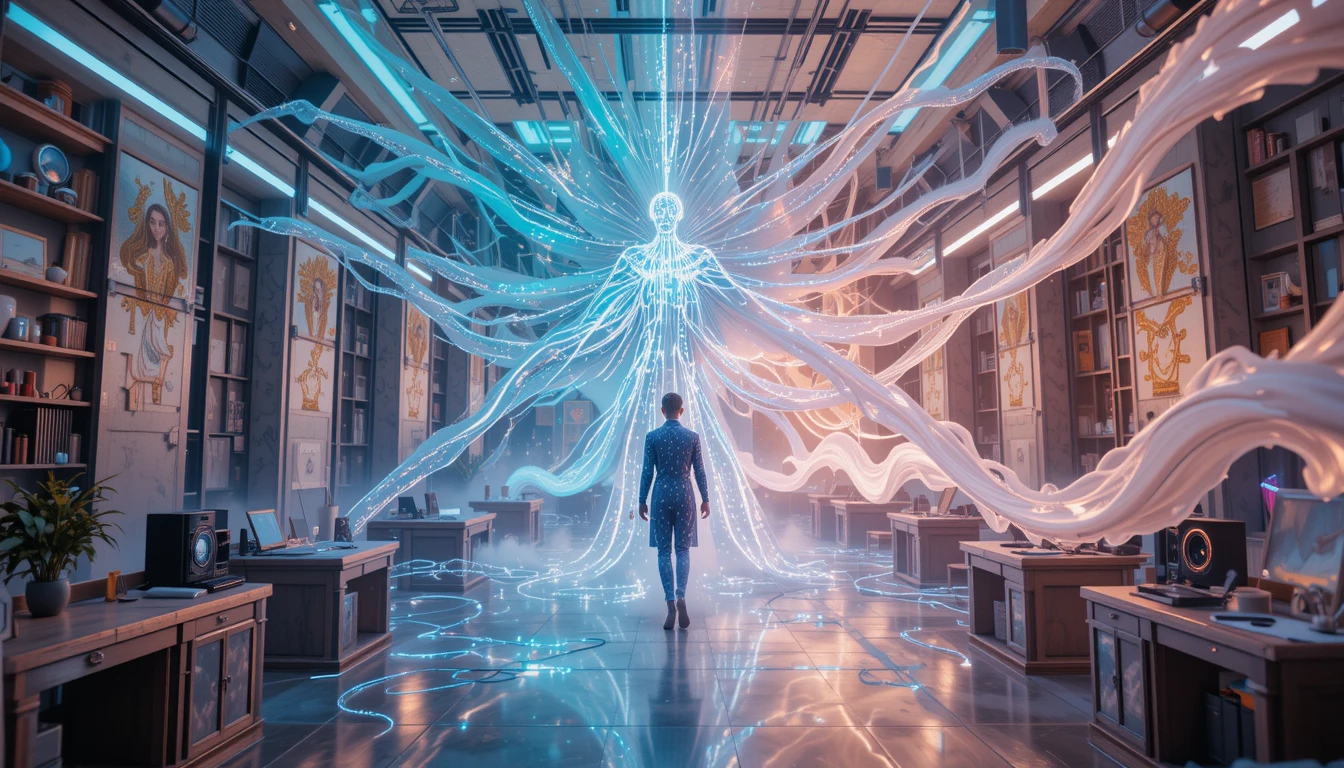
How AI Is Transforming Human Creativity and Artistic Expression
How AI Transforms Art and Creative Expression
Explore how artificial intelligence is revolutionizing art by merging machine learning with human creativity, highlighting innovation, challenges, and future potential in the creative industries.
Artificial intelligence is rapidly transforming industries worldwide, with one of the most profound impacts seen in art and creativity. AI is no longer just a tool but serves as a catalyst for innovation in artistic expression. This changing dynamic between human creativity and machine intelligence offers opportunities for enhanced expression while retaining emotional depth.
🎨 ## Understanding the Impact of AI on Creative Industries
AI has long been portrayed as a mysterious force reshaping entire industries—from healthcare diagnostics to financial forecasting—but its impact on the creative realm can be illustrated by an everyday analogy: imagine a master chef whose palette is suddenly enriched with every spice imaginable from across the globe. Integrated into our daily lives, AI has evolved from a mere buzzword into a powerful partner that redefines what it means to be creative, challenging traditional paradigms and fueling a renaissance of artistic expression. This transformative collaboration isn’t about replacing the human spark; it’s about expanding that spark into a vibrant spectrum of innovation that celebrates the fusion of human intuition and digital computation.
The Digital Canvas of Everyday Life and the Arts
AI’s integration into daily life is visible in the way it influences our decisions, refines our aesthetics, and augments our creative endeavors. Across industries, algorithms trained on massive datasets provide insights that were previously unimaginable, unlocking doors to artistic styles and techniques that push the boundaries of traditional media. For example, in healthcare, Mayo Clinic has leveraged AI to enhance diagnostic imaging, while in finance, Forbes reports that advanced predictive models are transforming market forecasts. Similarly, in the creative industries, AI tools enable a methodical deconstruction of complex data sets—ranging from historical art movements to modern social media trends—that spur fresh artistic approaches.
In the realm of visual arts, thought leaders have begun to see AI as an extension to the traditional artist’s toolbox. Rather than viewing it as a mere technological curiosity, influential voices like those published in Wired emphasize AI’s potential to serve as a co-creator, suggesting that algorithms can bring to light hidden patterns within massive repositories of art history, thereby inspiring new styles. Consider the influential work of generative adversarial networks (GANs), which have been used to produce breathtaking visual art that challenges the boundaries of creativity and aesthetics. This is not just about creating pretty pictures; it’s about reframing the entire creative process, where AI acts as a catalyst for exploring infinite combinations of color, form, and texture.
Moreover, the digital canvas is evolving as AI tools increasingly disrupt traditional creative workflows. These tools empower artists to experiment with innovative mediums by automating repetitive tasks such as color correction or formatting, allowing for more focus on the expressive, conceptual aspects of their work. For instance, platforms like Adobe’s Creative Cloud have integrated AI-driven features that enhance the editing process in photography and video production, thereby democratizing the production of high-quality art. With each stroke influenced by both human creativity and machine precision, the finished product symbolizes the balance between digital innovation and traditional craftsmanship.
Importantly, AI’s influence in the creative industries is not unchallenged; it straddles a fine line between being an enhancer and a disruptor. While AI can streamline production and generate novel idea combinations, there are valid concerns regarding originality. Critics raise questions about whether a piece of art, birthed from an algorithmic process, can truly encapsulate the unpredictable beauty of human emotion. However, numerous case studies and expert analyses, such as those highlighted on MIT Technology Review, reveal that the secret lies in collaboration rather than replacement. The tools themselves do not create art; they provide a platform for creative augmentation that can lead to unforeseen and groundbreaking artistic expressions.
Artists, designers, and writers are now exploring creative augmentation tools that redefine their artistic processes. These tools enable a form of experimental approaches across multiple fields, fostering a space where both the human element and digital innovation come together. In a world where algorithms can suggest subtle modifications or bold reinterpretations of a concept, experimentation becomes a collective dialogue between man and machine. Platforms like Behance showcase portfolios born out of this collaboration, offering tangible evidence of how AI has enabled artists to break free from traditional limitations. The result is a vibrant cultural landscape where traditional techniques are reinvigorated by the exploratory spirit of modern technology.
The integration of AI within creative industries is a double-edged sword. On one hand, it liberates and inspires, inviting artists to challenge the preconceived boundaries of their crafts; on the other hand, it forces a reexamination of what it means to be truly original. The debate is reminiscent of past technological revolutions—like the advent of photography in art—that initially sparked fear but ultimately led to the evolution of entirely new art forms. For an in-depth exploration of these dynamics, articles on TED provide a range of perspectives on how AI is reshaping human endeavors, confirming that even in the most creative of fields, technology can be both a tool and a muse.
The reality is that AI is not inherently creative—the spark of artistic creation remains uniquely human. Yet, by synthesizing multiple streams of data and offering previously unseen correlations, AI challenges artists to think beyond the obvious and consider the broader implications of their work. Just as a well-tuned orchestra benefits from the guidance of an experienced conductor, the dynamic between a creative mind and AI yields a harmonious composition that resonates with novelty and authenticity. The future of creative industries, therefore, is not a battleground between humans and machines but an emerging frontier where technology extends the boundaries of human expression.
🚀 ## Exploring AI as a Collaborative Artistic Muse
As the creative landscape evolves, AI emerges not simply as a tool but as an inspiring collaborative partner—a muse that challenges established creative norms and encourages bold, new explorations. In the realm of music, visual arts, and narrative storytelling, AI has proven its capacity to act as a co-creator, offering fresh perspectives and uncharted artistic directions. The journey from algorithmic suggestion to innovative artwork is filled with both promise and complexity, as demonstrated by numerous case studies and pioneering experiments.
AI-Assisted Musical Composition and Emotional Resonance
One of the most compelling examples of AI as a creative collaborator emerged from a story that transcends the conventional boundaries of composition. In the 1990s, renowned composer David Cope confronted a creative impasse by turning to AI—a move that ultimately redefined musical collaboration. Cope’s innovative experiment culminated in the creation of Emmy, an AI program capable of analyzing and generating musical compositions that mimicked the nuances and emotional depth of his own work. Emmy wasn’t just a mechanical copy machine churning out notes; it was a system empowered by patterns hidden within vast amounts of musical data, capable of producing pieces that resonated with a soulful characterization. For further insights into this transformative moment in the convergence of art and technology, see the detailed analysis on Wired.
The success of Emmy points to the potential of AI systems to uncover unexpected creative avenues. When algorithms analyze an artist’s style, they often identify hidden motifs and recurring themes that can serve as the basis for new, groundbreaking compositions. More than just replicating existing patterns, these systems can also suggest plot twists, unique chord progressions, and layered textures that defy the typical expectations of classical music. This process of creative augmentation highlights how AI collaborates with the human mind, stimulating original ideas rather than displacing the artist’s unique vision.
AI-powered platforms for music generation have advanced significantly since Emmy’s inception. Modern systems now allow for real-time collaboration, where musicians can interact with digital tools that suggest improvisations or variations on the fly, effectively turning the creative process into a dialog between human intuition and machine intelligence. Tools such as Amper Music offer composers the ability to generate fully original scores by specifying moods, tempos, and instrumentation. These platforms highlight AI’s role as a facilitator—enhancing creativity by offering new ideas and avenues for experimentation, rather than dictating terms.
AI in Visual Arts and Narrative Storytelling
Beyond music, the digital brushstrokes of AI are making a significant impact in visual arts and narrative storytelling. Algorithms can analyze large volumes of artistic data ranging from Renaissance paintings to modern digital graphics, synthesizing styles and generating new works that synthesize traditional techniques with contemporary aesthetics. Visual artists have embraced smart tools that can automatically generate intricate patterns or suggest unexpected color combinations, providing a blend of algorithmic precision and creative freedom that is shaping the next generation of art. Publications like ArtNews have chronicled the rise of these techniques, illuminating how the creative process is evolving in tandem with technology.
In terms of storytelling, AI has dived into areas once thought exclusive to human experience. Algorithms trained on expansive datasets of literature and storytelling traditions can suggest character arcs, plot twists, and even full narrative arcs. For instance, platforms like Narrative Science are beginning to demonstrate how automated storytelling can enhance the creative process, offering writers new ways to overcome writer’s block or explore alternative narrative structures. The collaborative nature here is key: while AI helps generate ideas, it’s up to the human creator to weave these fragments into a cohesive and emotionally resonant story. This partnership is reflected in research published by ScienceDirect, which emphasizes that the most compelling narratives arise when human creativity is bolstered by the analytical prowess of AI.
AI: An Inspiring Co-Creator, Not a Replacement
The underlying technology that powers these creative endeavors necessitates a shift in perspective: instead of viewing AI as a potential threat to originality, it should be embraced as a collaborator whose capabilities extend the creative palette available to artists. AI excels at unveiling intricate patterns and connections that lie beneath the surface of a human-created work, serving as a mirror reflecting undiscovered potential. For example, by tapping into vast, diverse datasets—from classical literature to modern digital art—AI uncovers hidden motifs that can help generate innovative reinterpretations of established themes. This amalgamation of human intuition and machine precision paves the way for art that is simultaneously rooted in tradition and wildly experimental.
The collaboration between human artists and AI is perhaps best encapsulated by the shift in perspective experienced by innovators like Cope. Initially wary of AI’s encroachment upon the sacred domain of human creativity, these pioneers soon recognized that technology offers not a usurpation but a magnificent extension of their creative reach. By using AI as a brainstorming partner, artists can explore uncharted territories while staying grounded in the subtleties of human expression. This sentiment is echoed by studies in digital creativity highlighted on Nature, where data-driven insights are transforming our understanding of collaborative art.
A particularly fascinating aspect of AI as a creative muse is its ability to facilitate what can be described as “creative serendipity.” Imagine an artist experimenting with a new musical theme or a writer drafting the outline of an epic narrative—and then receiving a subtle nudge from an AI tool suggesting a twist or an unexplored perspective. This process, far from being orchestrated or mechanical, resembles the spontaneous spark of inspiration found in interpersonal creative collaborations. It is this fusion of human vulnerability and algorithmic insight that promises to shape the future of art, ushering in an era where creative output is enriched by every nuance of technology and every facet of human emotion.
🧠 ## Navigating Challenges and Envisioning the Future of AI-Enhanced Art
While the creative potential of AI stands as a beacon of progress, it also brings with it a host of challenges and intricate questions about the future of art. The integration of AI into creative processes raises deep concerns about artistic homogenization, ethical dilemmas regarding copyright, and the inherent limitations of machine-led creativity. The key is to navigate these challenges with a balanced view—recognizing AI’s transformative power without losing sight of the irreplaceable human touch that imbues art with soul.
The Risk of Artistic Homogenization and Diminished Human Input
As AI systems excel in pattern recognition and data analysis, there is a legitimate worry that these systems might inadvertently lead to a homogenization of creative output. If artists rely too heavily on algorithmically generated suggestions, the landscape of art may gradually converge into a narrow band of stylistic uniformity. This risk is akin to a well-trodden path in a forest where every tree begins to look the same, a concern discussed in depth in articles by Fast Company. When the data feeding these systems is limited or biased, the resulting art might mirror those limitations, potentially stifling the divergence and unpredictability that defines true creativity.
Moreover, there is the concern of diminishing human input. When artists lean on AI to handle technical aspects—whether it’s perfecting a musical arrangement or auto-generating visual compositions—they risk losing the deliberate, reflective process that forms the core of human creativity. Seminal work in the field of creative technologies, as chronicled by Smithsonian Magazine, reminds us that the essence of art lies not in flawless execution but in conveying deeply human insights and emotions. This delicate balance must be maintained, ensuring that AI remains a tool for augmentation rather than a substitute for the artist’s vision.
Ethical and Legal Concerns: Copyright and Data Biases
Navigating the ethical terrain of AI-enhanced art demands a reassessment of traditional frameworks and legal standards. One of the most pressing issues is copyright. When a piece of art is born from the collaboration of human input and AI-driven data analysis, determining authorship becomes a gray area—should the credit go entirely to the artist, or is there shared ownership with the algorithm that helped shape it? Organizations like the Library of Congress have begun to grapple with these questions as copyright laws strain under the pressure of rapidly evolving technologies. This tension underscores the need for updated legal and ethical frameworks that can address the hybrid nature of AI-assisted art in a fair and balanced manner.
Another layer of complexity involves data biases inherent in AI algorithms. Since these systems rely on historical and current data sets, any bias present in the data can be inadvertently reinforced or amplified in the final output. This challenge is well-documented in research published by Scientific American, which notes that algorithms may perpetuate stereotypes or marginalize alternative perspectives if not carefully managed. The artistic community must therefore be vigilant, ensuring that as AI augments the creative process, it also evolves in a way that critically examines and corrects its own data sources.
Balancing Innovation with Creative Control
The path forward lies not in choosing between human ingenuity and AI efficiency but in carefully orchestrating a balanced partnership where each complements the other. Artists must retain control over their creative process, using AI as an ally that provides suggestions, enhances experimentation, and frees up time for conceptual exploration. This balanced collaboration is often likened to a dance—one where both partners maintain their own rhythm while moving in synchrony with one another. For instance, platforms such as Adobe Photoshop now incorporate AI features that not only automate tedious tasks but also inspire creative experimentation, allowing artists to push boundaries while maintaining their unique stylistic voices.
Several emerging frameworks and initiatives seek to promote this balance, advocating for transparency in the development and application of AI tools within creative fields. Thought-provoking discussions published on The Verge address the need for ethical guidelines that balance innovation with the preservation of artistic individuality. The conversation extends to academic settings as well—with institutions and think tanks around the globe, such as those featured by Stanford University, diligently exploring how AI can be integrated in a manner that respects creative autonomy while pushing the limits of what’s possible.
Envisioning a Future of Human-AI Synergy in Art
Looking to the horizon, the future of AI-enhanced art is as challenging as it is exciting. The potential for novel art forms, spawned by the delicate interplay between human creativity and algorithmic insight, is vast and promising. This synergy could give rise to art that not only reflects our current cultural moment but also paves the way for entirely new aesthetic sensibilities. Imagine immersive installations where real-time data influences interactive visual displays, or narrative experiences that shift based on audience engagement—these are the kinds of innovations that begin at the intersection of art and technology as detailed in insights from BBC Future.
Yet, actualizing this future requires more than technological sophistication—it demands a cultural shift. Artists, technologists, and policymakers must engage in an ongoing dialogue that addresses both the opportunities and the pitfalls of AI integration. As technology continues to evolve, so too must our definitions of art and creativity. The evolving relationship between human expression and machine assistance is central to this transformation. It calls for an expansion of our creative identities so that art is no longer seen as a static expression but as an evolving relationship—a narrative woven through continual innovation and reinterpretation.
Forward-thinking leaders in the creative industries are already laying the groundwork for this future. Collaborative projects that merge AI with traditional artistic practices are being showcased at major global exhibitions, from MoMA in New York to cutting-edge galleries in Europe. These projects illustrate that when AI is applied thoughtfully, it can serve as an amplifier of human creativity, enhancing rather than overshadowing the artist’s vision. Rather than replacing the artist, AI offers new directions, challenges creators to rethink the familiar, and ultimately enriches the cultural tapestry with both precision and emotional depth.
Intrinsic to this evolution is the need for a comprehensive, forward-looking vision. The transformation currently unfolding within the creative industries is more than a momentary trend—it is a paradigm shift with lasting implications. As ethical, legal, and technical challenges arise, they must be met with innovative solutions reflective of a collaborative spirit. This vision promises to birth new art forms, hybrid genres, and unprecedented artistic expressions that transcend the old dichotomy of human versus machine. In this brave new world, art will continue to serve its timeless role as a mirror of human experience—one that adapts, transforms, and ultimately enriches our lives with every stroke of genius and every calculated algorithm.
In conclusion, AI-augmented creativity is not a replacement for human ingenuity but an invitation to explore uncharted artistic territories. As both a disruptor and enhancer, AI compels the creative industries to think bigger, push further, and redefine what is possible. By embracing a balanced approach that marries digital precision with human passion, the future of art is poised to become even more diverse, innovative, and emotionally resonant. This fusion of machine logic with artistic intuition stands as a testament to the enduring power of human expression—a creative journey that is continuously evolving, much like the algorithms that now play an integral part in its unfolding narrative.