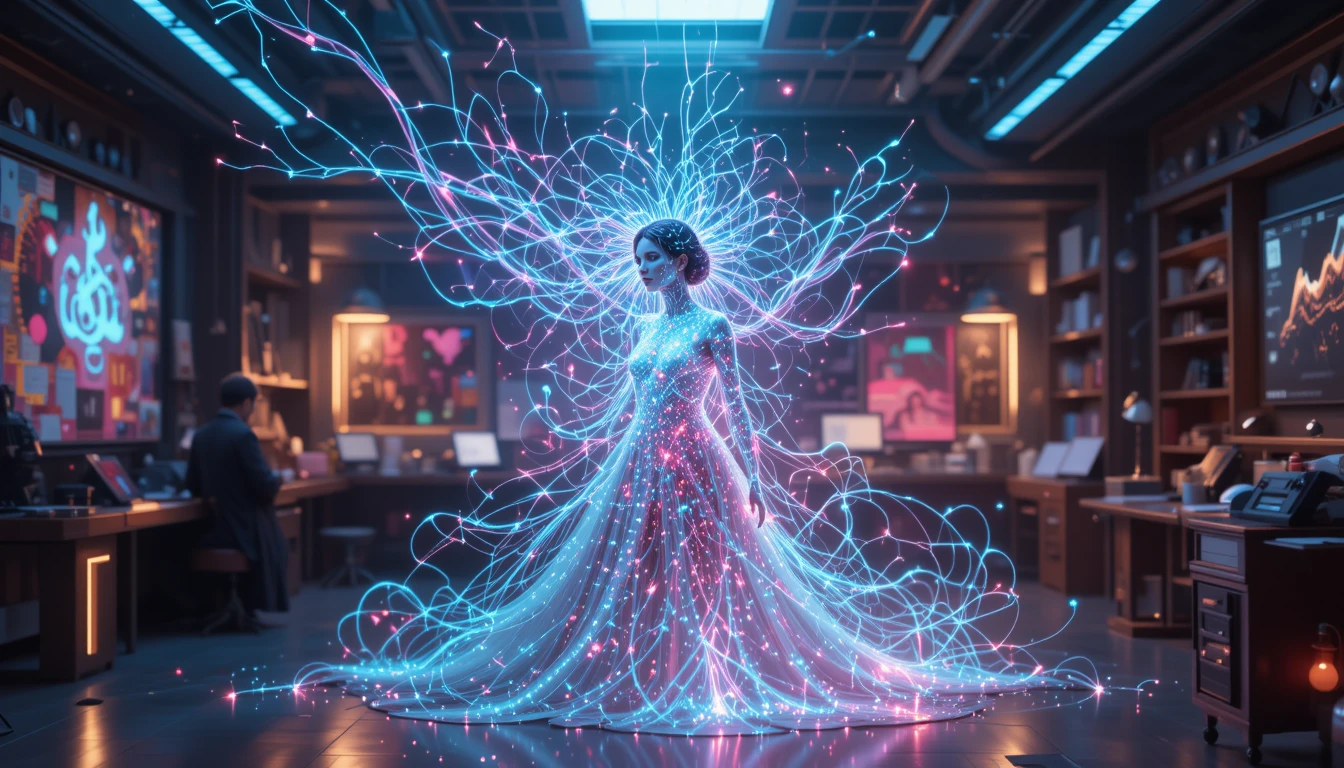
How Generative AI is Revolutionizing Content Creation
Generative AI: Transforming Content Creation
Discover how generative AI unlocks innovative ideas, automates content production, and personalizes audience experiences to revolutionize creative processes.
This article explores the revolutionary impact of generative AI on content creation. The discussion covers the basics of how this technology works, its role in enhancing creativity and accessibility, and its capacity to transform media production through automation and personalization. With insights drawn from advanced examples like language and image generation tools, the article provides an in-depth look at how generative AI is setting new standards for creative output in the digital age.
🌟 What is Generative AI?
Imagine stepping into the future, a world where content creation transcends traditional boundaries, offering endless possibilities waiting to unfold at your fingertips. Generative Artificial Intelligence, or Generative AI, lies at the heart of this transformative evolution, ushering creators into an era where innovation and imagination merge seamlessly into reality.
At its core, generative AI systems are sophisticated computational frameworks capable of autonomously producing content across multiple domains—be it text, imagery, audio, or even entire video sequences. Unlike conventional artificial intelligence tools explicitly programmed to address narrow tasks, generative AI employs extensive machine learning from massive datasets, uncovering hidden patterns that enable the creation of authentic, unique outputs. The models intuitively mimic the nuances, structures, and styles present in their training data, breathing new life into content creation by delivering outputs strikingly indistinguishable from human-crafted originals.
Two exemplary models encapsulating the power of generative AI include the influential language model ChatGPT and the advanced text-to-image creator DALL-E 2.
ChatGPT, leveraging cutting-edge deep learning techniques, swiftly generates coherent and contextually precise human-like interactions from user queries. By analyzing and interpreting input through large-scale neural networks trained on vast textual data, ChatGPT mimics language patterns with surprising accuracy. Equally transformative, DALL-E 2 showcases generative AI’s visual capabilities through an innovative method called the diffusion process—iteratively refining images produced from textual descriptions until they precisely reflect the user’s vision. Inputting a simple prompt results in an image as clear and realistic as a professional photograph, underscoring generative AI’s impressive potential to enrich creative expression.
But what fuels this technological marvel? Generative AI predominantly harnesses advanced neural networks, specifically utilizing deep learning methodologies such as transformer architectures and diffusion models. These neural networks decode complex patterns deeply embedded within vast quantities of data, allowing AI to independently generate outputs effortlessly—becoming indispensable partners in human creativity.
Consider the image creation workflow of DALL-E 2. The diffusion algorithm it applies begins with random noise, incrementally synthesizing clearer details rooted closely in text prompts until a convincing image emerges. By integrating extensive datasets with iterative refinement techniques, generative AI pushes the boundaries of traditional content production—transforming vague concepts into tangible outcomes rapidly.
Through remarkable AI-driven advances in pattern recognition, linguistic modeling, computer vision, and neural network frameworks, generative AI technology shapes a vibrant canvas filled with untapped creative opportunity—inviting visionaries and creators into the future of digital storytelling.
🚀 Enhancing Creativity and Accessibility in Content Creation
Generative AI’s true potential transcends merely automating processes—it democratizes creativity, making professional-grade content creation accessible to anyone connected online. Tools like ChatGPT and DALL-E 2 empower individuals worldwide, dismantling barriers once erected by steep learning curves or specialized skillsets. Suddenly, creators without extensive digital design experience construct stunning visuals effortlessly, while aspiring writers generate narratives echoing seasoned authors’ creativity.
By lowering the technical threshold of content production, generative AI fosters an inclusive ecosystem spotlighting diverse perspectives and thereby broadening creative conversations. Now, marginalized voices and community entrepreneurs alike utilize AI-driven platforms to share compelling narratives, reshaping global storytelling landscapes.
Generative AI isn’t just empowering—it actively combats creator fatigue and creative stagnation. Every content creator, writer, or designer inevitably reaches moments when fresh ideas elude even their most inspired musings. Here, models like ChatGPT offer valuable assistance, generating unique themes or narrative twists based purely on user prompts, injecting fresh perspectives when inspiration wanes. Similarly, automated visuals produced by DALL-E 2 allow instant visualization of abstract concepts or creative directions, facilitating consistent, innovative storytelling across different media forms.
Beyond creativity itself, generative AI liberates creators from tedious routine tasks. Repetitive activities such as grammar checks, text optimization, or social media graphics preparation are readily automated by generative systems—aiding authors, graphic designers, and marketers tremendously. Freed from habitual responsibilities, creators concentrate energies into strategic development, audience interaction, or exploring deeper conceptual ideas underlying their content.
Practical scenarios vividly illustrate this benefit: a content creator brainstorming marketing materials can turn text concepts immediately into engaging visuals via DALL-E 2’s creative engine. Simultaneously, ChatGPT supports seamless grammar correction, keyword variations, streamlined SEO-friendly content production, or even entirely automates routine email responses. These intelligent solutions drastically elevate productivity and efficiency, ensuring creative energy remains reserved precisely where human ingenuity is irreplaceable—strategic ideation, genuine empathy, storytelling innovation.
🎬 Revolutionizing Media Production and Personalized Engagement
Leveraging generative AI significantly impacts more than textual or static visuals—it revolutionizes dynamic content creation mechanisms such as media production and active digital audience engagement. These AI technologies dramatically reshape both creative workflows and individualized content delivery, opening remarkable opportunities in video production and personalized user experiences.
In film and animation circles, generative AI advances practical innovation through hyper-realistic, generated avatars and digital characters. Entirely virtual actors, indistinguishable from real performers, seamlessly interact within digitally-rendered environments. Effortlessly produced by AI frameworks, these cost-effective digital characters facilitate enhanced storytelling and innovative visual narratives previously achievable solely by substantial budgets or sophisticated professional tools.
Likewise, AI-driven editing systems significantly streamline post-production video processes. Generative AI tools intuitively automate complex editing techniques, multiple visual impacts, or sophisticated scene transitions—drastically diminishing previously massive investments of time, professional personnel, or expensive custom software. Now efficiently handled by advanced algorithms, production value increasingly depends less on budget restrictions, democratizing professional media creation opportunities at unprecedented scales.
Arguably most revolutionary, however, generative AI’s unparalleled potential for tailored, audience-specific engagement fundamentally alters digital interaction standards. Leveraging AI systems, content creators personally engage global audiences through targeted interactive storytelling, quizzes, individually-generated visuals, or documentary-style personalization calibrated by user preferences and lifestyle data.
Imagine interactive content dynamically adapting narrative viewpoints according to individual viewer responses, preferences, or past interaction historical data—crafting a deeply immersive, hyper-personalized digital journey each user uniquely navigates. Such innovative engagement dramatically strengthens existing audience relationships further drives greater content consumption satisfaction, facilitating lasting emotional connective bonds within extensive digital communities globally.
⚠️ Addressing Limitations and Embracing Future Possibilities
However, groundbreaking technological advancements rarely arrive devoid of challenges. Generative AI’s ascent similarly sparks valid concerns regarding potential job displacement and intensified ethical issues surrounding inherent biases within artificially-generated content. As automation capabilities strengthen, professionals in creative domains question employment futures within rapidly automating fields previously reliant entirely upon human imagination.
These concerns, though justified, neglect nuances central to generative AI philosophy. Fundamentally, generative AI represents augmented creativity—not a direct substitute challenging human presence. Current generative AI technologies inevitably depend fundamentally on human oversight, guidance, and creative intuition. Thus, creative professionals skillfully integrating AI tools navigate future evolutionary pathways, potentially generating exponential excellence far surpassing manually produced results alone.
Similarly vital ethical queries persistently surface surrounding generative AI’s inadvertent replication—or amplification—of biases deeply embedded within training datasets. Such limitations inherent within current modeling frameworks undeniably implicate an imperative toward proactive bias recognition, improved algorithm transparency, and increased inclusivity practices in AI dataset cultivation.
Mitigating these risks necessitates careful selection and treatment of training data, consistently employing diversified, balanced datasets. AI model creators bear primary responsibility for actively building fairness within their systems via rigorous ethical guidelines and inclusive data practices—thereby perpetuating equitable representation across generated content.
Looking forward, generative AI’s already significant impact sets fertile grounds ripe for further innovation, vividly expanding creative potential across countless applications—from immersive virtual worlds to bespoke, emotionally-responsive narratives designed uniquely for individuals’ psychological profiles. Embracing rather than resisting generative AI remains paramount for those actively participating within innovative digital environments today.
The transformative power of generative AI presents both unprecedented challenges and remarkable potential. By responsibly integrating inclusive and ethical practices, creators collaboratively unlock capabilities revolutionizing content creation far beyond current comprehension. Now, the invitation stands—embrace generative AI wholeheartedly, tapping into boundless potential awaiting discovery, and define creative futures actively alongside intelligent collaborative tools.