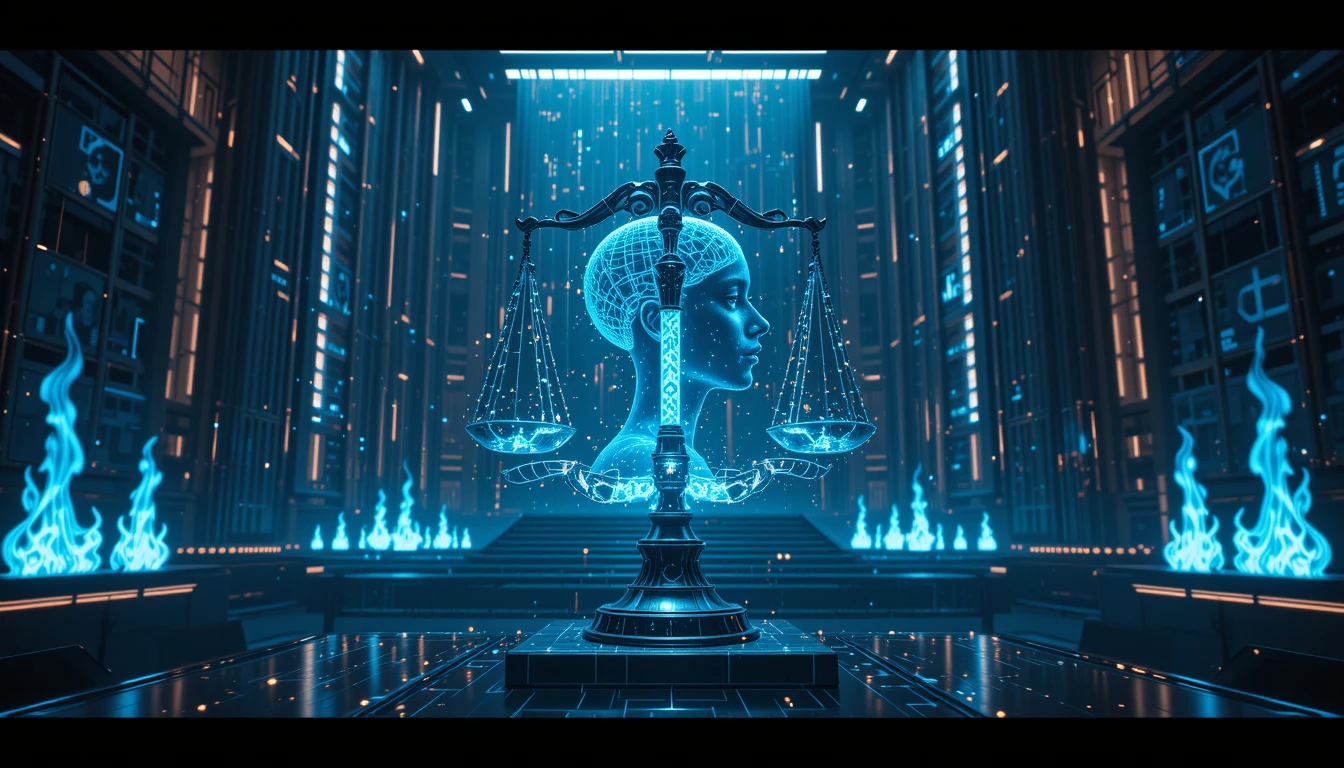
The Urgent Need for AI Regulations to Combat Deepfakes
Urgent AI Regulations: Combating Deepfakes and Safeguarding Truth
Explore the need for AI regulations to combat deepfakes, protect society from misinformation, and preserve trust as technology rapidly evolves.
This article highlights the pressing need for comprehensive regulations addressing AI-generated content and deepfakes. It examines how rapidly advancing AI technology is blurring the lines between reality and fiction while raising ethical, social, and legal concerns. The discussion explores the risks posed by deepfakes and the importance of transparent labeling, accountability, and policy reform for a safer digital future.
🤖 Understanding the Rapid Evolution of AI-Generated Content
Imagine for a moment you’re strolling through an art gallery. You gaze at vivid paintings that stir your emotions, marvel at videos so realistic they’re indistinguishable from reality, and read prose that resonates deeply—all created not by renowned human artists, but by artificial intelligence. This isn’t science fiction; it’s our present reality—a world reshaped at electric pace by advancements in AI-generated content. In just a matter of years, we’ve traversed leaps that would have been unimaginable a decade ago—from clunky, scripted chatbots answering basic customer queries, to uncanny, hyper-realistic content producers capable of crafting mesmerizing images, immersive films, and captivating text that blur forever the boundaries between genuine and synthetic.
Today’s cutting-edge applications like DALL-E and the visionary creations powered by MidJourney exemplify this quantum leap in AI’s creative prowess. Such tools empower artists, designers, and creative teams worldwide, unlocking potentially infinite avenues of innovation. Curious creators have embraced AI to design jaw-dropping album covers, produce staggering architectural renderings, and even script movies nurtured from algorithmic seedlings into lush, polished storylines. With AI-powered augmentation, creativity has never been more democratized—bridging gaps, breaking norms, and ushering humans into a renaissance of collaborative creativity with machines as thoughtful co-creators.
But as with any transformative power, AI-generated creativity isn’t without its darker edges. The very tools that inspire wonder, spark imagination, and fuel human invention can also sow confusion, deception, and misuse. This dual potential spotlights the critical dilemma society faces today: navigating the profound implications of indistinguishable synthetic content in an increasingly digital culture.
Indeed, AI tools are advancing at a breathtaking rate: in a matter of moments, algorithms can now realistically mimic human expressions, textures, even nuances that once served as reliable authenticity markers. The implications here aren’t just philosophical—they are deeply practical, profoundly cultural, and genuinely existential.
🎭 The Dangers and Implications of Deepfakes in Today’s Society
Perhaps nowhere is the troubling side of differentiating synthetic from authentic clearer than with the phenomenon of deepfakes—hyper-realistic videos artificially manufactured using AI to portray individuals engaging in acts or saying phrases they’ve never actually performed or spoken. Initially surfacing as an online curiosity, deepfakes have rapidly evolved into an insidious tool for misinformation, harassment, and defamation.
Real-world examples already illuminate how toxic misuse of deepfakes impacted individuals and societies. Disturbingly widespread, deepfakes increasingly play roles in online harassment, often involving explicit videos produced without victims’ knowledge or consent. A concerning study recently published by researchers at University X discovered deepfakes now account for a significant percentage of harassment cases online, underscoring their insidious potential to cause severe emotional and reputational harm. This dangerous evolution is amplified because the technology itself grows more affordable, accessible, and user-friendly virtually by the month, dramatically lowering barriers to misuse.
The risk isn’t confined to individual harm alone. Deepfakes could profoundly disrupt societal stability, weaponizing highly realistic false digital narratives to manipulate public perception. Imagine a fabricated video depicting a political candidate engaging in compromising behavior; even after such deception is eventually revealed, public trust can be irreparably eroded, undermining democratic institutions and fostering debilitating skepticism towards genuine news narratives. The long-term consequences stretch further still, unsettling collective mental health by distorting our shared realities and erasing confidence in formerly reliable visual evidence.
With AI-generated falsehoods poised to redefine politics, media, and culture, discernment—and corrective measures—become paramount. While detecting deepfakes grows increasingly challenging even for seasoned experts, the ethical imperative to mitigate harm rises correspondingly. The narrative of deepfake dangers isn’t speculative paranoia—it’s acute realism: a genuine crossroads for humanity, an intersection between tech advancement, societal trust, and ethical accountability.
🛂 Proposing Robust Regulations and Ethical Guidelines for AI Content
Confronting the immense benefits and severe hazards of AI-generated content urgently calls for practical steps, strategic regulation, and robust ethical frameworks. One promising concept deserving serious exploration involves explicitly labeling AI-produced content. Evoking the clarity of food ingredient labels, creators could be required to transparently disclose if their content was AI-generated, helping audiences maintain an accurate understanding of origin and authenticity. Doing so—not merely suggested guidelines but mandated transparency—would place power back into the hands of consumers, enabling thoughtful navigation and trust preservation within a rapidly digitizing landscape.
However, labels alone, while valuable, won’t resolve all challenges. Effective management of AI content requires reshaping and modernizing existing law frameworks too, specifically in realms of defamation, harassment, and intellectual property rights. Regulations must adapt dynamically to technological realities, explicitly defining responsibilities and repercussions tied to the harmful misuse of AI-generated materials. Legal regimes worldwide must strive to carefully delineate liability, providing clear consequences for malicious falsehood dissemination, and ensuring AI creators and disseminators are accountable for the tangible consequences of their digital creations.
Crucially, legislation and regulation must reflect ethical standards integral to AI’s genuine promise. A widely accepted AI ethics code could reinforce core societal values—fairness, accountability, dignity, and transparency—as explicit guiding principles shaping content development and dissemination practices industry-wide. These ethical frameworks would ideally be monitored by independent oversight bodies, equipped to transparently evaluate AI tools’ impacts, ensuring systems truly benefit humanity. Transparent evaluation, public accountability, and clear avenues for victims’ protections are essential safeguards to exploit AI’s creative power responsibly, preserving rather than eclipsing human originality and integrity.
Additionally, it’s incumbent upon societies to provide ample victim support mechanisms—legal pathways, psychological assistance, and remedies ensuring justice—to navigate harms spurred by AI misuse. This multidimensional protective net provides necessary reassurance while preserving a balanced environment where human creativity continues flourishing unhindered by synthetic mimicry or deliberate distortion.
🧭 Charting a Collaborative Course to an Empowered AI Future
Yet even establishing these guidelines, transparency measures, and ethical regulations can’t wholly mitigate AI’s complex potential pitfalls. Addressing these technological realities demands society-wide participation and shared responsibility—not solely tech company boardrooms nor secluded legislative offices. Widespread dialogue, multidisciplinary engagement, and public education are essential components empowering AI’s evolution toward societal benefit rather than exploitation.
Similarly, nurturing critical awareness and media literacy skills become vital shields against AI misinformation and deception. Integrating these competencies explicitly into education frameworks at all levels won’t merely counteract harmful content. They will forge resilient, informed individuals ready to skillfully navigate emerging digital landscapes, equipped to evaluate authenticity thoughtfully and sensibly.
Additionally, attention must sharpen considerably around biases inherently embedded through human data inputs. As AI tools grow ubiquitous, their underlying biases risk deepening societal inequities rather than alleviating them. We must champion diverse and inclusive teams designing and molding AI systems, ensuring technologies sustainably serve universal human values and welfare—not perpetuating biases or disparity.
Ultimately, as Rokito.ai continually emphasizes, AI inherently mirrors our values, bias, and intentions, reflecting the humanity embedded within its code. Navigating this powerful capability responsibly necessitates ongoing, collective vigilance and commitment—humanity leading its digital creative machines ethically and constructively forward, hand in hand into the uncharted yet exhilarating future.
We stand indeed at a defining crossroads, responsibilities heavy but hopeful. AI-generated content holds unprecedented potential to enrich human imagination and enhance global progress. Yet, as cautioned reflections have illuminated, without deliberate, thoughtful stewardship, this same power risks societal harm, psychological stress, and creativity’s irreparable obfuscation. Our next collective steps matter profoundly. Our proactive collaboration, shared accountability, and resolutely implemented ethical guidelines promise an AI-powered future where human creativity, authenticity, and dignity not merely survive but thrive.
Together, human minds and algorithmic creativity stand poised not adversarially, but harmoniously—as collaborators, uniquely empowered to reshape and elevate our shared human narrative. The question remains clear, crucial, and ultimately human:
“What future do we envision with AI—and how decisively and responsibly will we shape its potential into reality?”