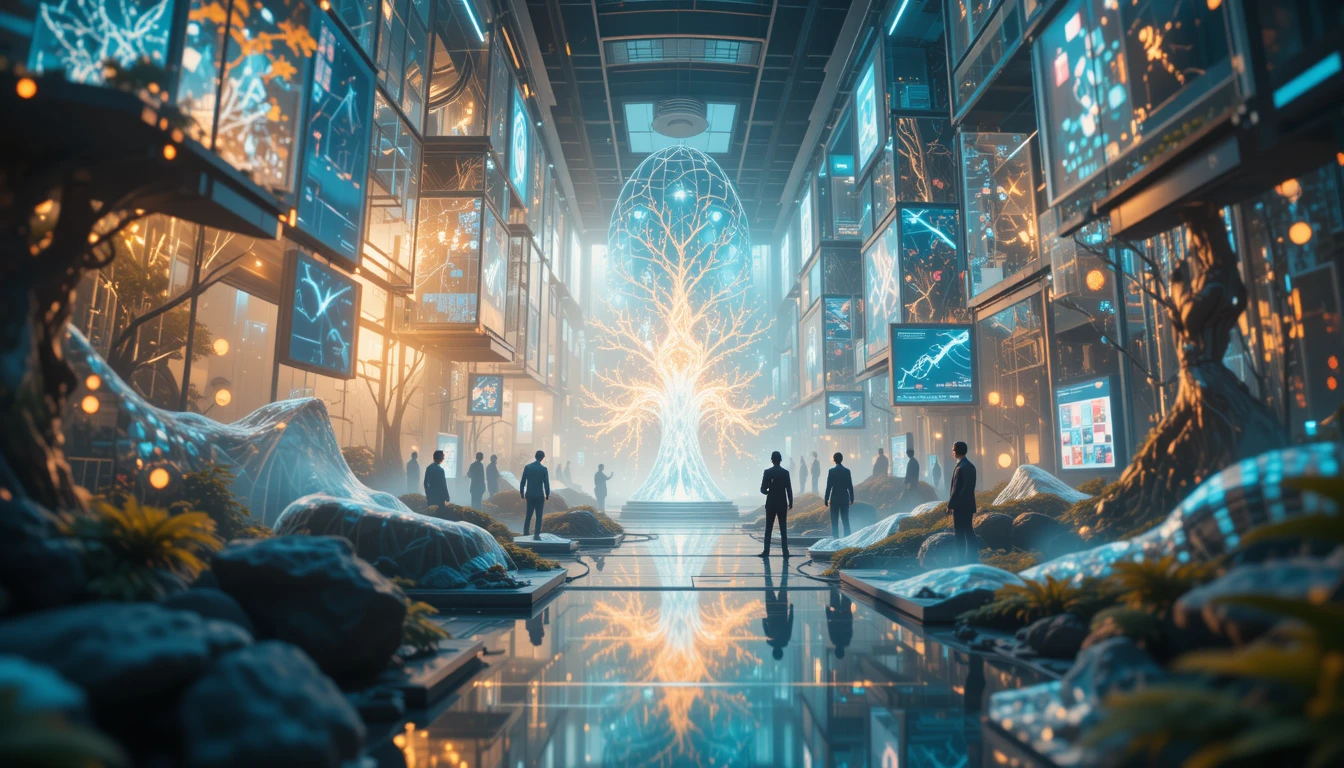
How AI Is Reshaping Work, Ethics, and Human Creativity
AI’s Impact on Work, Ethics, and Creativity
Discover how AI transforms work environments, raises ethical challenges, and redefines human creativity for a more innovative future.
This article explores how transformative artificial intelligence is reshaping work practices, challenging ethical norms, and inspiring new forms of creativity. By examining the impact of AI across various industries, the discussion delves into automation, job evolution, ethical responsibilities, and the innovative blend of human creativity with machine intelligence. The insights provided here offer a comprehensive view of the current and future landscape of AI in our daily lives, highlighting both its exciting opportunities and potential challenges.
🎯 1. AI Redefining the Work Environment
In today’s rapidly evolving world, artificial intelligence is no longer a futuristic concept confined to science fiction; it is fundamentally reshaping how industries operate, how teams collaborate, and how work itself is defined. This transformation is akin to handing over a set of super-tools that not only enhance human ability but also challenge long-standing work paradigms. Imagine a bustling hospital where AI algorithms analyze imaging data with near-omniscient precision, or a manufacturing plant where smart robots operate side by side with human workers to guarantee productivity, quality, and safety. Such vivid scenarios underline that we are standing at the threshold of a revolution—not solely technological, but socio-economic as well. This revolution demands that we rethink our roles, our skills, and even our ethical responsibilities as we integrate machine learning and automation into the very fabric of our everyday labor.
Impact Across Industries
The influence of AI spans virtually every industry, delivering transformative impacts with far-reaching consequences. In healthcare, for example, AI accelerates the diagnostic process by analyzing massive datasets to detect diseases at their nascent stages, resulting in earlier interventions and improved patient outcomes. According to Health Affairs, AI-driven diagnostics are significantly reducing errors in the interpretation of medical images, ensuring that conditions which might elude even experienced professionals are spotted and treated early. Similarly, manufacturing industries are witnessing a paradigm shift where AI not only automates repetitive tasks but also optimizes supply chains and production lines. Smart factories that employ AI-powered robots are setting new benchmarks in efficiency and reliability, transforming legacy processes much like the revolutionary work of McKinsey & Company in predictive maintenance.
Retail has also embraced AI in striking ways; recommendation engines and tailored shopping assistants now make personalized consumer interactions possible. From suggesting the next best product based on past behavior to processing payments seamlessly, AI platforms are enhancing customer engagement in real time. Transportation, through innovations in autonomous driving and traffic management systems, aims to revolutionize urban mobility by reducing human error and optimizing routes—an endeavor supported by research from NHTSA. In the realm of finance, algorithm-driven investment models and fraud detection systems bolster market security, while education harnesses adaptive learning tools that tailor curricula based on individual student performance. Even the entertainment sector, enriched by AI-generated creative tools, is redefining content consumption, as highlighted by studies from Forbes.
The common thread across these varied applications is the hefty processing power of AI—its capacity to learn from large quantities of data. This ability to detect nuanced patterns, as explained by sources like ScienceDirect, not only fosters efficiency but also unlocks innovative strategies previously unimaginable in traditional workflows. In retail, transport, and even entertainment, these breakthroughs are the result of AI algorithms that tirelessly analyze data to deliver insights that shape the overall strategy of a business. This comprehensive reach underscores why leaders across sectors are bracing for an era defined by the synthesis of human ingenuity and machine precision.
Alongside these industry-specific innovations, AI fosters a new era of collaboration between human teams and automated systems. This shifts the role of human workers from performing monotonous tasks to engaging in higher-level problem-solving and creative strategies—a transformation that is redefining sectors ranging from manufacturing to creative industries.
Automation and Collaboration
The integration of AI into everyday work processes is not merely about replacing human labor; it is about enhancing human capabilities through collaboration with machines. In manufacturing floors, for instance, AI-powered robots seamlessly handle repetitive, hazardous tasks, thereby reducing workplace injuries and enabling human employees to focus on supervisory and creative tasks. As noted by Bureau of Labor Statistics, this kind of synergy has already led to measurable productivity improvements and a safer working environment. Similarly, in offices, intelligent systems automate routine administrative tasks—everything from scheduling meetings to analyzing vast datasets—freeing up time for employees to devote their mental energies to innovation and strategic thinking.
Collaborative work environments are evolving where machines serve as extensions of the human workforce. The automation of mundane, repetitive tasks is fostering a culture where employees are encouraged to upskill and shift their focus toward tasks that require creativity, decision-making, and emotional intelligence. This is not about obsolescence; it is a profound realignment of job roles. As industries witness this transformation, they are re-defining what it means to be productive. The ultimate goal is to reach a state where technology augments human capacity rather than simply replacing it—a concept widely explored in thought pieces from sources like Harvard Business Review.
Furthermore, the marriage of AI with traditional work processes is stimulating new forms of collaboration. Consider the emerging landscape of smart manufacturing, where operators and AI-driven machinery collaboratively design production protocols that reduce waste and optimize assembly-line throughput. In these smart workplaces, safety is paramount: intelligent systems are programmed to detect potential hazards and alert human teams, creating an environment that is not only more efficient but also significantly safer. The holistic impact of these technologies even extends to everyday consumer experiences—for instance, intelligent recommendation engines in online retail platforms transform how products are marketed, ensuring consumers see the products most relevant to their preferences. This kind of synergy between AI and human intuition is setting new standards for customer service and operational excellence.
Evolution of Job Roles
The advent of AI is heralding a shift in the nature of employment. Routine and repetitive tasks, once the backbone of many job roles, are increasingly automated, thereby enabling workers to transition into roles that require higher-order thinking, nuanced creativity, and advanced problem-solving skills. This evolution is monumental; traditional jobs are undergoing redefinition, and new roles are emerging that never existed before. Research from World Economic Forum highlights that many of these emerging roles require an adept understanding of technology and data, yet also call for uniquely human skills such as empathy, strategic foresight, and complex judgment. In many respects, AI is shifting the focus from transactional operations to transformative ones.
As the physical boundaries of conventional work environments dissolve, new positions that bridge the gap between technology and human intuition are being developed. Emerging roles such as “AI trainers,” “algorithm auditors,” and “digital ethics officers” illustrate how the workforce is evolving. Embedding AI in these roles helps ensure that technologies are not only efficient but also ethically sound and mindful of the human context in which they operate. This evolution is reminiscent of previous technological revolutions where new skills replaced old ones, echoing similar transitions observed during the industrial revolution. Insights from MIT underscore that this transformation requires a proactive approach from organizations—to harness AI’s incredible potential while simultaneously safeguarding the value of the human contribution.
Many corporate strategies now include a robust plan for workforce evolution. From strategic training sessions to hands-on upskilling initiatives, companies are investing in programs that prepare employees for this new landscape—a necessity underscored by various reports in Deloitte’s research. The focus is on not only adapting to the changing dynamics but thriving within them. Rather than viewing AI as a threat, forward-thinking organizations see it as a partner that can elevate human capabilities, making the workforce more agile, innovative, and resilient in the face of rapid change.
Upskilling and Lifelong Learning
In the age of AI, the ability to continuously learn and adapt is paramount. As repeated tasks become automated, the onus shifts to workers to develop new skills that are less about routine execution and more about creative problem-solving, strategic planning, and innovative thinking. Continuous education, both formal and informal, is becoming a cornerstone of modern professional development. Initiatives such as online courses, micro-credentials, and corporate training programs are empowering individuals to master skills that will remain relevant irrespective of how rapidly technology evolves. Organizations like Coursera and edX have paved the way for accessible, high-quality education that meets the demands of an AI-powered future.
Upskilling is not limited to technical qualifications—it also involves understanding the ethical, social, and strategic dimensions of AI integration in the workplace. By equipping workers with a blend of hard and soft skills, companies can ensure that the transition into an AI-dominated environment is both smooth and beneficial. The emerging concept of lifelong learning is critically important; it plays a central role in empowering workers to continually refine their skills and maintain their relevance in a dynamically evolving job market. Academic and industry research from Pew Research Center underscores that lifelong learning is not merely a luxury but a fundamental requisite for career resilience and growth.
Furthermore, digital transformation strategies in the workplace are emphasizing the importance of cross-disciplinary learning. The integration of AI demands that employees not only understand technical systems but also grasp the broader context of how these systems affect customer relationships, ethical practices, and strategic decision-making. Schools, universities, and private organizations alike are launching programs that nurture these hybrid skills, preparing a workforce that is adaptable, ethically aware, and ready to collaborate with sophisticated AI systems. This culture shift is critical for a future where AI and humans coalesce to drive innovation and sustainable growth. As more companies invest in human capital, the future of work looks not only more technologically advanced but also far more human-centric.
🚀 2. Navigating the Ethical Challenges in AI Adoption
The journey into this AI-driven future is not without its ethical crossroads. As societies embrace the transformative potential of sophisticated algorithms and learning machines, significant challenges arise around job displacement, algorithmic fairness, data privacy, and the need for collaborative ethical frameworks. These challenges are not impediments to progress; rather, they are crucial touchpoints that demand balanced strategies to ensure that the growth of AI technology is aligned with the broader interests of society at large. Recent analyses by Brookings Institution emphasize that ethical considerations should be an integral part of any AI adoption strategy, ensuring technology serves the public good.
Job Displacement and Responsibility
One of the most debated ethical implications of AI involves the displacement of traditional jobs by automated systems. The automation of routine tasks has raised deep concerns about the future of employment for many workers. As AI replaces functions that once required human oversight, organizations must develop strategic transition plans to support these communities. Leaders in policy and industry, drawing insights from platforms like OECD, advocate for retraining programs, social safety nets, and proactive workforce transitions that help workers to shift from roles that are at risk of becoming obsolete toward new, robust positions. The challenge is to harness the economic benefits of AI while ensuring that no segment of the workforce is left behind—and indeed, many forward-thinking companies are already charting these paths.
Key responses to job displacement include:
- Instituting comprehensive retraining and upskilling programs.
- Redesigning organizational structures to value both technological prowess and human creativity.
- Engaging with policy-makers to create supportive legal frameworks.
Addressing job displacement responsibly is not solely about preserving livelihoods; it is also about maintaining social stability in an age where technological progress could otherwise exacerbate inequality. For deeper insights into workforce transitions, refer to studies published by International Labour Organization which paint a detailed picture of the interplay between automation and job creation.
Algorithmic Bias and Fairness
Even as AI systems gain prominence, their efficacy is intimately tied to the quality and neutrality of the data they consume. When data sets are biased, AI algorithms can inadvertently reinforce existing inequalities, leading to unfair outcomes in sectors ranging from hiring to law enforcement. The risk of skewed decision-making driven by algorithmic bias is a critical issue discussed in academic circles and policy debates alike. Institutions such as the Association for Computing Machinery have published guidelines that stress the importance of transparency and rigorous testing of AI systems to ensure fairness.
Organizations tasked with developing AI technologies are now placing considerable focus on creating systems that are both fair and transparent. This involves:
- Implementing robust auditing methodologies to detect and mitigate bias.
- Developing training processes that incorporate diverse datasets.
- Engaging external auditors and independent panels to validate algorithmic decisions.
The ethical mandate is clear: To realize the full potential of AI, its outputs must be scrutinized rigorously, ensuring that technological progress does not come at the expense of social justice. Leading organizations such as IBM are at the forefront of these efforts, pioneering methods that promote both accuracy and fairness in AI systems.
Data Privacy and Security
As AI systems operate by ingesting and analyzing tremendous volumes of personal data, concerns about data privacy and security have moved to center stage. The sheer scale of data collection necessary for AI to function optimally raises important questions about who has access to this information and how it is used. With high-profile debates emerging on platforms like Financial Times and Wall Street Journal, there is increasing pressure to ensure that personal data is safeguarded within a robust regulatory framework.
Organizations around the world are being urged to adopt stringent data protection protocols. Essential measures include:
- Encrypting sensitive data to preclude unauthorized access.
- Adhering to international standards such as GDPR and CCPA.
- Developing clear policies regarding data collection, storage, and usage.
This focus on data privacy is not only a matter of compliance; it is a cornerstone for building the trust necessary for widespread AI adoption. Reports from CSO Online illustrate how breaches of trust can derail entire AI initiatives, causing public backlash and regulatory intervention. The dual challenge remains: leveraging big data for predictive analytics while ensuring that individual rights are robustly protected.
Collaborative Ethical Frameworks
Addressing the ethical dilemmas posed by AI is not the sole responsibility of individual organizations; it requires a concerted, collaborative effort across governments, corporations, and civil societies. The establishment of collaborative ethical frameworks is essential for ensuring that AI technologies benefit humanity collectively. These frameworks are intended to provide guidelines for transparency, accountability, and public participation in the development of AI technologies. Stakeholders ranging from technology giants to small enterprises are expected to align with these shared principles to ensure ethical deployment.
Cross-sector partnerships and policy dialogues—regularly convened by organizations like the United Nations—are vital to constructing these frameworks. Such initiatives promote the integration of ethical considerations at every stage of AI development, from design to deployment. In practice, collaborative frameworks often address:
- The development of universal ethical guidelines.
- Establishing multi-stakeholder oversight committees.
- Encouraging transparency and public accountability in algorithmic decisions.
The underlying rationale is simple: No single entity can address the broad spectrum of ethical challenges isolated. Instead, a cooperative approach is required to cultivate trust, spur innovation, and ensure that AI remains a tool for positive social change. Refer to recent joint publications by IEEE for a deeper dive into effective ethical collaborations in technology.
🧠 3. AI and the Future of Human Creativity
The narrative surrounding AI is not solely about automation and efficiency; it is also fundamentally about a renaissance in human creativity. As AI-powered tools evolve, they are blurring the boundaries between conventional artistic expression and machine-assisted design. This has led to a dynamic interplay where human innovation is amplified by the capabilities of machines—a partnership that promises to redefine the creative process in profound ways.
AI-Powered Creative Tools
Today’s AI systems can generate realistic images, compose music that resonates with human emotion, and even write compelling stories. These capabilities are opening up vistas that were once firmly in the realm of science fiction. For example, AI tools are being used to craft digital art that mirrors traditional painting techniques, or to compose orchestral arrangements that blend classical sensibilities with modern experimentation. The power that these algorithms wield lies in their ability to learn from vast reservoirs of cultural artifacts, forging new creations by blending diverse influences—a phenomenon detailed in research by Nature.
Beyond technical execution, AI is increasingly becoming a creative partner. Artists and musicians are collaborating with digital systems to push the boundaries of what is possible, creating works that would be unimaginable without the computational intricacies of AI. In effect, these tools serve as a catalyst for creative experimentation and multi-sensory expression. The interplay between human intuition and algorithmic precision has led to a fusion where art, technology, and innovation converge harmoniously. Such creative collaborations have even shaped the storytelling methods employed in modern cinema, as highlighted by evolving discussions in Variety.
Enhancing Artistic Collaboration
The fusion of AI with the creative process is fostering an environment in which traditional artists can explore uncharted territories. By providing insights into patterns and aesthetics previously hidden in vast datasets, AI tools are equipping creators with new perspectives. Consider the scenario of a writer brainstorming ideas for a novel: an AI-powered suggestion engine can analyze trends in narrative structures, character arcs, and thematic elements across a multitude of genres, offering a palette of inspiration that is both broad and nuanced. Such tools do not replace creative talent; instead, they act as a partner that elevates the creative process, turning sparks of inspiration into meticulously crafted narratives.
This enhanced artistic collaboration is also evident in collaborative design and personalized content creation. Advertising agencies, film studios, and digital content creators are tapping into AI-driven analytics to tailor their content to specific demographics, ensuring messages resonate on a deeply personal level. Multiple sources, including insights from Adweek, show that AI not only improves production efficiency but also enriches creativity by curating personalized media experiences. This tailored approach is rapidly redefining the creative industries by moving away from one-size-fits-all campaigns towards highly customized artistic expressions.
Personalized and Engaging Experiences
At the heart of AI’s transformative impact on creativity is its ability to curate highly personalized content. Think of personalized news feeds that adjust in real time to the interests of individual users, or recommendation engines that tailor shopping experiences based on subtle cues gleaned from past transactions. These systems, driven by sophisticated machine learning algorithms, create digital environments where every interaction feels uniquely attuned to the user’s preferences. Research from Nielsen validates that personalization not only enhances consumer engagement but also drives loyalty and sustained interest.
Personalized experiences extend well into the creative domain. Digital platforms are now curating art and music recommendations that are uniquely tailored to taste preferences, rendering each experience largely individual yet remarkably connected to broader cultural movements. For instance, streaming services harness AI to suggest films or series that cross-reference individual viewing habits with global trends, fostering a cinema experience that is as engaging as it is enriching. This technological nuance is redefining creative consumption, offering audiences an immersive, tailored experience that seamlessly melds technology and art.
Redefining Creative Industries
The integration of AI into creative industries has sparked a paradigm shift that is redefining what it means to create, consume, and interact with art. New media forms, spawned by the collaborative efforts of humans and intelligent systems, are emerging that defy traditional categorizations. Whether it’s interactive exhibits in museums where AI curates personalized tours, or digital art galleries that leverage algorithmic curation to craft virtual experiences, the creative landscape is undergoing a profound transformation. This is more than a technological evolution; it is a reconceptualization of creativity where human taste and machine intelligence coalesce to produce genuinely innovative works.
For those traditionally housed within the arts, the advent of AI offers not just tools for greater efficiency but avenues for exploring entirely new genres of expression. As noted in academic discourses at institutions like Arts Journal, AI-powered platforms are enabling a type of creativity that is dynamic, interactive, and inherently personalized. The merging of human insight with machine learning is spurring a renaissance in artistic production—one that is attuned to the rapid pace of cultural and technological change.
From interactive online exhibits to immersive theater productions that adapt in real time to audience reactions, creative professionals are reimagining the boundaries of storytelling and artistic presentation. The collaborative dynamic extends beyond the creation of art—it informs the very frameworks through which creative content is curated and experienced, marking the dawn of a truly transformative era in media. As AI continues to infiltrate every facet of creative expression, industries from music to digital advertising are capitalizing on these innovations to craft richer, more engaging experiences for audiences worldwide.
In conclusion, the coalescence of AI and human creativity is redefining the landscape of modern innovation. Through collaborative partnerships in art and business alike, AI is not merely a tool but a transformative force that enhances the human capacity for creativity, productivity, and ethical progress. As this synergy deepens, it becomes increasingly clear that the future will be characterized by an intricate dance between human ingenuity and artificial intelligence—a future where continuous learning, ethical mindfulness, and boundless creativity form the pillars upon which prosperity and innovation are built. With careful oversight, strategic upskilling, and an unwavering commitment to fairness, the AI-driven revolution stands not as a harbinger of obsolescence, but rather as a beacon guiding humanity toward greater achievements and a richer, more inclusive future.
Each industry, every workplace, and all creative expressions are touching new heights under the influence of AI. The integration of technology into our work and creative lives is a journey filled with both promise and responsibility. It calls for leaders who not only understand the potential of AI but also embrace lifelong learning and ethical innovation. As societies continue to navigate this transformative landscape, the message is clear: rather than fearing the rise of intelligent machines, it is essential to harness their power to augment human capabilities, drive innovation, and ultimately uplift the collective human spirit.
The future of work is an ecosystem where humans and machines coexist in a complementary relationship. It is a domain where routine processes are automated to free humans for strategic and creative pursuits, where upskilling becomes the currency of progress, and where ethical frameworks ensure that technological advancements uplift rather than marginalize. This symbiotic relationship between human creativity and artificial intelligence promises not only enhanced productivity but also richer, more personalized experiences—both at work and in life. The strategic imperatives for businesses are clear: invest in advanced AI capabilities, nurture human talent through continuous learning, and champion ethical standards that protect privacy and promote fairness.
As the transformative power of AI continues to ripple across industries—from healthcare’s data-driven diagnostics to entertainment’s immersive, personalized narratives—the imperative for collaborative, ethical, and visionary leadership has never been greater. The integration of AI represents a renaissance not just in technology, but in the entire construct of human society. Just as the digital revolution reshaped every aspect of modern life decades ago, the age of AI will demand ingenuity, resilience, and a steadfast commitment to innovation rooted in ethical integrity.
To explore further insights on how AI is shaping the work environment and creative industries, consider resources such as the TechRepublic for technology trends, the Strategy+Business magazine for business strategy, and academic papers featured in JSTOR to understand the scholarly debates around these issues. These platforms offer a deeper dive into the far-reaching implications of AI on society and the workforce.
In this unfolding era of intelligent evolution, the interplay of human creativity and machine learning stands as the most potent force capable of reshaping the future into a more innovative, inclusive, and ethical reality. The path forward is one of continuous transformation, where every challenge is an opportunity to reimagine the possibilities of human ingenuity. With determined collective effort from policymakers, business leaders, educators, and technologists, society can ensure that technology remains a tool for empowerment, driving progress that benefits all layers of human life.
By aligning practical strategies with visionary ethical frameworks and embracing lifelong learning, the global community is poised to not only navigate the challenges of AI adoption but to harness its transformative power fully. The convergence of automation, human creativity, and strategic upskilling is setting the stage for an era defined by unprecedented innovation and a commitment to shared prosperity. This symbiotic journey, marked by the dynamic interplay between advanced technology and timeless human values, is a clarion call to build a future where everyone thrives in the age of artificial intelligence.
Ultimately, the era of AI is more than a technological milestone; it is a fundamental shift in the human narrative. It serves as a reminder that the future, while shaped by algorithms and data, is ultimately steered by human vision and ethical consideration. With the right balance between technological advancement and human-centric values, AI can be the powerful catalyst for a new age of creative, ethical, and productive progress—one where every innovation is a testament to the enduring strength of human potential, and every challenge is met with a resolve to build a brighter, more inclusive future.
Through strategic foresight, robust ethical frameworks, and a dedication to continuous learning, the transformative potential of AI is unequivocally driving the forward march of human civilization. As industries reimagine traditional work models, society redefines creativity, and ethical debates shape policy, the journey ahead is both exhilarating and humbling. It is in this landscape of boundless possibilities that artificial intelligence promises not only efficiency and productivity but also a reinvigorated spirit of innovation that will propel humanity to ever greater heights.
The dynamic interplay between human ingenuity and artificial intelligence stands as a testament to the power of collaboration—a collaboration that is set to redefine how work is performed, creativity is expressed, and ethical boundaries are navigated. Today, as AI transforms industries, nurtures new roles, and catalyzes a renaissance in creative expression, the message remains clear: embracing this technological evolution responsibly and ethically will be the cornerstone upon which the future of human prosperity is built.
With strategic investments in technology, an unwavering commitment to upskilling, and a collaborative spirit to address ethical challenges, the promise of an AI-driven future shines bright. This is not a future where machines supplant human abilities but one where the partnership between technology and humanity paves the way for a richer, more innovative, and profoundly human existence.