Game-Changing ChatGPT Tool Transforms Product Images Fast
Revolutionary ChatGPT Update Enhances Product Image Creation
Discover how the groundbreaking ChatGPT update transforms dropshipping by creating unique, high-quality product images quickly and cost-effectively.
This article explores an innovative ChatGPT update transforming product image creation in dropshipping. The breakthrough technology eliminates the costly, time-consuming process of ordering samples by generating unique, customized images with simple text prompts. Learn how AI-powered image editing is revolutionizing e-commerce, saving resources and offering limitless creative possibilities. ChatGPT transformation and AI image editing are changing the game for online sellers.
🎯 ## 1. ChatGPT Revolutionizes Image Generation in Dropshipping
Imagine a world where capturing the perfect product image doesn’t require ordering costly samples or booking a professional photoshoot. Dropshippers have long grappled with the dilemma of producing high-quality product images without draining time or budget. Traditional dropshipping photography has been plagued by a series of challenges: coordinating sample orders, waiting for delivery, setting up the right lighting, managing props, and then finally editing images to meet the creative demands of digital storefronts. This process is not only expensive, but it also becomes a time sink in an industry where agility is key. The advent of advanced AI-driven image generation is now disrupting this old paradigm—enter the new ChatGPT feature that is set to change the game.
ChatGPT’s latest update is nothing short of revolutionary. Using a simple text prompt combined with an uploaded image, this feature leverages cutting-edge artificial intelligence to execute advanced image editing without manual intervention. Consider the painstaking process of shooting product photos: dropshippers would traditionally need to physically handle each product, then capture its perfect image. With ChatGPT, a single image can be intelligently transformed to fit various creative directions, ensuring that every product is showcased in an engaging and visually authoritative manner. For further insights on the evolution of AI in creative industries, see VentureBeat’s coverage on artificial intelligence.
🧠 Detailed Illustration: The Vanity Mirror Example
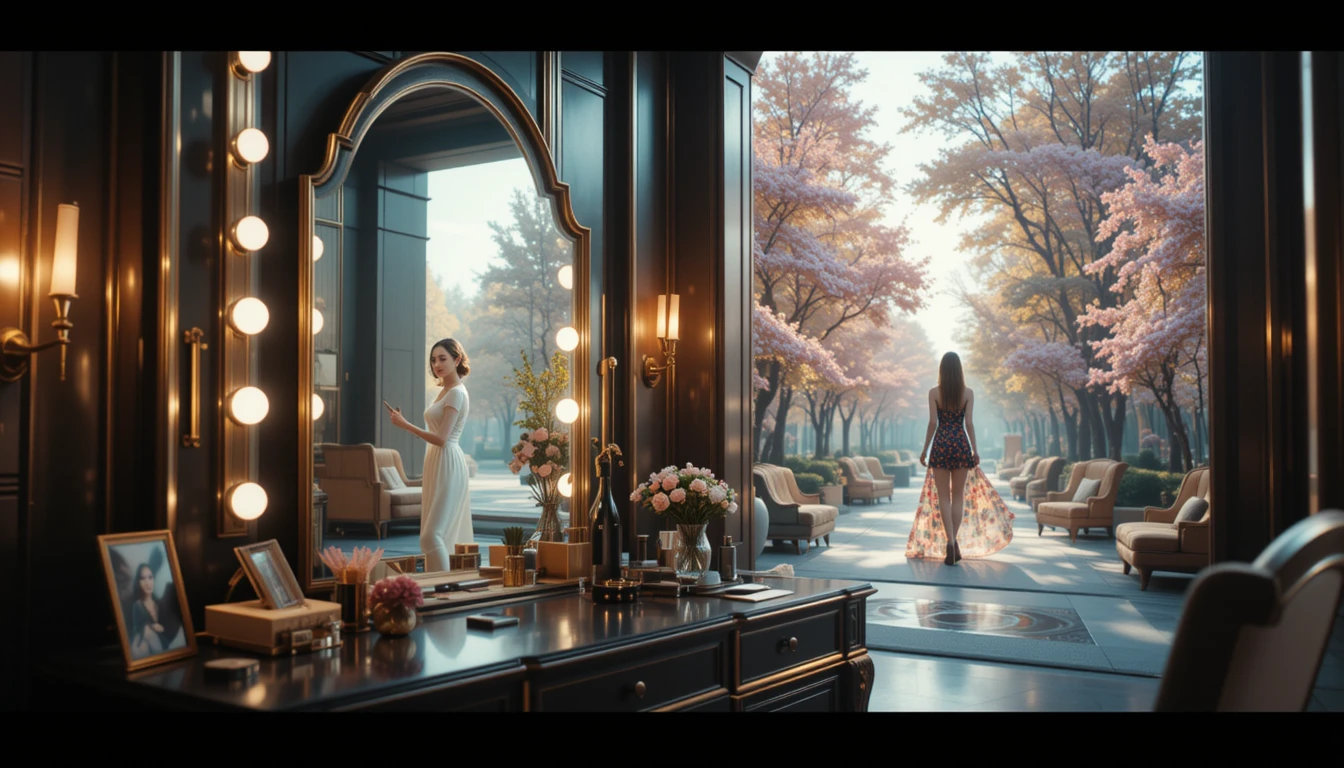
One of the most compelling illustrations of this technology comes in the form of the vanity mirror example. In a typical dropshipping scenario, a trifold vanity mirror might be photographed in a standard setting—perhaps in a boring, generic background. However, with the new feature, a user can simply upload an image of the mirror and instruct ChatGPT with a prompt like: “Create an image with a girl doing her makeup using this vanity mirror. Please include a reflection of her on the mirror itself. Set it in a walk-in closet background and make it look fancy.” This vivid prompt triggers the AI to analyze the original image, enhance it, and incorporate additional elements such as a realistic reflection, appropriate lighting, and a carefully curated background that exudes sophistication.
The process is not just about placing an image in a new setting; rather, it involves recreating the scene with precise attention to detail. The system can simulate natural lighting transitions, calculate the correct angles for reflections, and even generate intricate background elements like LED details or decorative accents. This capability mirrors the high-level work typically performed with professional photo-editing software, for instance Adobe Photoshop, but now it is democratized at the click of a button. For a historical perspective on how digital imaging evolved, consider The New York Times’ timeline on photography.
The automation of these tasks signifies more than just convenience—it represents a strategic pivot in resource allocation. Instead of spending thousands of dollars and countless hours on cumbersome photoshoots, businesses can now reallocate those resources to higher-level strategic initiatives such as marketing, product development, and customer engagement. Moreover, the accuracy of the AI in recreating scenes—with exact angles, sophisticated color gradients, and realistic reflections—is an absolute game changer. The detailed output even includes tiny idiosyncrasies like the LED lights and power button that were once captured only through expensive physical setups. To delve into the technical underpinnings of these algorithms, see OpenAI research publications.
🚀 The System’s Analytical Mastery
At the heart of this breakthrough is ChatGPT’s unparalleled ability to analyze inputs and then synthesize an entirely new image that adheres to the specified prompt. This isn’t a simple overlay or a filter effect; it’s a comprehensive scene re-imagination. When a user uploads an image, ChatGPT examines key properties such as color composition, textures, and structural details before recombining these elements with new ones generated from the text description. For example, the AI can adjust a product’s presented angle—ensuring that elements like reflections or user interactions are depicted from the optimal perspective. This sort of detail-driven recreation ensures that the final image is not only unique but also consistently high in quality. More technical insights into similar AI-driven imagery can be found in academic journals on computer vision.
Staying ahead in the ever-evolving e-commerce landscape demands tools that not only solve age-old problems but also redefine them entirely. With the integration of ChatGPT’s image generation, dropshippers are now empowered to present products in imaginative and captivating ways that were once relegated to the realm of manual editing and high-cost production. In essence, this feature is a synthesis of artistic creativity and technical precision, offering a solution that is both scalable and cost-efficient. For additional context on how AI is reshaping creative industries, check out Harvard Business Review’s analysis of AI in marketing.
🎯 ## 2. Practical Applications Across Multiple Product Niches
While the vanity mirror example illustrates the transformative potential of AI in product photography, the real power lies in its versatility. The breadth of practical applications for ChatGPT’s image generation spans niches as diverse as fashion, pet care, luxury accessories, automotive, and even children’s playthings. The impact is profound: regardless of the product type, this technology enables brands to create tailored visual experiences that resonate with their target audience.
🧠 Fashion E-commerce: Reinventing the Shein Dress
Take, for example, the ever-challenging fashion niche. Traditionally, dropshippers using platforms like Shein have been constrained by limited access to high-quality, exclusive imagery—especially when the platform itself restricts re-using model photos or promotional images. By leveraging ChatGPT, a user can circumvent these restrictions entirely. Consider a scenario where a screenshot is captured from Shein’s website of a popular floral dress. Instead of being confined to the provided imagery, the user can prompt ChatGPT: “Please put this dress on a woman walking down Central Park, New York City during a nice and semi-cloudy day.”
The resulting image is a dynamic portrayal of the dress in a lifestyle context, something that is particularly appealing in today’s experience-driven market. The image not only elevates the product’s aesthetic appeal but also situates it within a familiar, vibrant urban landscape—thereby enhancing its relatability. In addition, the AI’s ability to upscale the image ensures that even low-resolution screenshots are transformed into crisp, publication-quality visuals. The power of this approach can be compared to the creative strategies discussed in Forbes’ insights on AI in e-commerce.
🚀 Diverse Real-World Examples
Beyond fashion, several other product categories are witnessing a revolution thanks to this technology:
-
Automatic Pet Feeder: Imagine an image that captures a pet in action. By using a prompt that describes “a dog eating from an automatic pet feeder at home while the owner monitors via a smartphone in an office setting,” ChatGPT generates a scenario that narratively captures both the product’s function and its contextual use. This creative process ensures that the image is not just about the product, but about the lifestyle it supports—a key focus in modern marketing. For more on how pet tech is evolving, refer to TechRadar’s coverage on smart pet devices.
-
Luxury Accessories and Automotive Triumphs: The realm of luxury is a fine example of how specificity enhances desirability. In one instance, the image generation involved a watch being showcased during a high-end driving experience. The prompt, enhanced with precise elements like “a person driving a car with their hand on the steering wheel wearing this watch, set inside a luxurious Nissan GTR,” produced a visually striking image that resonated with aspirational buyer personas. Despite slight variations in how the angle was captured, the final product was extraordinary in its detail. For further reading on the integration of luxury branding with technology, see Luxuo’s insights on luxury tech trends.
-
Kids’ Barbecue Set: Even products aimed at younger demographics or family-oriented niches are benefiting. Consider the creative narrative of a kids’ barbecue set transformed into a scene of fun and togetherness. By directing the AI to generate “a kid using this barbecue playset outside while his dad stands nearby with a real barbecue cooking, smiling down at him,” the technology produces an image that encapsulates warmth, playfulness, and family bonding. Such images are ideal for brands targeting family consumers, emphasizing not only the product but also the lifestyle it encourages. For inspiration on family-friendly marketing, visit Parenting Magazine’s website.
-
Upscaling and Consistency Across Visuals: One of the most notable advantages of this technology is its ability to upscale images. Even when starting with a low-resolution snapshot, the system’s built-in upscaling ensures that the final images are sharp, clear, and professional. This is critical for maintaining brand consistency across product listings—whether it’s about a trendy accessory or an innovative home gadget. To learn more about the technical challenges and breakthroughs in image upscaling, check out Digital Trends’ features on image enhancement technologies.
🧠 Integrative Possibilities and Cross-Niche Benefits
The underlying technology does more than simply transplant a product into a new scene—it integrates multiple facets of creative storytelling into one cohesive image. For instance, when ChatGPT was tasked with mixing visuals for the pet feeder and the luxury watch examples, the outcomes were not just accurate narrations; they were artfully rendered environments that embody the product’s intended lifestyle context.
This integrative approach offers several benefits:
- Enhanced Engagement: Customers are naturally drawn to visuals that tell a story. By embedding products in relatable, real-life scenarios, dropshippers can build stronger emotional connections with their target audiences. This type of narrative imagery has been highlighted as crucial in modern visual marketing strategies on platforms like Inc.com.
- Versatility in Ad Campaigns: Instead of spending money on multiple photoshoots for different scenarios, a single product image can be transformed into various settings. This not only cuts costs significantly, but it offers creative flexibility for running targeted ad campaigns across digital platforms, as noted by Marketing Land.
- Consistency in Quality: Whether the starting image is a high-resolution studio shot or a hastily taken screenshot, ChatGPT’s image generation maintains consistency in quality. This is especially beneficial for online marketplaces where clear, professional visuals can significantly influence consumer purchasing behavior. Additional insights on visual quality and consumer trust can be found at Nielsen reports.
The diverse use cases exemplify how AI-driven image generation is not just a tool but a catalyst for creative reinvention across multiple product niches. By transforming the way product images are generated, dropshippers are no longer confined by budget or logistics—the creative freedom afforded by ChatGPT’s adaptive technology opens up unprecedented possibilities. For further reading on AI’s transformative impact across industries, see McKinsey’s analysis on digital transformation.
🎯 ## 3. Strategic Advantages and Future Industry Impact
In the rapidly evolving e-commerce landscape, adopting innovative technology is not a luxury—it’s a necessity. ChatGPT’s image generation feature offers significant strategic advantages that extend far beyond immediate cost-saving measures. It represents a seismic shift in how dropshippers and e-commerce entrepreneurs approach marketing materials and product presentation.
🚀 Cost and Time Savings
Perhaps the most immediate and impactful benefit is the dramatic reduction in cost and time. Traditionally, dropshippers have to order sample products, arrange for professional photography, and then spend hours editing images. In contrast, this AI-powered solution allows entrepreneurs to generate multiple, high-quality images for a single product with little more than a text prompt and an input image. This saves not only hundreds of dollars but potentially thousands of hours—resources that can then be reinvested into scaling other aspects of the business. Consider the obstacles faced by early e-commerce players as recounted in historical business studies, such as the challenges detailed by Harvard Business Review.
🧠 Competitive Differentiation and Platform Compliance
Another strategic edge lies in the ability to create unique product images that distinguish listings on crowded online marketplaces. Online platforms today are increasingly strict about image reuse and uniqueness. With ChatGPT, dropshippers can produce images that are entirely novel and stand apart from competitors. This not only adheres to platform image uniqueness policies but also enhances the perceived value of the product. Utilizing distinctive visuals is a key component of digital branding, as elaborated in Business Insider’s reports on e-commerce trends.
The AI’s capability to tailor visuals to match specific product niches means that every image can be optimized to resonate with the intended audience. For instance, luxury accessories showcased with precision in luxury settings, or everyday products reimagined in aspirational environments, serve to reinforce brand identity. This kind of creative differentiation is critical in the modern retail environment and has been discussed in-depth on platforms like The Wall Street Journal.
🚀 Future Innovations and Market Impact
While the current breakthrough in image generation is impressive, it also serves as a harbinger for what’s to come. ChatGPT’s continual evolution suggests that even more innovative marketing materials could emerge soon—imagine dynamic video creation, interactive product visualizations, and personalized advertising content that adapts in real time. The future of e-commerce marketing lies in these adaptive, AI-driven creative solutions. This trend aligns with broader industry forecasts provided by Gartner’s research on emerging technologies.
The strategic implications for the industry are profound:
- Rapid Iteration: With a tool that allows for instantaneous image generation, businesses can rapidly test different creative variations to determine which visuals perform best. This agile approach to marketing is increasingly essential in a digital environment where trends can shift overnight.
- Scalability: The capacity to generate multiple high-quality images from a single product photo ensures that even small dropshippers can compete with larger brands that have deeper pockets for professional photography.
- Subscription-Based Premium Features: The new service, being part of the paid ChatGPT plan, not only offers limitless creative potential but also positions itself as an indispensable tool for long-term competitive strategy. The subscription model incentivizes continuous improvement and ensures that the tool remains cutting edge. This approach mirrors the recurring revenue models that have revolutionized software services, as described by TechCrunch’s analyses on subscription-based tech services.
🧠 Disruption and Historical Parallels
The disruption ushered in by ChatGPT’s image generation parallels past shifts in the e-commerce landscape. Reflecting on how companies that failed to adapt to the rise of the internet—like Toys R Us—and even near-bankruptcies that were averted through radical reinvention, the lesson is clear: early adoption of new technology is not optional. Best Buy, for instance, is a classic case study in how embracing digital transformation can save a storied company from obsolescence. For more historical context and analysis, CNBC’s archives on business adaptations provide a wealth of insight.
This historical lesson underscores a vital strategic message: those who leverage AI-driven tools like ChatGPT’s image generation will not only improve operational efficiency—they will redefine what is possible in the realm of e-commerce. The convergence of creativity and technology offers unprecedented opportunities for brands to control their narrative and deliver personalized, high-quality visuals that truly resonate. For further details on industry disruption and strategic innovation, explore McKinsey Digital Insights.
🚀 The Path Forward: Adoption and Transformative Potential
Examining the broader panorama, there is no doubt that the integration of AI tools in image generation is only the beginning. As the capabilities of artificial intelligence continue to expand, future updates could enable seamless transitions between still images and dynamic video content. Imagine a scenario where a single product image evolves into a short video ad without the heavy lifting of traditional production—this is the horizon towards which the industry is marching. Such predictive trends in marketing technology are highlighted by research at Forrester Research.
For dropshippers and e-commerce entrepreneurs, the message is unequivocal: adapt early or risk being sidelined by competitors who harness these innovations. The cost-benefit analysis is compelling when one considers the reduction in sample ordering expenses, the dramatic cut in creative turnaround times, and the enhanced ability to run multi-faceted ad campaigns with fresh, original imagery. In this sense, ChatGPT’s image generation is not just a tool—it’s a catalyst for a wholesale transformation in how product branding is approached in the digital age.
The subscription-based access to these premium ChatGPT features further enhances its value proposition. By paying a modest fee, dropshippers can unlock an array of functionalities that previously required a sizeable budget or a dedicated creative team. The service essentially pays for itself with the potential for exponential returns on improved product imagery and increased conversion rates. For more on the economics of digital transformation, Bain & Company offers relevant case studies and insights.
Ultimately, the strategic advantages provided by ChatGPT’s image generation capabilities create a significant moat for early adopters. Whether it’s through cost and time savings, competitive differentiation, or positioning for future innovations, the technology aligns seamlessly with broader trends in e-commerce and digital marketing. The path forward is clear: companies that integrate these advanced tools into their operations today will not only survive—they will thrive in tomorrow’s fiercely competitive online marketplace. For continued insights on leveraging AI for business success, refer to Inc.com’s AI strategy articles.
In summary, the advent of ChatGPT’s new image generation feature represents a major inflection point in dropshipping and e-commerce at large. It tackles long-standing challenges with traditional photography through an elegant, AI-driven solution that flawlessly blends creative direction with technical precision. By transforming even mundane product snapshots into artfully crafted narratives, the technology unlocks unique competitive advantages across numerous product niches. Its practical applications, whether for fashion, pet care, luxury goods, or lifestyle accessories, reveal a versatility that is poised to redefine digital marketing strategies.
Moreover, the strategic implications extend far beyond immediate cost savings. This innovation signals a broader transformation: the convergence of AI and commerce is setting the stage for a future where product imaging—soon to evolve into dynamic video content—becomes one of the most critical components of brand identity and customer engagement. As the digital landscape continuously evolves, adopting such tools becomes imperative for any brand seeking relevance in a tech-driven future.
For those ready to seize this opportunity, the advice is unequivocal: adapt early, harness the unlimited creative potential of AI, and let technology work as a powerful lever for long-term business success. This early adoption not only distinguishes your brand from the competition but also ensures alignment with emerging trends that will define the retail environment of the coming years.
As a parting thought, consider the last few decades of digital evolution—from the advent of the internet to the rise of smartphones—and how every major technological shift has left behind those who hesitated to adapt. ChatGPT’s latest innovation is no different. The tool’s ability to generate high-quality, adaptable, and creative imagery is destined to serve as a cornerstone of innovative marketing strategies. For anyone interested in understanding the broader implications of this technology, additional reading on the impact of AI in creative industries can be found at MIT Technology Review.
In this era of accelerated change, leveraging AI-driven tools is not only about keeping pace—it’s about setting the pace. Those who harness ChatGPT’s image generation capabilities today will be the visionary leaders of tomorrow’s digital marketplace. The digital revolution in dropshipping is here, and it is both transformative and inevitable.