Create Stunning AI Videos and Images for Free with Flora AI
Free AI Video & Image Creation with Flora AI
Discover how to effortlessly generate stunning AI images and videos with Flora AI. This free tool makes creative digital content production accessible to everyone.
This article will guide readers through the innovative functionalities of Flora AI, a free tool for generating compelling images and videos using advanced AI models. Emphasizing a simple, intuitive interface and versatile creative flows, the article highlights how users can leverage this tool for creative digital content creation. Flora AI features and its user-friendly interface combine to deliver an accessible and powerful solution for artists and creators alike.
🎯 ## 1. Exploring the Flora AI Interface and Workflow
At the intersection of art and technology, where creativity meets streamlined efficiency, there unfolds a narrative of transformation that can redefine the creative landscape. Imagine a digital workspace that feels as welcoming and intuitive as your favorite local café—where every click opens a doorway to new artistic possibilities. This is the promise of Flora AI, a tool that reshapes how images and videos are conceptualized and brought to life. The interface is notably uncluttered, deliberately designed to let the creative flow emerge naturally, much like water finding its course through a riverbed. One might compare it to the thoughtful design behind IBM’s AI-powered design systems, where simplicity enhances the power of technology.
The central hub of Flora AI is a clean user interface divided into distinct areas—assets, histories, and a dynamic creative space that supports image and video generation using interconnected flows and nodes. On the left, users find neatly organized assets and historical records, enabling them to revisit earlier ideas effortlessly. The main screen serves as the battlefield for creative endeavors: whether it’s describing an image with poetic clarity or merging disparate concepts into a dynamic flow. This node-based generation process is the backbone of Flora AI, where each node represents a decision point—a chance to infuse creativity with algorithmic precision. Tools like these echo the philosophies found in Harvard Business Review’s insights on AI-driven innovation, emphasizing both ease-of-use and the ability to innovate at scale.
Fueling this elegant interface is a suite of powerful models that serve multiple roles in the creative process. Flora AI supports industry giants such as GPT-4, Gemini, and Claude for text generation, while its proprietary Flux model propels fast and efficient image creation. The ability to choose among these models is akin to selecting the right tool for vintage restoration or modern digital art—it’s all about matching the tool to the task at hand. Notably, despite the differences in their design philosophies, the text generation models operate on similar performance metrics in terms of processing time and credit consumption. Such consistency ensures that creativity is not burdened by technological delays, a feature reminiscent of the operational excellence highlighted by Forbes’ technology leaders.
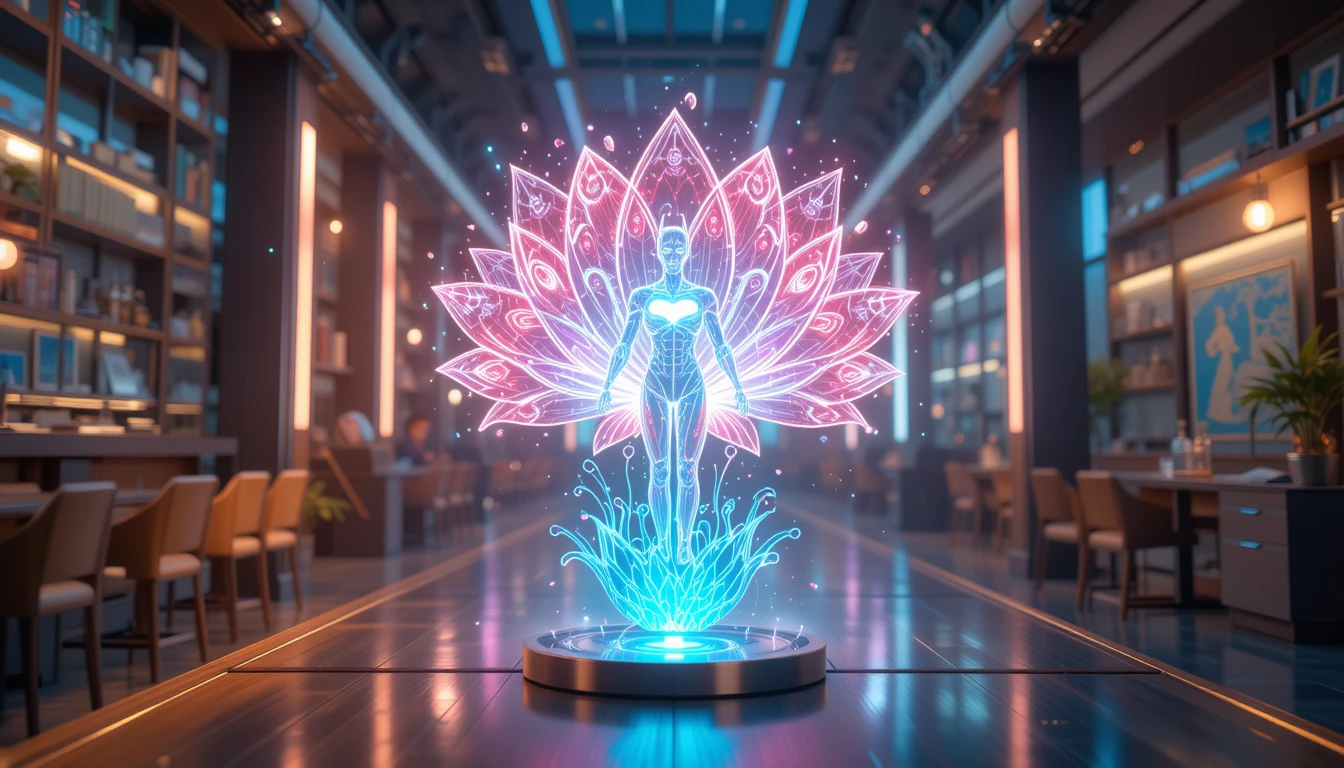
An essential point of admiration for Flora AI is how it simplifies the creative process. Gone are the days when generating complex digital art required navigating convoluted software menus laden with obscure options. Instead, Flora AI provides clear controls and customizable settings that make it accessible for novices and professionals alike. This approach democratizes high-end digital creation, a vision shared by progressive technology innovators detailed in publications like Wired and MIT Technology Review. The tool’s streamlined workflow, showcased vividly in a recent Skill Curve video by a presenter known as “Mad,” demonstrates how users can generate a glowing image of a delicate flower with minimal effort, only to discover that every artistic possibility lies just a few clicks away.
Beyond the aesthetics of the interface itself, the underlying genius of Flora AI is in its concept of flows—predetermined creative journeys that guide users from conceptualization to final output. These flows are not rigid scripts but dynamic templates that users can adapt, combine, and modify to suit their creative needs. Such adaptability is reminiscent of design thinking principles found at Fast Company, where innovation is as much about the process as it is about the final product. The interface’s ability to support multi-step creative projects ensures that whether the task is generating a static image or an elaborate video sequence, the design remains fluid and intuitive. Finally, just as a well-tuned orchestra brings disparate instruments into a harmonious symphony, Flora AI’s modular interface aligns custom prompts and preset flows into a coherent creative narrative. This integration of clear controls and customizable settings empowers users to explore, iterate, and ultimately excel in digital art creation—a testament to the visionary potential of AI-powered platforms as seen in the broader ecosystem of creative tools, such as those discussed on The New York Times’ technology section.
🚀 ## 2. Generating and Enhancing AI-Powered Images
Harnessing the power of Flora AI to generate stunning images begins with understanding the “Describe an Image” feature—a tool that symbolizes the seamless integration of descriptive language with visual representation. At its core, this feature functions by transforming a simple text description into a compelling visual narrative. Picture the prompt “a luminous flower blooms delicately,” which today resonates with warmth and clarity like a scene unfolding in a dream. The interface not only accepts this request but visualizes it with a precision evocative of National Geographic’s breathtaking imagery, where technology meets artistry.
The process is both straightforward and intentional. Users start by selecting the “Describe an Image” option, which instantly reveals a sample output—a glowing glass flower that radiates luminous energy. This is more than mere image generation: it is the translation of poetic description into visual art. The user then sees the description articulated within a designated text box, unifying language and image in a manner that is both efficient and expressive. The simplicity of this step belies the intricate network of AI-powered algorithms functioning behind the scenes. In many ways, this method parallels the elegant user experiences offered by Google’s DeepMind projects, where layers of machine learning distill human input into perceptible art.
To delve deeper, consider the example of generating a neon Batman image. The workflow here is illustrative of Flora AI’s capacity to handle complex creative prompts. The process starts with initiating an image generation request by clicking on a plus icon—a small, unassuming gesture that launches a cascade of creative possibilities. The prompt is meticulously detailed: from the concept of a demo image to the execution of a vibrant, neon-themed Batman, the tool methodically translates the idea into reality. This is achieved by selecting the image creation node and choosing from various available models. For this particular instance, the use of the Flux model is recommended given its speed, ensuring that the transformation from concept to visual output is both swift and striking.
Once the prompt is initiated, the tool kicks into gear, and the image generation sequence commences—with a simple click of an arrow button, the process is set in motion. Within moments, an image emerges that showcases the iconic persona of Batman, reimagined in neon hues with an aesthetic that is as edgy as it is imaginative. The striking visual of a neon Batman is not merely a product of routine algorithmic processing; it is an embodiment of creative freedom enabled by Flora AI, where every detail is meticulously honed to capture the spirit of the prompt. For further technical insights into such AI-driven workflows, readers may explore discussions on algorithmic art at arXiv.org.
But the creative journey does not halt at the first generation. Flora AI’s interface empowers users to modify and enhance images seamlessly. Consider the playful yet impressive ability to change the color scheme of an image. In the neon Batman example, a user might decide that the standard design could benefit from a splash of purple to introduce a different mood or energy. By clicking the plus button once more and simply specifying a new prompt (changing the color to purple), Flora AI reprocesses the image to yield a purple neon Batman. This iterative process is akin to the revisions a master painter might make—adding shadows, tweaking hues, and deliberating over every stroke until the image achieves the desired effect, reminiscent of the iterative creative techniques highlighted on The Verge.
The true brilliance of Flora AI emerges as users experiment with a variety of custom prompts. The system is robust enough to handle diverse requests, from the distinctly retro to the surreal. For instance, a prompt like “a ’90s retro computer setup with CRT monitor” channels a nostalgic aura that takes one back to the early days of digital computing. The resultant image can evoke memories of a bygone era, juxtaposed with modern-day AI execution—a synergy much celebrated by Microsoft Research in discussions on digital transformation.
Other imaginative requests further broaden the creative horizon. One might prompt the tool to generate “a surreal desert with a floating pyramid and a gigantic moon,” a scenario that renders an almost otherworldly vista combining elements of dream logic with hyperrealism. Alternatively, an intriguing visual request might paint “a hyper-realistic glass city in the clouds,” conjuring a futuristic metropolis that borders on the fantastical. These exercises are not merely academic; they embody real-world applications in digital art, marketing, and even cinematic production, much like the AI-enhanced visual effects explored in recent VentureBeat features.
Among the more playful experiments is a prompt that asks for “a cat holding a council meeting in a castle.” The whimsical juxtaposition of a feline in a regal setting infuses humor into the creative process while challenging the AI to maneuver between different stylistic registers. Another prompt, “Candid photo of a street magician in Paris,” drapes the scene in the timeless allure of black and white photography, reminiscent of classic moments captured by the likes of The New York Times’ art coverage. These diverse scenarios not only showcase Flora AI’s adaptability but also reflect a broader trend in the creative industries where AI serves as both a muse and a tool, a trend meticulously analyzed in articles from Fast Company.
The subtle elegance of Flora AI is further accentuated by the depth of control it offers during the image generation process. Users are not merely at the mercy of automated outputs; they have the reins to guide the evolution of the artwork. By layering descriptive prompts, making real-time adjustments, and experimenting with variations, the tool acts as a partner in creativity. This is especially useful for industries where precision and personalization matter—such as advertising and digital marketing—echoing the strategic insights disseminated by industry leaders on Forbes.
In essence, the journey of generating and enhancing AI-powered images with Flora AI is a sophisticated dance between human intent and machine efficiency. It transforms abstract ideas into palpable visuals, enabling businesses, artists, and tech enthusiasts to unlock creative potential with a few simple commands. As the digital age surges forward, platforms such as Flora AI are not just tools—they are catalysts for an artistic revolution that redefines the boundaries between human imagination and artificial intelligence.
🧠 ## 3. Crafting Engaging AI Videos and Creative Combinations
Stepping beyond the realm of static imagery, Flora AI extends its creative prowess to the generation of dynamic videos and intricate digital compositions. This evolution from still images to video creation signals a paradigm shift in how narratives are constructed and experienced. In today’s fast-paced digital ecosystem, the ability to translate narrative prompts into lively motion pictures holds profound implications for storytelling, advertising, and interactive media. Here, the AI does not merely generate visuals; it orchestrates a fluid dance of camera movements, effects, and transitions that parallel the storytelling techniques lauded by influential media critiques on The New York Times and Wired.
The video generation process begins from the same intuitive, node-based interface that governs image creation. Users simply select the video option—a decision that signals a step into a more dynamic creative process. A notable example demonstrates how a scene is brought to life: envision a prompt describing “a robot walking alone in a flooded street in slow motion.” This vision is not only compelling but also technically precise, demanding a balance between narrative subtlety and visual impact. Flora AI accommodates this with options to select between models optimized for video performance, namely Minimax and LTX.
When opting for video generation, the choice between the Minimax and LTX models becomes a strategic decision. The Minimax model is acknowledged for its ability to deliver high-quality visuals, albeit with a slightly longer processing time, making it ideal for scenes where quality is paramount. On the other hand, the LTX model offers swift rendering times—a feature that is useful when speed is of the essence. In the example of the lone robot, the Minimax model’s output stands out with clear detailing and fluid water effects, underscoring the importance of quality in narrative-driven visual storytelling. This model selection process is analogous to the trade-offs discussed in academic articles on video production technologies at MIT Technology Review.
Beyond single-scene videos, Flora AI also caters to the creation of elaborate story sequences through its “Explore Flow” option. This feature is a treasure trove for creatives: it houses pre-built sequences that streamline video generation for specific domains, such as gaming, digital marketing, or cinematic storytelling. For instance, a pre-designed gaming flow might start with a detailed game development environment description, followed by prompts that generate atmospheric visuals like “a dark and atmospheric scene featuring flickering torchlight casting dancing shadows on rough stone walls.” The resulting video clip, complete with evocative background effects and smooth transitions, is as immersive as an indie game trailer or a cinematic teaser. This layered approach to video creation mirrors strategies discussed in Forbes’ coverage of digital storytelling and the rising influence of AI in content creation.
The exploration of video generation doesn’t end there. Flora AI’s versatility shines through the ability to slip seamlessly between images and moving sequences. Users can first create a high-quality image and later transform it into a video by appending motion cues, camera movements, or special effects. Imagine combining disparate elements into a singular coherent narrative: a manga-inspired character with dynamic angular features paired alongside a sleek car model to create an eye-catching Ferrari poster. Such creative combinations are not mere novelties; they offer a powerful tool for digital marketers and creative agencies striving to capture the attention of modern audiences. The blending of static design with dynamic motion epitomizes contemporary trends in digital media, as highlighted by VentureBeat.
A particularly compelling application of this technology is the ability to generate thematic videos from imaginative scenarios. Consider a charming prompt like “a sunny park scene where Max and Bella, two playful puppies, frolic together.” With Flora AI, this description evolves into a vivid video scene where camera movements capture the dogs’ energetic play, and ambient sounds further enrich the viewing experience. The resulting video is more than a sequence of images—it is an immersive narrative that brings characters and environments to life. Such creative freedom is consistent with the ideas presented in Microsoft’s research on multimedia AI, where the convergence of image and motion creates entirely new forms of digital art.
The process of crafting engaging AI videos also extends to more complex compositions, where multiple visual elements are combined to form a new narrative. For example, by merging scenes generated from distinct prompts—such as a futuristic high-rise against a backdrop of a surreal desert landscape—creators can construct layered digital collages that challenge traditional boundaries of art. This method of digital juxtaposition, which might involve blending hyper-realistic glass cities with neon cinematic effects, echoes the avant-garde techniques seen in contemporary art exhibits and design labs. The fluidity in combining images for videos using Flora AI is a subtle reminder of the artistic resilience and inventive potential found in digital media, much as described in Fast Company’s innovation profiles.
Moreover, the tool’s modular design streamlines even the most intricate video projects. Whether it’s a dynamic video outlining a storyline complete with generated imagery from pre-built flows or an ad hoc production that meshes animated characters with moving backdrops, Flora AI supports seamless integration of ideas into a cinematic experience. Video creators can manipulate camera angles, utilize transitions, and even direct the pace at which the narrative unfolds. For example, in generating a video where water effects and a solitary robot create an ambience of isolation and determination, controlled adjustments like slow-motion sequences ensure that the viewer remains captivated by every detail. Such functionalities highlight a sophisticated interplay between manual control and automated processes—a subject that AI ethics and technology reviews often debate in the pages of The New York Times’ opinion section.
The potential applications of these capabilities are enormous. In the realm of filmmaking, advertising, education, and gaming, the ability to quickly prototype narratives and visual assets is invaluable. Creatives can generate detailed storyboards in a fraction of the time traditionally required—an advantage that is as economically attractive as it is artistically liberating. Additionally, for experimental artists who thrive on the juxtaposition of contrasting ideas, the ease of combining them into a single visual narrative offers an unprecedented form of creative expression. These advancements in video generation are part of a broader movement towards augmented creative workflows, where artificial intelligence does not replace human ingenuity but rather amplifies it. For further reading on the integration of AI in multimedia production, The Verge presents insightful discussions and case studies.
In matching creative ambition with technological capability, Flora AI emerges as a comprehensive platform for both image and video generation. Its blend of intuitive design, rigorous control, and expansive creative potential positions it as a beacon for those who dare to reimagine art in the digital era. By providing tools that simplify complex processes and enable seamless transitions between static and dynamic media, Flora AI illustrates that the future of digital creation lies in the harmonious collaboration between human vision and artificial intelligence. As the digital landscape continues to evolve at breakneck speeds, the insights provided by platforms like Flora AI will undoubtedly influence how society perceives and utilizes creative technology— a transformation closely monitored by influential tech critics on sites such as Forbes and VentureBeat.
In summary, whether through the generation of evocative images or the crafting of engaging video narratives, Flora AI stands at the forefront of AI-driven creativity. Its workflow, built around clear interfaces, interactive flows, and customizable nodes, democratizes digital content creation and empowers artists and businesses alike. From a glowing, luminous flower to a vibrant, slow-motion video of a robot navigating flooded streets, the platform transforms ideas into art in a manner that is both accessible and awe-inspiring. The integration of creative prompts, iterative adjustments, and high-quality output is a testament to the relentless drive of innovation, ensuring that the creative possibilities of tomorrow are within reach today.
Each creative venture undertaken with Flora AI is a step toward a future where digital and human creativity converge seamlessly, reshaping industries and influencing how stories are told in a rapidly evolving digital world. This is not just about generating images or videos; it’s about exploring new realms of possibility where every idea, no matter how intricate or whimsical, finds its expression through intelligent design and thoughtful technological integration. Visitors who explore this arsenal of creative tools find a world of opportunities, much like those documented in research and case studies from IBM’s AI initiatives.
Thus, in a continuously shifting landscape where technology evolves and creativity expands its boundaries, Flora AI represents more than just a tool—it is a catalyst for reinvention. As emerging media landscapes develop, traditional barriers are being dismantled and replaced with bridges that connect the human imagination with the boundless potential of artificial intelligence. This evolution is celebrated in platforms like Flora AI and critically examined in scholarly and industry publications alike, marking a significant milestone in the journey toward an AI-enhanced creative future.
By combining the precision of algorithmic computations with the boundless creativity of human thought, Flora AI not only delivers polished artistic outputs but also fosters a culture of continuous innovation that will energize digital art for years to come. From educational institutions to commercial creative agencies, the platform’s influence is set to expand across disciplines, urging everyone to embrace the fusion of art and technology in unprecedented ways. With each generated image and every carefully crafted video sequence, the platform reinforces its status as a vital player in the broader narrative of digital transformation.
In conclusion, the creative potential offered by Flora AI is immense. The thoughtfully designed interface, coupled with its expansive set of tools for both image and video generation, makes it an indispensable platform for anyone looking to explore the convergence of technology and art. As the digital world continues to morph, platforms such as Flora AI remain at the forefront—a testament to how AI can empower a new generation of creators to push the boundaries of what is possible and redefine the limits of human imagination.
For further exploration of how AI is transforming creative industries, insights can be deepened by exploring expert perspectives on digital innovation at Microsoft Research, alongside analyses available at arXiv.org where the latest advancements in machine learning and AI are documented. These resources provide invaluable context and further bolster the understanding of the profound impact of AI on the creative process—a journey that Flora AI exemplifies with every project it undertakes.
Ultimately, the creative possibilities and the avenues for innovation that Flora AI opens up are only beginning to be understood. As every artist, designer, and digital storyteller discovers the transformative potential of this platform, the lines between human creativity and machine intelligence blur into a harmonious blend of thoughtful design and technological mastery. This union is at the heart of many exciting new developments in the creative industry—a development chronicled across numerous technology insight platforms such as Google’s AI blog and extensively analyzed on The Verge.
In essence, Flora AI stands not only as a tool but as a visionary guide in this expansive domain of AI-driven artistry, inspiring creators to challenge conventional boundaries and to redefine what is possible in a world where every image and video encapsulates both innovation and artistic spirit.