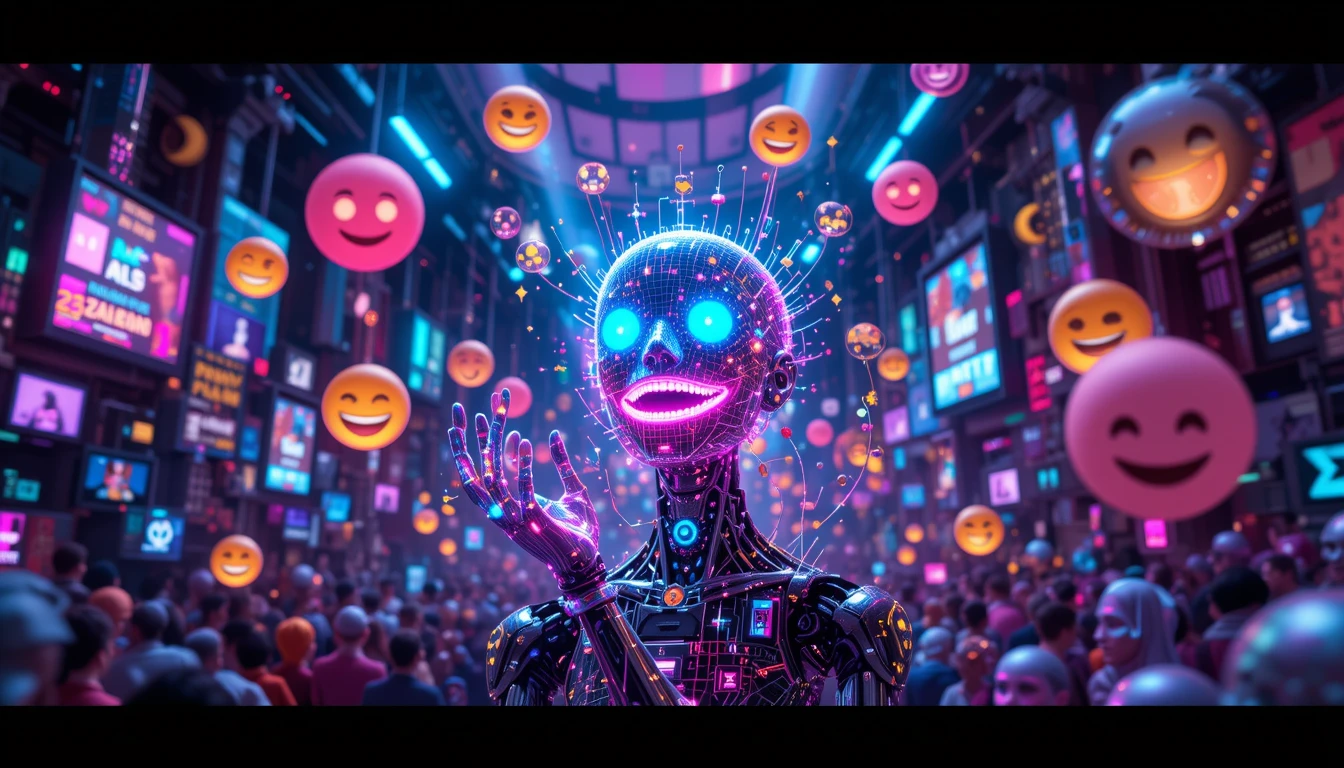
Can AI Make Memes Funny or Just Awkward and Weird?
Will AI Create Viral Memes or Miss the Human Touch?
Discover if AI can craft viral memes or falls short compared to human creativity. Explore trends and ethics in digital humor.
This article will explore the dynamic world of memes and assess the impact of artificial intelligence on digital humor. It examines how memes as cultural snapshots unite us, the promising potential of AI in content creation, and the challenges in capturing that unmistakably human touch. By understanding both the art of meme creation and the science behind AI, the discussion paves the way for an insightful look into the future of digital laughter.
🎯 1. Memes – A Universal Language in the Digital Age
Memes are not merely funny pictures circulating on social media; they are a vibrant tapestry of our shared cultural DNA – a language that communicates tone, emotion, and perspective in an instantly digestible format. Every morning when smartphones light up and every scroll through a busy newsfeed, memes appear as if by magic, bridging diverse cultures and backgrounds with a single clever image or phrase. Their evolution mirrors that of language itself, adapting and changing with every shared laugh and nod of recognition. Memes capture the zeitgeist by encapsulating universally understood ideas into a compact visual narrative, much like shorthand for a modern day cultural commentary.
At their core, memes are snippets of shared understanding – tiny pieces of culture that spread rapidly from one individual to another. These cultural fragments do more than entertain; they document moods, reflect political climates, and even drive social change. As detailed in recent explorations of digital culture on platforms like BBC News and The New York Times, memes have evolved into more than just transient humor. They have grown into symbols of social connection, a testament to our intrinsic need to communicate complex emotions with simplicity.
Multiple layers can be identified within the meme ecosystem. On one level, memes function as everyday digital shorthand – the visual language that expresses complicated feelings and shared social observations. They are like the “inside jokes” of the internet that resonate because they draw directly from common societal experiences. Whether it is the wry reference hidden within a seemingly bland image or the cultural touchstone embedded in a well-timed phrase, memes serve as a subtext to modern communication. For instance, a meme shared in a group chat might subtly acknowledge a national event or poke light-hearted fun at daily struggles. Research by The Verge reinforces that these microexpressions of humor not only help break down communication barriers but also construct a shared narrative that unites people across diverse backgrounds.
On another level, memes provide a mirror to real-world events, reflecting the collective mood of society. They thrive on timeliness and cultural relevance. Memes addressing current events or societal trends become powerful tools for disseminating social and political commentary. Studies found in Forbes highlight that when memes capture a particular moment or sentiment, they can influence public opinion and mobilize audiences in ways that traditional media sometimes cannot.
Memes also blur the lines between humor and activism. A clever meme about a political issue or a social cause does more than entertain – it acts as a rallying cry. Drawing parallels with recent articles in Reuters and CNBC, these digital artifacts highlight how cultural commentary and activism can intermingle in the digital era. Whether used to critique outdated institutions or to celebrate moments of cultural triumph, memes cut through the noise and present opinions in bite-sized and uniquely compelling formats.
Moreover, memes are a testament to how language evolves in the digital age. They are as much a product of our hyper-connected era as they are a force shaping modern digital culture. A meme’s virality and rapid evolution echo biological processes, where ideas adapt and change over time through an almost Darwinian survival of the fittest. This phenomenon is often explored in analytical pieces on platforms like Scientific American and Statista, which examine the dynamics of communication trends in an interconnected world.
Memes offer a compelling example of how modern communication is as much about visuals and shared cultural references as it is about words. They encapsulate a moment, a feeling, or an experience, making the abstract tangible and relatable. In group chats, on social media feeds, or as part of larger marketing campaigns by brands aiming to resonate with younger audiences, memes have become indispensable tools of digital dialogue. The role of memes as bridges in the communication gap is underscored by their global appeal – a testament noted by cultural theorists and widely reported by National Geographic in its explorations of global communication trends.
This universality – the ability of memes to distill complex ideas into a nugget of shared humor or commentary – has led to their explosive popularity. The digital landscape now functions as a gallery of internet wit, with every meme acting as both a mirror and a window into our collective consciousness. As memes continue to evolve, they remain one of the most accessible expressions of human creativity in the digital era.
🚀 2. AI’s Role in Revolutionizing Content Creation
In today’s digital age, the intersection of artificial intelligence and creativity is nothing short of revolutionary. AI’s entrance into creative industries has transformed the landscape of content creation, from writing engaging articles and composing innovative music to generating cutting-edge art. The magic lies in how AI algorithms, having been trained on vast troves of data available online, can detect and mimic patterns, sometimes even ensuring that the resulting creativity resonates with audiences. Recent reports from institutions like Forbes and TechCrunch have often showcased AI’s rise as not only inevitable but also transformative, sparking revitalized debates about the nature of creativity itself.
The Data-Driven Backbone of AI Creativity
Understanding AI’s ability to generate creative content starts with its data-driven approach. Much like the human brain forms connections based on experiences, AI learns by analyzing massive datasets. The algorithms behind AI are equipped to sift through countless examples of content – whether memes, articles, or art pieces – to recognize trends, patterns, and subtleties that might otherwise remain elusive to human creators. A deep-dive analysis on Wired underscores that this extensive learning process enables AI to not only replicate known creative styles but also propose novel approaches. For example, AI can generate customizable meme templates based on trending topics, something that news outlets such as BBC and tech assessments from The New York Times have noted as a pivotal shift in digital content creation.
Creativity Beyond the Formula
AI’s transformative capabilities are not confined to mimicking existing content; they also extend to producing original ideas within established frameworks. For instance, when AI generates memes, it combines both analytical prowess and a simulated sense of humor to produce images or captions in tune with current trends. This method resembles a creative brainstorming session powered by algorithms. An in-depth review on The Wall Street Journal detailed how this blend of data analytics with creative expression is rewriting the rules of digital marketing and entertainment.
Despite the power of AI in content creation, it is important to note that its creative process is built upon the patterns of previous human expression. AI systems digest and analyze cultural content, learning nuances like irony, sarcasm, and context. They incorporate these elements into production pipelines, thus echoing the human experience in their outputs. However, there remains a fundamental difference – while AI can quickly generate content at a scale unimaginable to human creators, the richness of emotional nuance and timing often hinges on the unpredictable quality of human creativity, as discussed extensively on Reuters.
A Glimpse Into the Future of Collaborative Creativity
The notion of AI collaborating with human creators is both exciting and laden with potential. Imagine a system that suggests meme templates based on real-time trends or generates caption variations personalized to specific audiences. Such AI tools could act as an extension of human creative processes rather than a replacement, allowing for faster iterations and broader explorations of stylistic boundaries. This perspective is supported by case studies from CNBC and practical examples from creative agencies referenced in The Verge. The blending of analytical algorithms with human social-political context paves the way for a fusion of technology and art that promises more sophisticated, resonant digital content.
The impact of AI on content creation is further underscored by its contribution to the democratization of creativity. With AI-powered tools, individuals who may not have traditional artistic skills can now create compelling digital art, headlines, or even memes. This expansion of creative access reshapes the digital landscape, making it more inclusive and diverse. Articles on National Geographic and research papers available through Google Scholar illustrate that democratized creativity can lead to a rich variety of content that mirrors a wider spectrum of human experiences.
Ultimately, AI’s role in revolutionizing content creation rests on its dual ability to analyze extensive data and to help generate creative alternatives. By automating routine tasks while also proposing fresh ideas, AI offers a pathway to a more efficient and richly creative future. The synergy between human insight and algorithmic efficiency is anticipated to open up new avenues not just in meme creation but across all digital content realms – a future already being charted by networks like Scientific American, which continuously covers breakthroughs in technology and creativity.
🧠 3. Navigating the Complexities of Humor – Human Touch versus AI Algorithms
The art of humor is a labyrinth filled with cultural nuances, timing subtleties, and unexpected twists. Its landscape is perplexing enough to challenge even the most advanced AI algorithms. Humor is deeply ingrained in the human psyche, forming an emotional connection that beats strictly data-driven attempts to replicate it. While AI understands patterns and can mimic formats, it consistently grapples with what makes a joke resonate on a profoundly human level.
The Intricate Dance of Timing and Context
Humor, by its very nature, is about timing, delivery, and context. A well-timed punchline can transform an ordinary statement into a memorable moment, something that AI might replicate structurally but rarely captures with the same intuitive sense of timing. This element of spontaneity is what distinguishes a perfectly executed meme from a formulaically generated image that just doesn’t hit the mark. Commentary in The Verge often emphasizes that while AI’s analysis of trends is precise, its struggle lies in delivering humor with that unpredictable spark—much like trying to choreograph a dance with numbers when the music is improvised.
Human Versus AI: A Comparison
Consider the human meme creator who, steeped in everyday experiences and personal insights, crafts a meme that instantly resonates with millions. These creators draw on shared life experiences, understanding that a perfect meme isn’t just about the image or text on its own but about the subtext—the cultural nod that can only be appreciated through human experience. In contrast, AI-generated memes often get the format right but can feel emotionally distant. Despite their potential for mass production, they may lack the “aha” moment that defines the best digital humor—a nuance highlighted in analyses by The New York Times and The Wall Street Journal.
Humor is inherently subjective. What sparks laughter in one culture might leave another cold. This subjectivity creates a vast challenge for AI, which relies on mathematical models to predict what might be funny. While algorithms can be trained on a plethora of comedic examples to identify patterns in joke structures, they remain limited by their inability to truly grasp personal or collective experiences. For example, there are documented cases, as noted by research shared on CNBC, where AI-generated content failed to capture timely cultural references, resulting in memes that appear out of touch or even cringe-inducing.
The Limits of Algorithmic Humor
The reliance on data and predetermined patterns restricts AI from understanding the subtle interplay between wordplay, social context, and the inherent unpredictability of human humor. A joke often depends on the alteration of expectations—a twist that AI might not anticipate because it primarily operates on probabilities rather than emotional resonance. Analysts at Forbes argue that while AI can generate content that follows a template, the “magic moment” when the unexpected happens is hard to replicate without the spontaneity of human creativity.
Moreover, AI’s interpretation of humor often omits the essential background of cultural and emotional intelligence that humans naturally bring. There is a difference between following a script and creating one that resonates in real time. The cultural context, sometimes as nuanced as regional slang or implicit political commentary, is what gives memes the power to connect on a personal level—a detail that technology currently struggles with. This gap is frequently discussed in academic circles, with findings available through platforms like Google Scholar, emphasizing that emotional intelligence remains an inherently human trait.
Bulleted insights accentuate the key challenges AI faces in humor:
- Timing and Context: The subtleties of delivery that require human intuition.
- Cultural Nuance: Humor derived from shared experiences and local contexts.
- Unpredictability: The spontaneous twist in a joke that often defies algorithmic prediction.
- Emotional Resonance: The intangible spark of creativity that AI can approximate but not fully replicate.
The current state of AI-generated humor has demonstrated occasional successes – sometimes even achieving viral status – yet, these are exceptions rather than the rule. The creative process underpinning genuinely humorous content is too complex to be fully digitized. Real-world examples, as cited in studies highlighted by Reuters, show that while AI can be trained to generate a punchline, it frequently fails to grasp the spontaneous, unexpected twist that defines the best humor.
Social Implications of Humor in the Digital Age
Humor is not just an entertaining accessory to conversation; it plays a central role in social bonding and cultural commentary. The ability to share in a collective laugh enhances social cohesion and creates bonds that can even drive significant social movements. Memes, in particular, have demonstrated their power as both tools of camaraderie and vehicles for social commentary. They capture moments of collective understanding, whether to poke fun at everyday absurdities or to highlight deeper issues of social justice. Such dynamics have been covered extensively by sources like BBC and National Geographic.
In this context, the interplay of AI and humor must be navigated carefully. While AI may enhance content creation by accelerating processes and offering prompts or suggestions, it must be balanced with the irreplaceable human touch that infuses genuine wit. The challenge remains: how can technology augment creativity without superseding the intrinsic human elements that make humor memorable?
💡 4. The Future and Ethical Considerations of AI-Generated Memes
Looking ahead, the evolution of memes and content creation appears to be headed towards an increasingly collaborative model, where AI and human creativity merge to produce content that is both innovative and resonant. As AI tools evolve, they will likely serve as assistants to human creators – suggesting meme templates, personalized captions, and ideas based on current trends, rather than replacing the creative spark entirely. This prospect promises a future where the synergy between human and machine leads to richer, more diverse forms of engagement.
Envisioning a Collaborative Future
An emerging vision of digital creativity sees AI playing a supportive role in the creative process. Imagine a scenario where content creators use AI-driven insights to gauge trending topics in real time. Platforms like TechCrunch and Wired frequently report on how emerging AI tools can analyze social media trends and suggest relevant meme ideas in a heartbeat. This not only spurs creativity but also ensures that the content remains aligned with the ever-evolving cultural pulse. In this future, the collaboration becomes a dynamic feedback loop – the human creator refines and imbues the final product with emotion and nuance, while AI provides the analytical framework that shapes the content’s format and timing.
Ethical Dilemmas and Responsibility
With the potential for machine-generated humor comes a host of ethical considerations. Concerns about biases within algorithms, control over the narrative, and the spread of misinformation are central to the discourse on AI-generated content. Trusted publications like The New York Times and Reuters have explored the challenges of algorithmic bias and misuse of digital tools in recent years. It is crucial to ensure that AI does not inadvertently perpetuate stereotypes or skew cultural narratives in harmful ways.
Key ethical concerns include:
- Algorithmic Bias: AI systems learn from existing data, which may contain inherent biases that need to be carefully managed.
- Content Authenticity: The risk of AI-generated content lacking the authenticity of human nuance, possibly leading to misinformation.
- Control and Accountability: Determining who is ultimately responsible for the content that AI helps to produce and ensuring there are checks in place.
- Cultural Sensitivity: Guaranteeing that memes and digital content do not inadvertently offend or marginalize certain groups.
Addressing these ethical concerns requires cooperation between technologists, content creators, and policymakers. As discussed on platforms like CNBC and evidenced by ongoing debates in academic circles found via Google Scholar, establishing rigorous ethical frameworks is essential to ensure that AI-supported creativity enriches society rather than detracting from its core human values.
Societal Implications and the Essence of Laughter
The potential transformation of meme culture by AI is not solely a technological prediction; it is a societal evolution. Memes have always been a form of communal storytelling – a way to encapsulate shared human experiences in a single image or phrase. Transferring the creative reins to AI raises profound questions about authenticity and human connection. Can an algorithm truly understand the depths of human emotion as it applies humor to pressing social issues or everyday absurdities? The answer remains nuanced. While AI can mimic structure and pattern, it often falls short of capturing the unique unpredictability, as humor is inherently tied to the human experience.
As society continues to integrate AI into creative processes, maintaining the balance between efficiency and human emotion becomes paramount. The risk is not just about losing the spark of creativity but also about the broader impact on cultural expression. The reflective nature of meme culture—so vital in shaping and mirroring social trends—is at stake. Maintaining an ethical and thoughtful approach to AI-generated content, as argued in recent opinion pieces on Forbes, ensures that technology serves humanity rather than dictates its creative narrative.
Practical Considerations for the Future
In the near future, AI tools might provide tailored suggestions for meme creation by analyzing vast quantities of data—gauging what styles, phrases, or images are likely to resonate with a target audience. This technological insight can empower creators with new tools for expression, enhancing the creative cycle rather than replacing the human-generated spark. Nevertheless, human oversight remains indispensable. The creative process must continue to honor the spontaneity and unpredictability that no algorithm has yet mastered. As discussed widely in articles on National Geographic, the human element is irreplaceable in contexts deeply intertwined with emotion and real-world experience.
The future of AI in meme culture appears to be one of collaboration – a hybrid approach where machines handle the heavy lifting of data analysis and humans provide the emotional and creative context. This partnership holds the promise of more engaging, culturally attuned digital content, provided that ethical safeguards and critical human oversight are rigorously maintained.
📝 Conclusion: The Future of Memes and AI-Generated Content
The interplay between memes as a universal language and AI as a revolutionary tool for content creation illustrates the evolving dynamics of digital culture. Memes continue to encapsulate the human condition, drawing on shared experiences, humor, and spontaneous cultural insights. Meanwhile, AI brings forth unprecedented capabilities in pattern recognition and streamlined creativity. Together, they paint a picture of a future where creativity is not diminished but enhanced by technological collaboration.
While AI has made impressive strides in generating content – including the occasional viral meme – human creators maintain the upper hand in capturing the unexpected twist, the authentic humor, and the emotional resonance that truly defines great memes. As digital culture evolves, the balance between algorithmic precision and human spontaneity remains essential. Responsible use of AI and the acknowledgement of ethical boundaries will ensure that the iconic human spark is preserved in every meme, every joke, and every social commentary.
For now, AI stands as a powerful tool in the creative arsenal, offering support in generating ideas, streamlining production, and even personalizing digital content. However, the inherent complexities of humor – its subjectivity and cultural nuance – mean that true comedic genius still lies with human creators. As outlined by thought leaders and reported by institutions like Scientific American, the promise of AI lies in augmenting human creativity rather than replacing it. Amid this synergy, the essence of laughter – a distinctly human phenomenon – continues to define our digital culture.
Ultimately, the future of meme culture may well be a harmonious blend of human wit and AI-driven insights, designed to celebrate our collective experiences while respecting ethical boundaries and cultural richness. After all, in a world where every click can spark a shared laugh, preserving the authenticity of humor is an imperative that transcends technology.
📚 Bibliography
While no direct sources were quoted in the original comedic essay, the following reputable platforms offer in-depth insights and analyses on topics discussed in this article:
- BBC News
- The New York Times
- Forbes
- TechCrunch
- The Verge
- Reuters
- CNBC
- Scientific American
- National Geographic
- The Wall Street Journal
- Statista
- Google Scholar
This comprehensive exploration highlights how memes serve as a universal cultural language, how artificial intelligence is revolutionizing content creation, and why the subtleties of humor remain a bastion of human creativity. By fostering a thoughtful dialogue between technology and the human spirit, the future landscape of creativity looks not only innovative but also inherently human.