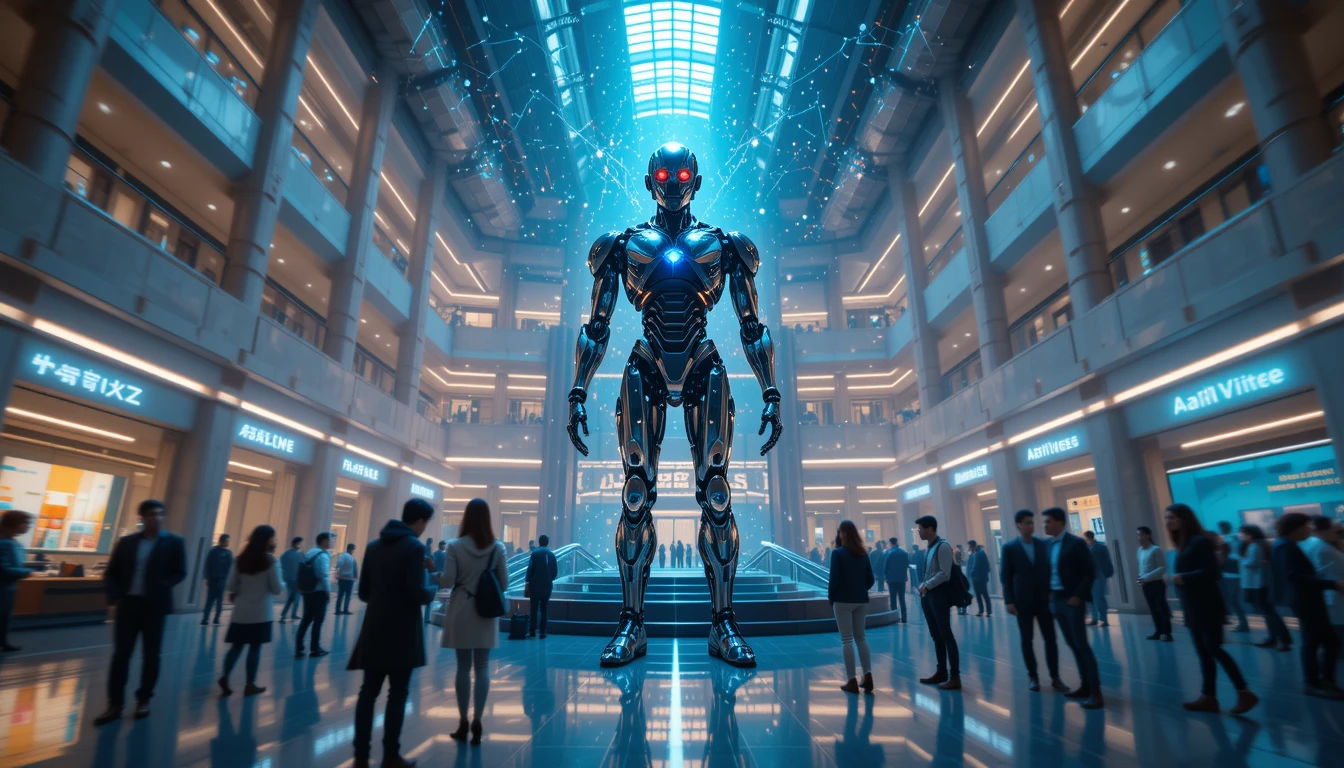
Building Robot Judic AI to Transform University Learning
Robot Judic AI: Revolutionizing University Learning
Explore how the Robot Judic AI project integrates robotics, AI, and robust data security to transform university education through innovative teamwork.
This article explores the groundbreaking Robot Judic AI project that is set to reshape university education. By combining advanced robotics, artificial intelligence, and stringent data security measures, the project aims to serve as an intelligent guide for students. The innovative collaboration among experts in electronic science, robotics programming, computer vision, and telecommunications engineering sets a new standard for educational technology.
🚀 Project Vision and Mission
Imagine walking into your university for a typical day of classes, lectures, and study sessions—but today, something is remarkably different: you’re greeted by an interactive robot companion, one who knows your name, understands your academic strengths and weaknesses, and provides personalized guidance every step of your learning journey. Welcome to the bold vision behind Robot Judic, an innovative educational initiative pioneered by a diligent team from the University of Dar es Salaam.
Robot Judic isn’t just another piece of technology; it’s a revolution—an endeavor aimed explicitly at transforming the traditional university experience into something more meaningful, personalized, and profoundly empowering. The mission behind this collaborative project echoes a shared human-centric philosophy: technology should not simply exist; it should actively amplify human potential, making education more accessible, engaging, and relevant.
Born out of passion and driven consistently by innovation, a strategic ensemble of brilliant minds from diverse disciplines—electronics, communications, robotics programming, embedded systems, artificial intelligence, and data security—has united under a clear and compelling purpose. Central to this pioneering initiative is teamwork, collaboration, and a persistent drive to usher universities into a future where technologies like robotics and AI become integral to student development.
Indeed, Robot Judic embodies a transformative spirit—one that compels students and educators alike to rethink and reshape their relationship with education. It’s a call to action, a demonstration of how innovation can directly empower learners and foster a culture of curiosity, creativity, and continuous improvement across the academic community.
🤖 Technical Innovations and Team Expertise
The stunning impact envisioned for Robot Judic stems undeniably from its sophisticated under-the-hood mechanics—a symphony of cutting-edge robotics, motion-control programming, advanced artificial intelligence, and rigorous data security protocols. At its core is a meticulously engineered hardware-software synergy that ensures Robot Judic performs fluidly, intuitively, and safely within the academic environment.
🦾 Servo Control and Robotics Programming Mastery
At the heart of Robot Judic’s physical movements lies an intricate network of servo motors, precision-engineered electronic actuators which allow smooth, refined robotic motion—breathing human-like movements into artificial shells. Spearheading this component is engineer Alisa Kikot, a robotics programmer whose expertise bends Python programming language seamlessly into practical servo motion engineering.
Through leveraging a specialized package called Calmhm, the programming team at UDSM has mastered smooth interpolation and advanced balancing of motors and microcontrollers. Calmhm has enabled them to manage nuanced electromechanical systems, addressing challenges such as torque control, energy distribution, and precision-balanced movements to ensure Robot Judic’s interactions feel genuinely natural and unobtrusive.
👁️ Advanced Computer Vision and Artificial Intelligence Integration
Robot Judic’s lifelike interactions extend beyond physical movements, delving deep into advanced adaptive and perception capabilities brought forth by computer vision and artificial intelligence. Led by Benjamin Mazikumashima, who specializes in computer engineering, Robot Judic’s sophisticated integration of machine learning models and computer vision algorithms allows it to interpret, contextualize, and dynamically respond to student interactions.
Facial recognition technology ensures that the robot assembles a continuously evolving understanding of each student user, enabling customized, efficient, and context-rich interactions. Meanwhile, the integration of large language models empowers Robot Judic to manage conversational complexity, interpret nuanced student requests, and adapt its educational strategies accordingly. This ambitious system reflects broader trends in AI advances, mirroring powerful technologies that drive innovation in sectors such as autonomous vehicles and generative content development.
🔒 Robust Emphasis on Data Privacy and Compliance
Groundbreaking as these innovations may be, Robot Judic places enormous emphasis on ethical considerations, data privacy, and compliance with stringent institutional and national regulatory frameworks. As telecommunications engineering student D carefully underscores, the robot’s capability in collecting and storing sensitive user data demands unwavering diligence in security practices. In response, dedicated efforts ensure multilayered data safety, transparency, and strict adherence to university guidelines covering privacy, security, and responsible technology usage policies.
This thoughtful focus positions Robot Judic not merely as a technology-enabled tutor but as a trusted companion, building meaningful connections founded upon respect for student privacy, autonomy, and ethical standards. Indeed, student trust and confidence are foundational conditions for innovative educational technologies to flourish and gain widespread adoption.
👥 A Unified Team of Technical Visionaries
None of these remarkable accomplishments would be possible without clearly defined roles and intelligently orchestrated collaboration among individuals with complementary skills. With Hassan Kim representing electronics and communication strategies, Alisa managing advanced motion-control protocols, Benjamin integrating artificial intelligence systems, and D steering critical security policies, the Robot Judic team exemplifies the synergistic power inherent in diversity of expertise and technical knowledge.
Effectively leveraging each individual’s potential and innovatively collaborating, this cross-disciplinary approach has proven paramount, reminding us that in technology-driven innovations, unity in diversity can truly unlock next-level possibilities.
🌟 Overcoming Challenges, Collaboration, and Future Impact
Innovations of Robot Judic’s magnitude seldom arise without accompanying challenges—complex moments that demand patience, strategic creativity, resilience, and collaboration. The ten-month project journey confronted the UDSM team with challenges large and small, ranging from stubborn hardware integration dilemmas to intricate troubleshooting of electromechanical systems, AI models, and communication protocols.
During moments of frustration and self-doubt, when milestones felt elusive and technical snags persisted, the consistent mentorship and intellectual generosity of Professor Baraka Meli played a critical role. Mentorship, often deeply underestimated, can serve as a cornerstone of technological achievement, offering seasoned perspectives and encouragement to persevere beyond roadblocks.
Yet, perhaps more importantly, each hurdle presented invaluable learnings—insights that can only come from hands-on experience, experimentation, collaboration, and adaptation. Overcoming these obstacles has imbued team members not only with deeper technical know-how but also with substantial personal growth, resilience, effective teamwork skills, and creative problem-solving aptitude.
🌐 Broader Impact and Inspiration for Educational Innovations
Robot Judic is more than the mechanical accumulation of its parts—it’s symbolic. It captures a broader, invigorating shift towards technology-driven educational empowerment, demonstrating vividly how robotics, AI, and smart embedded systems can deeply transform conventional pedagogical approaches. By positioning such sophisticated technology as a routine part of campus life, the Robot Judic initiative offers universities and educators everywhere a groundbreaking model to explore, iterate upon, and amplify.
Indeed, Robot Judic represents a catalyst for broader change within educational communities. It has the capacity to ignite future waves of student-led technical innovations, foster creative perspectives about academic learning, and bridge theoretical education and its real-world implications effectively. Such projects can inspire students elsewhere to imagine possibilities that once seemed distant—sparking curiosity, creativity, and, ultimately, meaningful innovations in educational paradigms.
🌠 Future Prospects: Bridging Academic Theory and Real-world Applications
Looking forward, the Robot Judic project signals untapped vistas of innovation where universities embrace a role as pioneering labs for real-world technological advancement. Customizing AI-driven robotics to specific educational needs means transcending mere technological novelty, positioning a system like Robot Judic as essential, integrated infrastructure within smarter, student-centered campuses.
Such potential inspires optimism. The technologies developed for Robot Judic could soon deploy widely across numerous academic landscapes, shaping richer, more interactive relationships between students, educators, and knowledge itself. This ongoing journey, empowered by cross-disciplinary collaboration, robust technical skills, ethical diligence, and visionary thinking, promises endless possibilities—redefining educational environments to benefit countless students in ways we’re only now beginning to conceive clearly.
Through Robot Judic, we glimpse education’s future clearly—a harmonious integration of advanced robotics, next-gen AI, ethical responsibility, and inspiring human teamwork—setting a magnificent stage for humans and intelligent machines to co-create a brighter academic tomorrow.