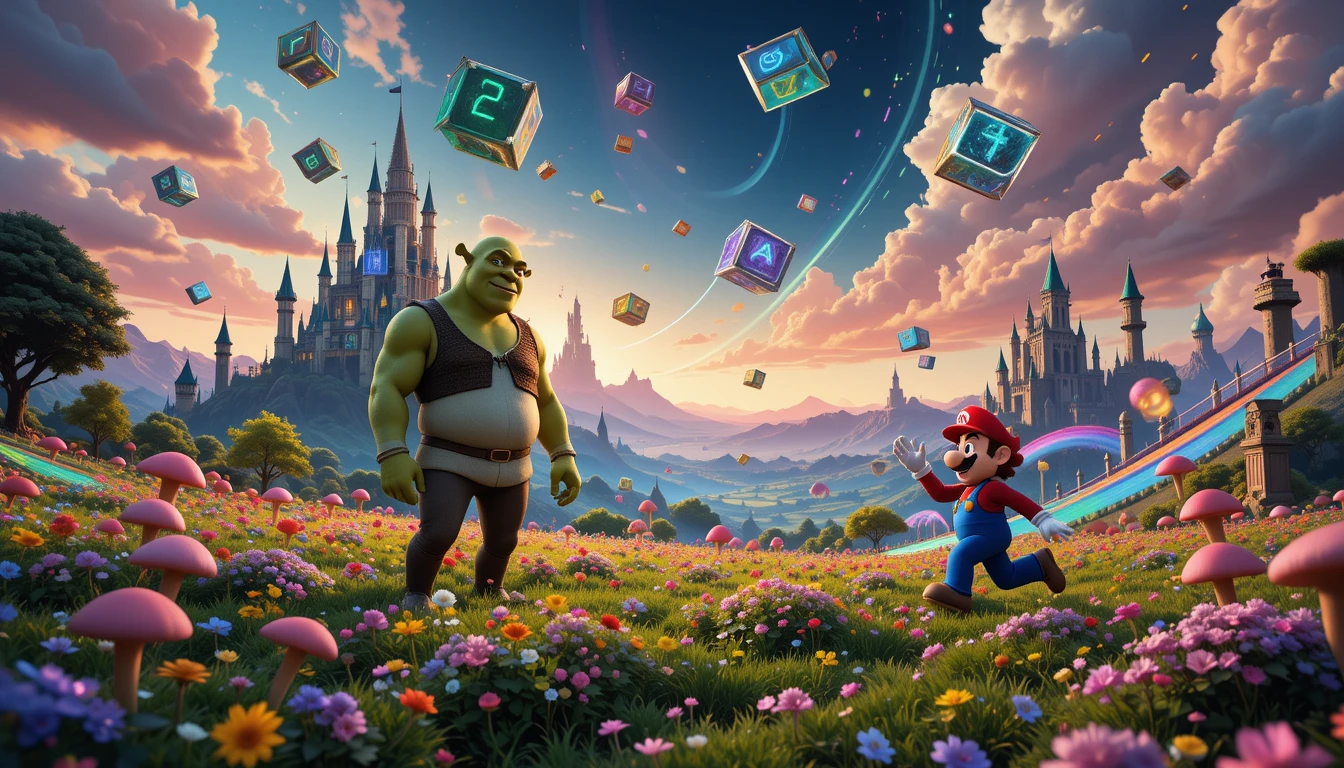
AI Turns Memes Into Wild Dream Worlds With Shrek and Mario
AI Crafts Wild Dream Worlds with Shrek and Mario
Discover how AI transforms memes into surreal dream worlds featuring Shrek, Mario, and an array of unforgettable characters in a chaotic narrative.
This article explores how AI technology turns everyday images into wild, 5-second videos that evolve into surreal, meme-inspired dream worlds. By blending iconic characters such as Mario, Shrek, and unexpected guest stars, the process creates a vivid tapestry of bizarre adventures and unpredictable twists. The journey showcases the power of AI-driven video generation and creative storytelling, inviting the reader to dive into an epic narrative full of AI-generated memes, surreal dream worlds, and creative transformations.
🎯 ## 1. The Power of AI Video Generation and Creative Extensions
Imagine an artist who paints a single 5-second clip and then, with every successive stroke, transforms that brief moment into an endless, dreamlike narrative. In the fast-paced era of AI-driven innovation, technology now allows any image to spark an ever-evolving video clip—a magic trick where each extension layers surreal transitions into an unpredictable tapestry. This isn’t science fiction; it’s the frontier of AI video generation, a technique where every extension creates a layered, bizarre narrative that mimics the fleeting and chaotic logic of dreams. Day after day, creative visionaries are leveraging this technology, which was once limited to static images, to create dynamic visual stories that oscillate between familiar scenes and wild, unexpected twists.
At the core of this innovation is an AI that begins with a simple 5-second video clip from a static image. The process is as much an act of creation as it is an exploration of narrative potential. The AI uses a dreamlike approach where each new extension not only continues the original scene but also infuses it with elements of chaos and surprise. For instance, one might start with a seemingly ordinary image, and before long, viewers are treated to a sequence where reality distorts: “Hey dog, I’m about to hang ten!” echoes amidst a backdrop that suddenly blends ordinary objects with the surreal—cookies and onions, fragmented whispers of an uncanny script that only AI can stitch together with such abandon.
The entire process is reminiscent of the creative ethos behind digital art platforms like Adobe Creative Cloud and the experimental projects hosted on Behance, but with a twist that is exclusive to generative AI. The AI’s dreamlike extension method transforms a simple 5-second video into a cascading series of narrative fragments—each extension taking on an almost poetic quality as the transitions become increasingly bizarre. Imagine a narrative where each scene leaps unpredictably—one moment, the image is extended with a chaotic dream sequence reminiscent of classic surrealist cinema, and the next, disparate elements start merging to form a cohesive, albeit unpredictable, storyline.
This method draws parallels to modern AI art experiments discussed on platforms like Forbes Tech Council and Wired. It raises intriguing questions such as: What does it mean to have a narrative crafted by iterative uncertainty? How do these dream extensions redefine the traditional boundaries of storytelling? And importantly, what might the future hold when such unpredictable yet captivating sequences become mainstream?
The creative process is very much like trying to capture the essence of a fleeting thought—one that morphs and transforms unpredictably as new connections are formed. The idea is to continuously extend the story, stitching together the ephemeral fragments of a surreal dream into a larger, intricate narrative mosaic. The system does not shy away from bizarre responses; rather, it thrives on them. It transforms everyday inputs into sequences that challenge conventional narrative structures, inviting audiences to view storytelling as an evolving art form.
The tool itself is groundbreaking. With the click of a button, it turns any image into an animated journey—a journey reminiscent of the rapid innovations reported by IBM AI and the expansive research shared by Microsoft AI. Just as these industry giants continually push the envelope in AI research and application, this AI video generator challenges creators to rethink how digital narratives form. It offers a dynamic environment where imagination is free to roam and the traditional constraints of time and continuity are loosened.
The beauty of this technique lies in its dual nature. On one hand, it is methodical—starting from a fixed point and logically extending with each prompt iteration; on the other, it is wildly unpredictable, injecting bizarre transitions that feel more like fragments of a surreal novel than a technical demonstration. As creative professionals harness such technology, it becomes clear that this is not merely about extending a video; it is about pioneering an entirely new medium of digital storytelling. This medium encourages the collision of mundane details with vivid, otherworldly imagery, where every extension could just as easily be a homage to the classic surrealist films discussed on The Criterion Collection as it is a sign of future storytelling innovations.
Beyond its technical merit, this AI video generation technique is transforming the creative landscape by inviting a reconsideration of how narratives are built. It opens doors for future creative economies, as industries from advertising to digital art find new methods to engage audiences. Just as platforms like TED have showcased revolutionary ideas that reshape our understanding of art and technology, this technique challenges the static norms of content creation, urging creators to embrace the unpredictable beauty of constantly evolving stories.
Every extended clip becomes a testament to the creative synergy between human inspiration and machine learning—a harmonious interplay reminiscent of the collaborative genius documented by MIT’s Media Lab in their exploration of computational creativity. As AI continues to integrate into the fabric of artistic creation, the boundaries between digital craftsmanship and spontaneous storytelling blur, giving rise to a new era where transformation is constant and creativity knows no bounds.
🚀 ## 2. Iconic Characters and Unpredictable Adventures
As the dreamlike sequences extend and morph, the narrative is punctuated by a roster of truly iconic characters whose very existence defies conventional logic. Imagine a dynamic where a beloved plumber, a twist on a classic monster, and reimagined sidekicks bump into one another in a landscape that is as surreal as it is irreverent. The technological prowess of AI video generation breathed life into these characters in ways that have audiences both laughing and scratching their heads in wonder.
The narrative journey begins with the unmistakable figure of Mario—a character whose adventures have long been defined by clear signals of heroism and playful action. Yet, in this AI-generated world, Mario’s classic antics take on a new, chaotic twist. In one sequence, instead of leaping over obstacles, Mario finds himself tumbling through a bizarre dream where classic game actions are subverted into chaotic mishaps. One moment he is navigating a power-up under the guidance of familiar tropes, and the next, he is embroiled in what can only be described as a murder mystery. As reported by Polygon and GameSpot, reimagining classic characters through AI opens a narrative space where humor intersects with surreal drama, challenging the audience to re-consider what they expect from iconic personalities.
Now, consider the twist on Cookie Monster—a character rendered with an unexpected physical quirk. In this experimental narrative, the beloved cookie-obsessed monster appears with massive ears, a detail so peculiar that it reshapes the perception of a character once defined by simplicity and a singular appetite. This deliberate subversion is not accidental. It is a calculated narrative risk taken to signal that in this evolved world of AI video generation, nothing is sacrosanct. The transformation of Cookie Monster is reflective of trends noted in creative industries, where reboots and reinterpretations have become common narratives in entertainment media, as detailed by The Hollywood Reporter.
Then comes Doug—a character who undergoes a series of configurations that underscore the fluidity inherent in the AI’s design. In one surreal moment, Doug transforms from one state to another, evolving into forms that are both humorous and bizarre. He shifts roles throughout the narrative, appearing as a regular character one moment and then as an entirely different entity the next. Doug’s chameleonic nature resonates with the idea that identity itself is malleable, echoing the dynamic transformations detailed in research on digital avatars and their impact on virtual storytelling, as discussed by MIT Technology Review.
The narrative does not stop at these two; it boldly introduces figures like Dr. Phil in the midst of a surreal game show chaos. Picture a scene where Dr. Phil—ordinarily known for his measured, methodical approach to problem-solving—is thrust into a vibrant, almost carnival-like setting, hosting a game show where Buzzers replace his usual cogent monologues. This unexpected placement of a well-known public figure into a bizarre environment is reminiscent of the playful, boundary-pushing experiments featured on Vanity Fair and BBC Technology segments that merge pop culture with futuristic AI narratives.
The experimental narrative curates a surreal editorial mix—never caring too much about strict continuity, it revels in the collision of ideas. In one moment, Mario’s nightmare turns into a frantic chase through an otherworldly cave; in another, Doug morphs into a fluid version of himself while battling unfamiliar forces. Real-world examples echo these transitions in contemporary storytelling in digital media, where characters in shows like Netflix’s experimental series and HBO Max productions often find themselves in scenarios where the line between the absurd and the profound is blurred.
The unique charm of these characters lies not just in their oddities but in the unpredictability of their adventures. Audio cues like “Hey dog, I’m about to hang ten!” set a tone that is at once irreverent and exhilarating—reminding audiences that traditional narrative structures have been upended. Whether it’s Mario stumbling into a mysterious piranha plant nightmare or Cookie Monster’s gigantic ears sparking a moment of comic absurdity, the narrative is unbound from the ordinary.
This dynamism provides a fertile playground for creative experimentation. The narrative employs rapid-fire dialogue, sudden positional shifts, and unexpected character arcs that echo the frenetic styles of multimedia storytelling celebrated on platforms like TED Talks on creativity. The result is a story that is constantly metamorphosing—where one moment, familiar figures like Doug become embodiments of comedic misadventure, only to morph moments later into entirely new, surreal entities. In an age where digital narratives are increasingly sophisticated and unpredictable, such transformations signal a broader shift in entertainment where quirky, non-linear storytelling becomes the norm.
The choices in character design and evolution serve as a reminder that in a world governed by AI creativity, expectations are meant to be defied. Much like how industries have reimagined superhero narratives or subverted fairy tale tropes, this AI-generated narrative turns ordinary characters into icons of a new digital storytelling era. The significance of this creative revolution is not lost on cultural commentators and tech futurists alike, as seen in discussions on Wired’s exploration of AI art and Fast Company’s insights on design innovation.
With each character flip and unpredictable adventure, the narrative invites viewers to embark on a surreal road trip through a landscape where every turn yields mysteries, comic absurdities, and profound reflections on digital identity. The seemingly chaotic interplay between icons such as Mario, Cookie Monster, Doug, and Dr. Phil creates a vibrant collage of eccentricity—a creative experiment that redefines the boundaries of digital storytelling and encourages a playful dismantling of established narratives.
🧠 ## 3. Weaving Chaos into a Cohesive Narrative
The true genius behind these AI-generated tales lies not only in the dazzling array of characters or their unpredictable adventures but in the intricate challenge of merging disparate dream sequences into a singular, coherent storyline. This process of narrative synthesis is akin to piecing together a jigsaw puzzle where every piece is a fragment of an alternate reality—a surreal montage that oscillates between absurdity and meaning.
Within the sprawling, often perplexing sequences, the AI is tasked with integrating segments that range from game-show chaos hosted by a caricatured Dr. Phil to cities built entirely from unorthodox elements like waffles, bones, or even glowing obsidian reminiscent of a Minecraft world. At its heart, this creative process grapples with the age-old tension between maintaining character identity and embracing abrupt, whimsical transitions. As recounted in experimental demonstrations of narrative AI, artists must continuously negotiate between the preservation of thematic integrity and the allure of unexpected narrative twists—concepts similar to those explored in academic journals about computational storytelling, as seen on JSTOR and Springer Link.
One vivid sequence involves a transformation where familiar scenes morph into iconic urban landscapes. At one point, the narrative shifts from a chaotic cave chase featuring Mario’s distress into a city composed entirely of bones—an image that is both striking and conceptually daring. In a manner reminiscent of the absurd yet profound narratives found in experimental theater or digital art installations like those curated at MoMA, the story navigates these abrupt transitions with a lighthearted audacity. Such scenarios place the AI in the role of both storyteller and surrealist—where each scene incrementally builds upon the last, despite the jumps between thematic universes.
Consider the challenge of merging individual dream sequences: the AI must reconcile scenes as varied as game shows, whimsical urban landscapes, shifting character personas, and sudden meteorological oddities like “riding a tidal wave of peanut butter.” These elements, while bizarre on their own, are delicately interwoven to produce a narrative that is surprisingly cohesive, although infused with a constant undercurrent of controlled chaos. Each clip, despite the randomness, contains intentional cues that allude to a larger, integrated plot—a narrative reminiscent of the complex, interwoven storylines found in modern cinematic masterpieces or episodic series available on Netflix Originals.
The synthesis process is not merely a technical challenge; it is a creative feat that rivals traditional storytelling. To achieve narrative continuity, the AI often links segments through key thematic elements—such as recurring motifs or symbolic imagery. For example, a subtle nod to previous scenes might be a character’s lingering expression or a recurring visual element, like a dilapidated city street that reappears in various forms (city made of bones, urban landscapes of waffles, or the enigmatic Nether-inspired setting reminiscent of virtual worlds like Minecraft, as elaborated on Minecraft). These unifying threads help guide the audience through the chaotic labyrinth of scenes, lending an almost hypnotic quality to the storytelling.
The challenge of maintaining continuity while embracing disjointed, surreal segments prompts fascinating discussions in creative and academic circles alike. Experts in narrative theory have long emphasized the tension between classic linear storytelling and fragmented, non-linear narratives—a tension that now finds a vivid, experimental outlet through AI. As outlined in studies by ScienceDirect and presentations at ACM conferences, such narrative experiments push the boundaries of traditional storytelling and open new vistas for audience engagement.
Embracing chaos does not mean surrendering to total randomness. Instead, it is about carefully orchestrating a series of seemingly disparate elements into a dance of surprising coherence. The AI, much like a skilled conductor, manages abrupt transitions—a cartoonish moment of Shrek admiring his acid pool, a rapid succession of character transformations with Doug morphing between forms, and a frenetic game show segment hosted by Dr. Phil—yet always hints at an underlying narrative structure. The result is a narrative mosaic that encourages viewers to assemble the pieces, however fragmented they may be.
This approach is highly reminiscent of the modern digital landscape, where viral content, memes, and rapid-fire cultural references collide in real time. Outlets such as BuzzFeed have long celebrated the fusion of seemingly unrelated content into a singular, compelling narrative. Similarly, the AI’s technique of juxtaposing images—like cities made entirely of whimsical elements or a surreal hot air balloon scene—mirrors the fast-evolving creative processes found in digital art collectives showcased on DeviantArt.
The beauty of weaving chaos into coherence is further appreciated when contextualizing it within broader artistic movements. Contemporary art is increasingly focused on the interplay between order and disorder—a dynamic beautifully captured in this AI-generated narrative that moves fluidly between moments of hilarity, tension, and quiet reflection. As highlighted in thought pieces on ArtNews, the tension between structure and spontaneity is a vital element in pushing art forward, and this technique does just that. It acknowledges that within the unpredictable lies a form of beauty and connectivity that might otherwise go unnoticed.
Moreover, the evolution of this narrative extends beyond the visual into the thematic. Moments such as a character’s abrupt transition—like Doug’s transformation mid-sequence or the unexpected arrival of a game-show-style Dr. Phil—force the audience to continuously reassess their assumptions about narrative order. These creative decisions prompt rich dialogues about the nature of storytelling in an era of information overload, where the boundaries between dream, memory, and fabrication are increasingly blurred. The method is not only a technical demonstration of AI’s capabilities but also a philosophical inquiry into how stories are constructed from fragments of memory, emotion, and cultural symbolism.
A few key points underscore the strategy behind designing such an intricate narrative:
- The deliberate use of surreal imagery (hot air balloons, cities made of bones, and tidal waves of peanut butter) serves as both a visual treat and an intellectual challenge.
- The integration of distinct characters across different scenes helps to create recurring motifs, even when the scenes diverge wildly in tone.
- The overall structure rests on the idea that within chaos exists a coherent thread—a reminder of the inherent order found in creative expression, much like the conceptual frameworks discussed on Inc.com regarding narrative structure in modern media.
By constantly grappling with the need for cohesion amidst unpredictability, AI-generated meme narratives exemplify a new paradigm where deliberate narrative disarray is not a flaw, but rather a feature. It invites viewers to partake in the formation of meaning, to assemble clues scattered across rapidly evolving scenes. This is not fully dissimilar from the interactive nature of modern social media platforms where users contribute to a continuously shifting narrative mosaic, as noted by Social Media Examiner.
Ultimately, weaving chaos into a cohesive narrative is both an art and a science—one that pushes the limits of what digital storytelling can achieve. It is an evolution that transforms the viewer into an active participant, assembling disparate threads into their own unique interpretation of events. This democratization of narrative formation, powered by advanced AI, signals a broader cultural shift towards storytelling that is as much about the process as it is about the final product.
✨ ## 4. The Future of AI-Generated Meme Narratives
As the boundaries of digital storytelling expand, so does the horizon of possibilities for AI-generated narratives in the realm of art, entertainment, and even meme culture. This experimental approach—merging fragmented dream sequences into a sprawling, surreal epic—stands as a harbinger of the future. It disrupts the familiar patterns of sequential storytelling by offering instead a fluid, non-linear experience that mirrors the dynamic, ever-changing flow of digital media in today’s hyperconnected world.
Looking forward, the implications of AI-generated meme narratives are multifaceted. On one level, they challenge the very notion of authorship. Traditional storytelling, with its clear beginning, middle, and end, is being replaced by a mode of creation where the process is as unpredictable as a dream, and where the role of the audience is transformed from passive observer to active participant. This approach resonates with the disruptive strategies outlined by Strategy+Business and the transformative visions promoted by leading tech innovators in the AI space such as OpenAI.
In practical terms, this means that the future of digital storytelling could very well be characterized by narratives that are not fixed, but rather continuously evolving—a sort of digital palimpsest where new layers of story are added over time. Imagine an interactive experience where a viewer can influence the direction of an unfolding narrative simply by engaging with it on social platforms, much like the participatory trends seen in live-streamed events covered by The Verge. This is the promise of AI video generation: a future where the creative process is as fluid and collaborative as a communal dream.
There is also the fertile ground of virtual experiences and immersive entertainment waiting to be explored. As virtual and augmented reality platforms continue to evolve, the fluid, chaotic yet cohesive narratives generated by AI can provide the backbone for new forms of interactive installations and multiplayer experiences. Consider how AI-generated content is already shaping industries as diverse as gaming—where environments that shift unpredictably can enhance immersion—and digital art exhibitions, much like those reported on Artsy and Saatchi Art. The blending of reality and fantasy in these narratives not only challenges the audience’s imagination but also paves the way for innovations that might redefine visual storytelling.
Furthermore, the use of AI in crafting meme narratives underscores a broader cultural shift. Internet memes, once relegated to fleeting online jokes, are gradually evolving into complex narratives with layered meanings. This transformation is powered by the same technology that enables a 5-second clip to proliferate into an epic, dreamlike montage. As digital memes become vehicles for layered storytelling and social commentary—as seen in studies from Pew Research Center on internet culture—they also provide a meta-commentary on our blurred reality. The rising trend of AI-driven art not only redefines the aesthetic but revolutionizes how humor, absurdity, and cultural critique are communicated in the digital age.
Looking even further ahead, potential innovations in AI could lead to tools that further blur the line between traditional storytelling and digital art. With rapid advancements in machine learning and neural networks, as evidenced by ongoing research at institutions like Stanford University and Caltech, future iterations of these technologies may provide creators with unprecedented control over narrative depth and visual complexity. Imagine an AI that not only extends a video clip but also adapts in real time to audience feedback, much like a live improvisational performance. This adaptive storytelling could revolutionize entertainment, turning every viewing experience into a unique, immersive event.
Equally important is the dialogue these innovations spark about the nature of creativity itself. If narratives can be generated by algorithms that weave together fractured dreamscapes into elaborate stories, what then defines the creative spark? Such questions resonate with discussions happening in academic circles—debates about the role of the human artist in an increasingly automated world, as explored in articles on The New York Times and in presentations by creative technologists at SXSW. These conversations remind us that even as art evolves, it invariably remains a human endeavor at its core, reflecting our endless capacity to reimagine the world around us.
In the near future, industries spanning from entertainment and digital art to advertising and interactive media can expect these AI-generated meme narratives to not only entertain but also redefine how stories are told and experienced. They are a testament to the power of technology to provoke deep cultural shifts, urging creators, audiences, and researchers alike to embrace a new era where creativity and technology coalesce into transformative visual storytelling. The techniques explored in these AI experiments may soon find their way into mainstream digital media, creating a playground where every dreamlike sequence holds the potential to spark new ideas and challenge existing narratives.
As digital landscapes continue to evolve, the interplay between chaotic visual storytelling and coherent narrative voice will likely fuel innovation for years to come. It is a future marked by constant reinvention—where every bizarre transition, unexpected character, and surreal urban landscape is not just an oddity but a building block in a grand tapestry of digital creativity. This emerging paradigm compels us to reassess our relationship with technology, reminding us that sometimes, in the heart of chaos, there lies an unexpected and profound beauty waiting to be told.
In this brave new world of AI-powered storytelling, traditional genre boundaries, narrative expectations, and artistic limitations are all up for redefinition. The current experiments are merely the tip of the iceberg—a preview of a future where creativity is liberated from conventional constraints and reimagined through the lens of artificial intelligence. As these narratives captivate audiences and challenge conventional wisdom, they herald a future where art, technology, and human ingenuity converge in the most unexpected ways.
From this vantage point, AI-generated meme narratives are not just a fleeting trend; they are the harbinger of a digital revolution in storytelling. They stand as a bold testament to the endless possibilities unlocked by artificial intelligence—a revolution that transforms everyday images into conduits of surreal narratives, compelling characters, and intertwined destinies. And as this technology matures, it promises to lead us into an era where the digital and the dreamlike not only intersect but blend into a seamless, cohesive artistic expression that continues to captivate and inspire.
In summary, the future of AI-generated meme narratives shines as a beacon of creative possibility. It is a testament to how far digital storytelling has come—and a thrilling glimpse of where it is headed. As technology continues to evolve, the potential for even more immersive, interactive, and unpredictable narratives becomes not only conceivable but inevitable. This wave of innovation promises to reshape our digital experiences, making us all participants in a grand, never-ending story of creativity and cultural expression.
With every scripted glitch, every unexpected character twist, and each progressively surreal extended clip, the narrative challenges conventional storytelling and invites audiences into a captivating, ever-changing digital dreamscape. It is a brave new world where collaboration between human creativity and machine ingenuity paves the way for a future rich with dynamic visual narratives—a future that is, simply put, irresistible.
By embracing these experimental approaches, creators and innovators alike stand on the threshold of a new artistic renaissance—one where quirky humor, identity subversion, and mind-bending visual dynamics coalesce to form stories that defy expectations. And as this movement continues to evolve, it reaffirms that the intersection of digital technology and creative storytelling is not only the future of entertainment but a bold new frontier in the evolution of art itself.