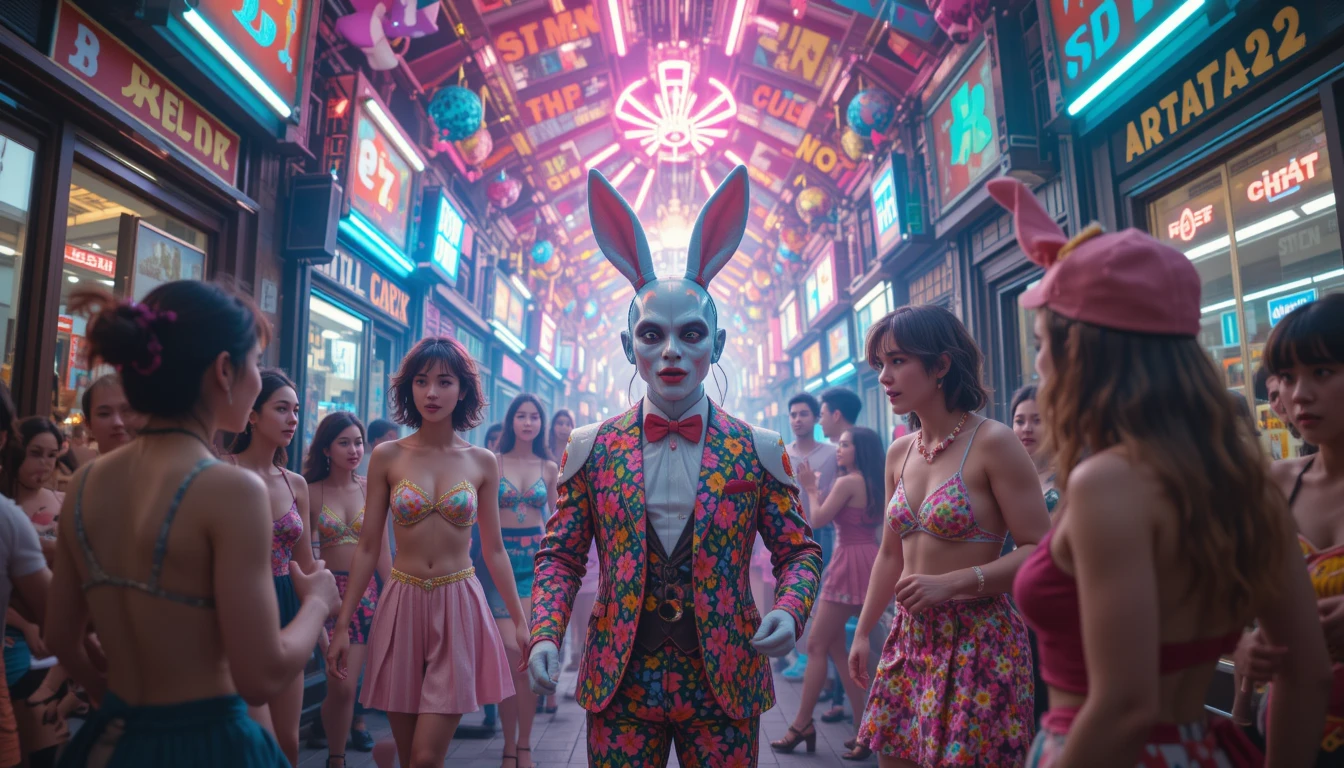
AI Recreates Iconic Vines with Hilarious, Bizarre Twists
AI’s Bizarre Twist on Iconic Vine Classics
Discover how AI transforms classic Vine moments with unexpected twists and chaotic humor, reshaping digital meme culture.
This article explores how artificial intelligence reimagines famous Vine clips into wildly unpredictable and humorous edits. The content dives into the dynamic interplay between technology and meme culture, showcasing the evolution and creative chaos of AI-driven Vine re-creations. Readers will find insights on the AI editing process, the surreal humor behind the transformations, and the broader cultural impact of these bizarre twists.
🎯 ## 1. The Evolution of Vine Edits Through AI
Imagine a world where a 15-second clip, once a staple of digital humor, is reimagined into a kaleidoscope of surreal transformations and rapid-fire character morphs. Classic Vine moments—like the iconic “9 + 10 = 21” exchange—had already set the stage for an entire cultural lexicon of brief, punchy humor. Now, artificial intelligence has taken that raw, irreverent energy and pushed it into entirely new territories. In this evolving landscape, an original clip is no longer limited to its initial punchline; instead, it becomes a canvas for digital rework, where each frame is open to unpredictable, sometimes hilariously chaotic reinterpretation.
At its core, the evolution of Vine edits through AI is about recontextualization. The traditional Vine “You stupid! No, not what’s 9 + 10. 21.” not only sparked laughs but also laid the groundwork for a digital dialogue on timing, irony, and absurdity. This legacy is now being reinterpreted by algorithms that scan, segment, and ultimately remix footage into entirely new narratives. Consider how the transcript reveals snippets like “Who the hell is that, first off?” along with jarring shifts where characters inexplicably transform into other figures or even animals (“Did he just turn into a bunny?”). These digital edits rely on machine learning models that detect subtle cues in the footage—the intonation, facial expressions, and even the cadence of dialogue—and use that to stitch together a new version of the content that oscillates between homage and hyper-surreal reinterpretation.
The transformation process involves multiple layers of computational complexity. Advanced video processing techniques isolate segments of the original Vine while advanced algorithms add layers of randomness. One moment, a character might exude an air of confident mischief; the next, the same character morphs into an entirely different persona, sometimes even blending racial or cultural markers (“They either get skinnier or their skin color just changes… turned into a black person or a white person”). Such dynamic alterations challenge the viewer’s expectations and underscore AI’s potential to disrupt established media formats. The intricate interplay of editing techniques, timing shifts, and the insertion of incongruent elements are all orchestrated by AI systems that are learning to “understand” humor in a digital age—a challenge that would have been unthinkable a decade ago.
This evolution isn’t just technical—it’s a cultural rebirth. The AI re-edits are more than just automated remixes. They are a creative dialogue between past and future, where the original essence of Vine humor is preserved but simultaneously stretched, warped, and amplified into new, unforeseen dimensions. Traditional editing methods once required meticulous frame-by-frame adjustments using professional software like Adobe Premiere or Final Cut Pro. Now, algorithms can interpret the comedic timing and infuse it with layers of abstract randomness, almost as if they’re remixing a classic analog record into a modern electronic beat. In many ways, this democratization of content remixing echoes trends reported in The Guardian and BBC News, highlighting how AI reshapes creative industries and how digital humor adapts to new media formats.
Yet, as these digitally remixed Vine edits become ubiquitous, there remains a tension between preserving the originality of Vine’s unique comedic timing and exploring new, algorithm-driven territories. AI’s manipulation of footage—for instance, turning one figure into another seamlessly in mid-dialogue—tests the boundaries of creativity and technical prowess. Tools that once performed rudimentary tasks now delve deep into video synthesis, a process elaborated in recent studies discussed on The New York Times Technology section. Researchers and digital artists alike continue to explore methods that push AI beyond a mere tool into a creative partner, blurring the lines between human intention and machine interpretation.
Moreover, the underlying technology doesn’t just remix visuals. Behind the scenes, neural networks analyze sound patterns, pauses, and even background music—integral components that contribute to the overall comedic impact. Phrases like “pause this, pause this” aren’t accidental; they’re part of a rhythm that the AI interprets to build tension and then subvert audience expectations with abrupt transitions and absurd juxtapositions. This melding of audio and visual cues forces viewers to rethink what constitutes coherent narrative, much like the groundbreaking digital art pieces featured on platforms like Wired and Forbes.
The AI transformation process also includes experimental elements such as randomized visual perturbations. Viewers are treated to a parade of unpredictable edits—random ancestral turns, unexpected insertions of characters, and even cross-cut scenes that contradict the original format of Vine. As the transcript recalls humorous, disjointed expressions like “Hey dog, you got some ice cream?” and references to pop culture moments such as “the Michael Jordan commercial with his mom,” these elements emphasize that the AI is not solely reliant on logic. Instead, it draws on a collective memory of digital culture, constantly feeding on historical trends and unpredictable randomness. The blend of automation with cultural memes prompts a discourse reminiscent of academic explorations found in Harvard Business Review and Scientific American, where the fusion of technology and human creativity is examined in deep, thoughtful layers.
It is crucial to note that AI-driven editing techniques in Vine remixes are emblematic of a broader shift in digital content consumption. Long gone are the days when viewers passively consumed content. Now, the audience actively participates in a meta-discourse—commenting on and even remixing content themselves using readily available AI tools. This evolution carries an intrinsic commentary about the nature of humor, identity, and even race—a theme briefly touched upon in clips where characters morph into different ethnicities or assume entirely unfamiliar identities, as if to challenge the viewer’s notions of consistency in on-screen representation. Such transformations have ignited both laughter and debate across social media platforms like Reuters Technology and CNET, where discussions about authenticity in digital media have steadily gained momentum.
Underpinning these projects is a network of algorithms and editing tools that continuously evolve to learn from one another. The rapid pace of development in AI video synthesis ensures that what seems revolutionary today may become the norm tomorrow. In essence, these new forms of digital remixing reinforce the idea that humor and cultural expression are living, breathing entities. They mutate, adapt, and sometimes even provoke uncomfortable questions about digital representation and authenticity—a debate that has roots in the early days of meme culture and increasingly finds echoes in modern AI ethics literature, as noted in platforms like Vox.
To summarize this evolution: Vine edits have journeyed from simple, memorable clips to a multifaceted digital art form honed by AI’s ingenuity. They serve as a testament to human creativity and technological prowess colliding in unexpected ways. These remixed Vine moments aren’t about simply overhauling a classic joke; they are about reimagining what humor can be when orchestrated by algorithms capable of understanding, deconstructing, and ultimately reconstructing cultural artifacts. This transformation is both a tribute to the past and a bold venture into the future of digital creativity, capturing the spirit of the original Vine culture while boldly charting new territory in automated digital remixing. For those interested in following these developments, further insights can be found on TechCrunch and Engadget.
🚀 ## 2. Hilarious and Bizarre Moments in AI Reimagined Vines
In the second phase of exploring AI’s creative revamp of Vine, the focus shifts to the moments that defy logic and, simultaneously, capture the ludicrous charm intrinsic to digital remix culture. As viewers navigate through the digital chaos, each sequence offers a jolt of unexpected hilarity and incongruent storytelling that challenges conventional comedic timing. One sequence from the transcript—replete with rapid-fire exclamations like “not even the kid… they just transformed into another person” and “did he just turn into a bunny?”—serves as a perfect example of how AI algorithms inject surprise and absurdity into these traditional clips.
The unpredictability of these edits is both fascinating and disorienting. Traditional Vine humor was often anchored on a set punchline or a familiar format, offering viewers a predictable rhythm. AI has upended this paradigm by introducing layers of abstraction and randomness. Characters no longer remain static; they twist, turn, and morph into entirely unexpected versions of themselves. For example, as recounted in parts of the transcript, a simple exchange quickly escalates when a character morphs—from one ethnicity to another, or from one recognizable persona to a completely random figure—prompting exclamations like “what the [__]? That’s just a whole another person.”
This randomness is not without purpose. It plays with the audience’s expectations by juggling elements of shock, humor, and cognitive dissonance. The AI re-edits harness this randomness to create what can be described as a digital Dadaist art piece, where nothing is as it seems. In one segment, after a familiar scene is broken by the unexpected insertion of “random ass people” spouting bizarre remarks such as “hey yo, you know this boy, he’s got his free Taco,” the traditional comedic rhythm disintegrates into a patchwork of incongruent images and dialogues. This sudden switch in narrative not only amplifies the humor but also acts as a meta-commentary on the fickle nature of digital content in today’s meme culture.
Breaking down these bizarre twists further reveals an underlying technological prowess. AI models are trained on vast repositories of visual and audio data that allow them to identify key features—such as a character’s face, voice tone, or even specific mannerisms—and then manipulate them subtly or overtly as the narrative demands. Techniques such as deepfake technology and neural style transfer have revolutionized the way content creators infuse randomness into traditional footage. For those interested in the technical side of these innovations, recent research published in arXiv and discussed in reports by MIT Technology Review provides a deep dive into the algorithms and methodologies powering these re-edited masterpieces.
In many respects, these hilarious and bizarre moments serve as a crucible for creative experimentation. They allow artists and programmers to explore the boundaries of humor by testing the elasticity of identity and narrative structure. The transition from one character’s identity to another—sometimes even mid-sentence—is reminiscent of rapid montage techniques used in experimental film, yet the pace and randomness here are uniquely amplified by AI’s untamed creativity. The result is an experience that oscillates between delightful absurdity and near chaos—each viewing revealing nuances that might have been overlooked in a more controlled editing environment. This creative unpredictability is comparable to remix cultures evident in music, often seen in platforms like Rolling Stone, where the unexpected interludes become as celebrated as the original tracks.
Moreover, such bizarre moments are not designed solely to shock. They also encapsulate an ongoing conversation about digital identity and transformation. The transcript highlights instances where characters shift from one perceived identity to another: “like get some ice cream,” a seemingly harmless remark quickly devolves into a discussion of rapid persona changes, stirring both humor and introspection regarding cultural representation in digital media. For example, a clip depicting a sudden transformation—where a character morphs from one ethnicity to another, sometimes even embodied by surreal imagery like turning into “an ape” or a completely alien form—challenges viewers to question not only the fluidity of identity but also how AI mediates societal stereotypes. These moments have sparked debates in communities online, with discussions reflective of studies featured on Pew Research and shared widely on The Verge.
The appeal of such content resides in its ability to evoke a deep emotional response—ranging from uncontrollable laughter to perplexity—while subtly critiquing the predictability of mainstream media. The randomness is almost like a digital carnival, where the unexpected is celebrated, and every misstep is a chance for innovation. Viewers find themselves in a state of contemplative amusement as they navigate through rapidly changing scenes punctuated by memorable, albeit perplexing, transformations: a character suddenly morphing into a completely different entity or a dialogue line that abruptly shifts context and meaning, leading to a cascade of further surreal edits. These techniques push the boundaries of visual storytelling—akin to the abstract art movement that challenged conventional forms of representation in the early 20th century, as noted in analysis on ArtNews.
Underlying the humor is a well-orchestrated dance between randomness and intentionality. The infusion of unpredictability in these Vine edits is not accidental. It’s grounded in carefully curated algorithms that leverage randomness as a tool for creative expansion. There’s a delicate balance at play: too much randomness would render the clip incoherent, while too little would stifle the intended chaos that fuels meme culture. In this light, AI becomes both a provocateur and a collaborator, challenging the deterministic nature of traditional editing. Intriguing insights about this balance have been highlighted in recent publications on platforms like Fast Company and Business Insider.
Furthermore, the playful insertion of seemingly extraneous elements—like the sudden appearance of a “random black dude” or references to off-context events like birthdays (“Happy Father’s Day, Dad!”)—serves as a microcosm of the larger post-digital culture. These moments, while hilarious, invite viewers to question the very fabric of narrative coherence. A clip that begins as a nostalgic tribute to Vine’s simplicity becomes a multi-layered collage of digital references, cultural touchstones, and implicit commentary on identity politics. With each bizarre twist and unpredictable transition, AI reimagined Vines transcend mere entertainment to become reflective mirrors of contemporary culture. For further reflection on these cultural shifts, articles on The New Yorker provide in-depth commentary on the evolution of digital humor and societal trends.
In essence, the hilarity and bizarreness inherent in AI-driven Vine edits lie at the intersection of technologically enabled randomness and human cultural memory. They reflect a playful, if sometimes disconcerting, dance of digital mutations that reframe familiar humor into uncharted territories of absurdity. The juxtaposition of unexpected phrases, unpredictable character transitions, and surreal visual motifs underlines a phenomenon that is both a product of and a commentary on the digital age. AI, with its vast computing power and growing creative potential, has taken the foundation laid by classic Vine humor and turned it inside out—inviting both laughter and critical reflection, as extensively discussed in recent analyses on National Geographic.
🧠 ## 3. Cultural Implications and the Future of AI-Driven Content
The cultural reverberations of AI-driven Vine edits extend far beyond mere humor; they provoke a transformative dialogue about creativity, identity, and the ethics of automated remixing. As digital culture continues to evolve, the increasingly blurred boundary between human creative expression and algorithmic reinterpretation has sparked debates that delve deeply into both societal values and technological potential. These discussions are not only about how funny a clip might be but also about what these transformations signify for creative freedom, cultural representation, and media consumption in the 21st century.
One of the most compelling facets of this evolution is how AI’s rework of original footage forces a reconsideration of narrative structures. Traditional media has long championed a steady, linear progression of narrative where change is measured, predictable, and, ideally, coherent. In contrast, AI-powered Vine edits thrive on disruption. The rapid shifts between identities, cultural features, and disparate cinematic spaces—evident when a character morphs mid-scene or when unexpected dialogue inserts itself into a familiar sequence—serve as a metaphor for the fluidity of modern identity and digital representation. These rapid transformations challenge viewers to adapt their expectations, fostering a more active engagement with content. Such dynamics are part of broader discussions outlined in articles by The Wall Street Journal and Bloomberg Technology, where media evolution is explored from both cultural and economic perspectives.
The societal reactions to AI-driven re-editing extend into discussions of ethical responsibility and creative ownership. When an AI algorithm takes a classic Vine clip and morphs its characters—sometimes even crossing boundaries of race or identity—the transformation may be seen as both an innovative act and a deliberate provocation. Instances noted in the transcript, where shifts in character ethnicity are met with reactions ranging from amusement to outright criticism (“that’s racist, that’s racist!”), underscore the fine line that creators and technologists must navigate. These moments force viewers to ask: When AI reimagines a culturally significant video, does it preserve the original context or does it inadvertently reinforce stereotypes? The debate resonates with concerns raised on platforms like Smithsonian Magazine and Al Jazeera, where the intersection of technology, art, and ethics is critically examined.
Looking ahead, the future of AI-driven content seems destined to challenge traditional media formats even further. The remix culture promoted by digital platforms hints at a broader shift in creative expression, where media is no longer strictly owned by its original creators but evolves through iterative reinterpretations by both humans and machines. As these AI systems improve their capacity to “remix” content, what was once considered ephemeral internet humor transforms into a potent force for sociocultural commentary, enabling a more dynamic exchange between content and audience. Innovative companies and digital agencies are already exploring similar concepts—an evolution discussed in detail in articles on Inc. and CNBC Technology—that signal a future where personalization and interactive content become the norm.
The ethical considerations raised by these technologically advanced edits are as important as the creative flourishes themselves. As algorithms become more proficient at altering a piece of content beyond recognition, questions arise about the ownership of the final product. Who owns a video that has been transformed by code—does it remain the property of the original creator, become a collective digital artifact, or even serve as fodder for AI learning in future projects? This debate has real-world implications that echo through legal discussions about intellectual property in the digital age. Academic journals and legal analyses, such as those summarized on The Wall Street Journal’s technology section and Law360, continue to dissect the ramifications of AI’s role in creative processes.
Beyond intellectual property, another significant cultural ramification is the shift in how society defines creativity itself. Traditionally, creativity was seen as an exclusively human domain—a craft honed through experience, intuition, and a deep understanding of context. Now, as algorithms remix beloved digital narratives into new configurations, the definition of creativity is broadened. AI no longer merely assists in creation; it actively contributes to, and sometimes even spearheads, the evolution of cultural content. This paradigm shift is reminiscent of the debates fueled by early instances of algorithmic art, as covered by renowned cultural commentators in publications such as The Atlantic and The Economist. The transformation prompts society to embrace a new form of collaborative creativity—where machines and humans co-create, often blurring the line between the two.
As this collaborative frontier expands, so do the opportunities for innovation in digital humor and media artistry. The very nature of Vine, with its rapid-fire delivery of jokes and quirky visuals, naturally lends itself to experimentation. Now, AI technologies not only enhance these experiences but also introduce unforeseen narrative elements that challenge viewers to keep pace with the evolving digital lexicon. This phenomenon has implications for educational content, advertising, and even political messaging, all areas where the ability to capture and sustain attention is paramount. Research into the psychology of humor and meme culture—such as studies shared by PLoS ONE—shows that unexpected shifts in perception can create more memorable and impactful content. These insights are already influencing strategies at innovative companies featured on platforms like McKinsey.
Furthermore, the rise of AI in digital creative work provokes a broader conversation about the evolution of audience engagement. The unpredictable twists seen in these Vine edits compel viewers to become active participants, dissecting, remixing, and sharing their interpretations on social media. In a digital ecosystem where content is king, the ability to engage audiences in such dynamic dialogues is a game changer. This hands-on engagement not only democratizes content creation but also redefines what it means to be a spectator in the digital age—a transformation that has been analyzed in depth by platforms like Strategy+Business. Embracing the role of both creator and critic, modern audiences now serve as arbiters of cultural trends, continuously reshaping the narrative landscape in unexpected ways.
Cultural implications extend to the very fabric of public discourse. As AI remixes classic digital artifacts, it reminds society that humor and identity are expressions in constant flux, susceptible to transformation by technology. What begins as a 15-second Vine has metamorphosed into a multi-layered conversation about authenticity, representation, and creative freedom. The debates ignited by these transformations are not isolated to the realm of entertainment; they spill over into discussions on race, identity, and even politics—topics that are as contentious as they are vital. The ethical quandaries raised by scenes that abruptly alter a character’s appearance or racial features evoke historical debates about representation in media, and they call for a thoughtful examination reminiscent of discussions in academic circles and cultural critiques found on The Chronicle of Higher Education.
Looking toward the future, AI-driven content is set to redefine digital media in profound ways. As algorithms grow in sophistication, the line between curated art and algorithmically generated spectacle will continue to blur. The impact of these developments will be felt not only by content creators and distributors but also by communities that consume and interact with this media daily. The role of AI as both an artistic collaborator and a disruptor of conventional narratives opens the door to innovative storytelling techniques that could revolutionize industries ranging from advertising to education. Policymakers, technologists, and cultural critics are already engaging in discussions about the ramifications of this shift—a dynamic well-articulated in recent technology summits and reports by United Nations initiatives on digital ethics.
Moreover, the momentum behind AI-driven editing is likely to accelerate as technologies such as real-time video synthesis, augmented reality, and virtual collaboration become more widely available. The transformative potential of these tools promises to reconfigure the landscape of creative expression, determining not only how content is produced but also how it is experienced by audiences around the globe. As the digital realm becomes increasingly interconnected and fast-paced, the adaptability of AI to human-driven storytelling will be paramount. Insights and forecasts on these trends are explored in strategic analyses on platforms like Deloitte Insights, which underscore the potential for a new era of creative collaboration between man and machine.
In conclusion, the journey of Vine edits—from their humble beginnings as brief, memorable clips to their current status as canvases for AI-driven creativity—illustrates the transformative power of technology in media and culture. These reimagined moments serve as both a tribute to the original spirit of digital humor and a bold statement about the future trajectory of creative expression. They challenge conventions, provoke debates about ethics and cultural representation, and most importantly, invite audiences into a participatory dialogue where every unexpected transformation is a reminder that creativity itself is an ever-evolving art form. As this digital evolution continues, content creators, cultural critics, and technologists alike will have much to explore—ensuring that the legacy of Vine, in all its chaotic brilliance, lives on and adapts to the complexities of the modern digital narrative.