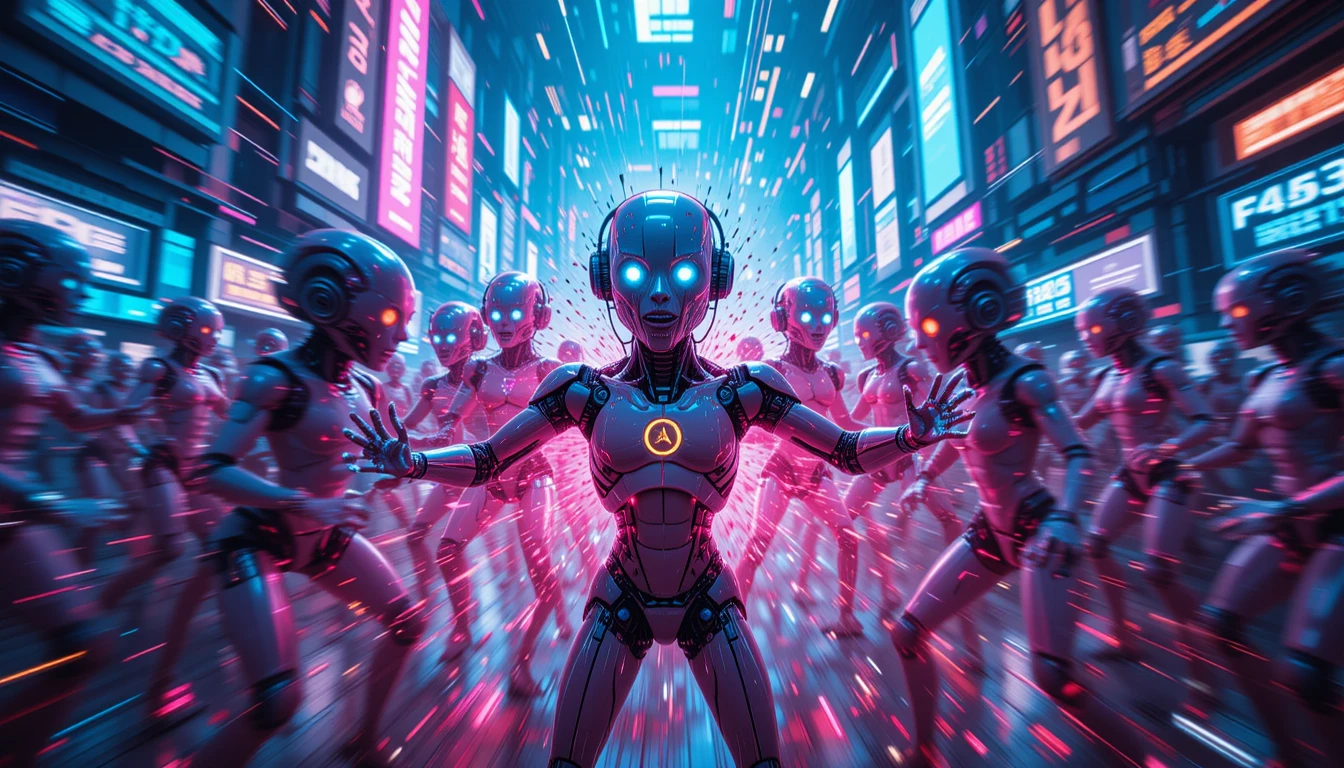
AI Meme Madness Gone Wrong Hilarious Chaos Ensues
AI Meme Mayhem: Hilarious Chaos Unleashed
Discover how AI-generated memes lead to unpredictable, humorous chaos with bizarre captions and quirky images in today’s digital culture.
This article explores the unpredictable world of AI-generated memes and the humorous chaos they bring. Through various experiments with innovative image generators, unexpected outcomes and quirky text mishaps emerge. The discussion highlights how AI tools, pop culture, and creative experimentation fuse into surprisingly entertaining digital content.
🤖 Experimenting with AI Meme Creation
In recent years, the convergence of AI and digital humor has given rise to a fascinating new frontier—AI-generated memes. One notable tool gaining traction is the Bing Image Creator, a tool capable of converting simple text descriptions into sometimes hilarious, sometimes bewildering visual meme art. The idea behind using AI for meme creation initially feels straightforward—input a quirky or amusing phrase, get a funny picture back, and share for a laugh or two. But, like any novel technological adventure, the path isn’t always as smooth or predictable as it seems. The results range from hilariously apt creations to the outright bizarre, as the human meme-creator soon discovers that AI’s creativity functions in surprising—and frequently baffling—ways.
Early adopters of AI meme generation typically begin with setting simplistic and minimalistic expectations, usually utilizing basic pairings of humorous or harmless-looking images with surprising captions. The power of meme culture rests in these unlikely pairings—innocuous visuals accompanied by satirical text or complex sentiments. Yet initially, a notable recurring issue with the AI-generated memes was the frequent appearance of overly long, confusing, or contextually disconnected captions. This was particularly noticeable in attempts to juxtapose cute imagery—puppies and kittens—with somber or anxiety-focused meme text. Rather than delivering the desired punchline, AI creators often delivered a confusing “wall of text” that failed to resonate humorously. These initial failures drove meme creators back toward simplicity, refining their AI prompts to produce something visually crisp, clear, and most importantly, funny.
One peculiarly odd result from these initial attempts was meme images with misaligned visuals and text intent. For example, an adorable puppy meme paired bizarrely with exaggeratedly dark notions of anxiety and depression failed spectacularly in delivering comic effect. What was meant as ironic unsettling humor, instead, felt inappropriate or confusingly executed—highlighting the limitations AI faces in contextual and emotional nuance. Similarly alarming was an attempt at pairing cute animals with witty observations; the unexpected emergence of visually unsettling elements, such as cats with intriguingly realistic human-like chins, produced unintended discomfort rather than amusement. Notorious instances of unintentional discomfort arose from imagery that the AI seemed to select automatically when trying to communicate simple humorous intentions—like a cat’s unsettlingly lush lips or overly-realistic facial features severely mismatched with innocent animal memes.
As meme creators learned through experimentation, simplifying their input led to better-quality outcomes. Early tests often demonstrated that attempts at nuanced humor with complicated requests overwhelmed the AI, leading to mishaps like awkward text combinations or strikingly uncomfortable visual content. Simplicity emerged as a guiding tactic. User experimentation iteratively improved meme-making by consciously switching from complex, layered ideas to simpler, punchier concepts—”when life gives you nuts” type phrases yielding far more effective, easily shareable meme creations. Through these repeated experiments, meme creators discovered that humorous simplicity, effective brevity, and straightforward creative prompts succeed far more in conjuring relatable AI-generated memes.
🎲 Unpredictable Outcomes and Meme Mishaps
Perhaps the most fascinating part of AI meme-making isn’t the successful memes, but rather the unpredictable AI-generated oddities that occur when machine creativity vastly deviates from human comedic intent. One iconic example vividly illustrates this unpredictability—a bizarre meme famously referred to by meme experimenters as the “terrifying beer” meme. This notably scary creation involved an initially innocent intention—a meme humorously teasing the latest beer brand—and instead birthed an unsettling AI-generated anthropomorphic beer bottle with unnervingly realistic facial features. The interpretation seemed less playful humor and more akin to a hallucination from an absurd horror film. Yet, strange as it was, the meme achieved popularity precisely due to that unsettling visual mismatch between harmless beer intentions and haunting image executions.
Instances like the “terrifying beer” underscore a core lesson in AI meme creation—the AI’s interpretation and visuals cannot always be anticipated clearly. This unpredictability was reinforced by further bizarre experimentations, such as random, uncomfortable pairings of cute animal images alongside incomprehensibly strange or menacing captions, or intensely realistic humanoid pets. Even more awkward was a strangeness witnessed in memes combining unrelated visual artifacts—grandmothers with terrifying “pizza faces,” bizarre incoherent textual threats like warnings about sharing cursed thermometer-water combinations, or sad SpongeBob imagery combined nonsensically with messaging about apocalypse-themed anxieties.
Wrapped within this chaos lies an accidental innovation. Memes that, while initially considered unsuccessful jokes, found success precisely because of their absurdity, strangeness, and shareability rooted in confusion rather than coherent comedy. Memes about SpongeBob, for instance, became unexpectedly powerful AI-driven references. SpongeBob memes, pervasive across internet platforms, provided ample source material, leading to satisfyingly strange yet engaging outcomes from AI generators that resonated strongly with social media audiences. It turned out the extensive availability of SpongeBob imagery online provided rich fodder for AI meme generation, where comically strange and distorted cartoon renderings became intensely shareable—exploiting AI creativity through collective pop culture familiarity.
An engaging example was a SpongeBob meme portraying the beloved cartoon character awkwardly transforming into pizza. This meme visual, paired humorously with the relatable distaste or satisfaction meme enthusiasts feel about pineapple-free pizza debates, captured social imaginations in unexpected yet delightful ways. Clearly unusual, the image was humorous precisely due to its unorthodox nature—inscrutable but compellingly shareable. Despite initially starting as mere accidents or meme failures, these mishaps became fuel for virality precisely because they tapped into an absurd style popular in meme culture—humor rooted not in logical storylines or jokes, but rather in strange, unconventional, uncanny, or mildly unsettling humor.
🎭 The Impact on Digital Humor and Meme Culture
The undeniable impact of AI-generated memes goes far beyond novel visual internet amusement. Robust, dynamic interactions between unpredictable AI creativity and contemporary internet humor have already started reshaping the landscape of digital comedy. Meme creators, sharing their experiments on popular platforms (Facebook,
Instagram,
YouTube, and
Twitter), receive immediate community feedback, often accelerating successful memes (or confounding failures) into viral status. Sharing curious, captivating AI-generated meme mishaps fuels online dialogue, critique, hilarity, and further creative engagement—where unpredictability is paradoxically consistent.
For digital creators, AI memes represent exciting technological creativity. But AI tools also unquestionably challenge how we think about human authorship in digital content. The question rapidly becomes, “Who truly authors a successful AI-generated meme?” The human guiding the prompt, or the unexpected machine creativity wielded autonomously by AI? The interplay at this technological-human intersection underscores richer debates about creativity ownership, digital authorship, and collective online culture. AI not only augments human humor but complicates digital authorship perceptions as unpredictable computational creativity substantially contributes to meme culture.
The further proliferation of unpredictable AI-generated meme content offers fascinating glimpses into digital art’s potential evolution—melding adaptive machine creativity and collective internet culture. Going forward, creators, marketers, and social media strategists must willingly embrace uncertainty. The approach shifts towards harnessing unpredictable AI humor potential—as seen from accidental successes—rather than tightly controlling joke outcomes.
Remember, in meme making—as in broader AI innovations—predictability isn’t necessarily the goal. Delight, engagement, baffling absurdity, and accidental brilliance often demonstrate more effective digital results. As meme creators navigate creative expression in this unpredictable AI-enabled digital landscape, it’s vital to acknowledge AI’s strange, often-disorienting yet consistently captivating complexity as humor’s future rides into astonishing unpredictability.