AI Memes, Music, and Movies: How Tech Is Reshaping Fun
Reshaping Entertainment: AI Memes, Music, and Movies Redefined
Discover how AI is transforming entertainment with viral memes, innovative film production, groundbreaking music startups, and immersive XR experiences.
This article explores the dynamic evolution of entertainment in the AI era. It examines how viral memes, cutting-edge film production, revolutionary music platforms, and immersive XR experiences are reshaping fun. The discussion highlights key trends and their potential impact on culture, creativity, and market dynamics, offering insights into the future of digital entertainment.
🎯 Viral AI Memes and Cultural Shifts
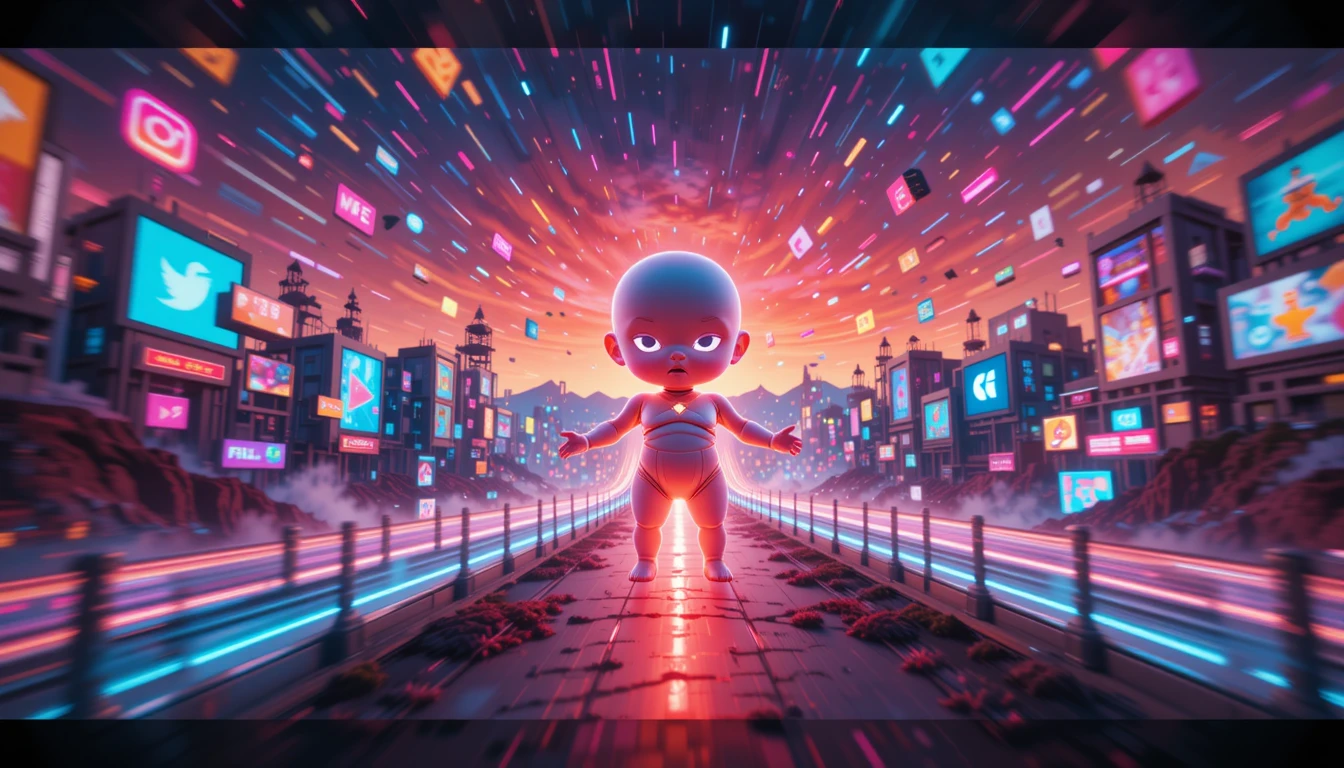
The digital landscape is shifting at breathtaking speed – a viral talking baby meme has not only made us laugh, but it has also become a symbol, a conversation starter about the future of AI in everyday culture. This meme, catapulted into viral stardom after its share by Canadian comedian Jonathan Lashoir on Instagram, illustrates how humor and technology collide to influence our collective mindset. At first glance, it appears as if a light-hearted bit of entertainment, but beneath the humor lies a profound commentary on AI’s transformative power in media, marketing, and e-commerce. Cleverly blending the realistic touches of digital avatars with the rapid-fire comedy of internet culture, this phenomenon provides a window into the broader cultural implications of AI-generated imagery.
The meme’s viral spread underscores the sudden ubiquity of AI in our digital ecosystems. Media platforms are stepping up their game with hyperrealistic video filters and image generators, a trend powerfully echoed in tools developed by leading technology companies like Adobe and NVIDIA. As technology consultant Shelley Palmer has pointed out, we are now standing at the precipice of a world where the practical and political ramifications of AI-generated images are becoming impossible to ignore. Beyond the viral laughs, the meme ignites debate regarding the authenticity and ethics of AI in creative outputs, raising questions about intellectual property, authenticity, and the creative boundaries forged by technology.
Cultural Commentary and Viral Dynamics
In modern culture, social media is the global stage where ideas are not only shared but transformed. The rapid propagation of the talking baby meme is a prime example. It acts as both entertainment and a mirror reflecting our hopes, uncertainties, and imaginative potentials regarding technological advancements. This phenomenon is reminiscent of previous cultural disruptions that tech innovation has inspired. For instance, when Wired documented the rise of internet culture in the early 2000s, there was a sense of uncharted territory filled with both promise and peril – much like today’s AI revolution.
Subtly, elements of the meme point to sophisticated underlying technology. It has been compared to Google’s Notebook LLM podcast maker and the lifelike avatars from popular apps such as Snapchat and Facebook. This blend of tools not only amplifies creative expression but also democratizes content creation, enabling even everyday users to participate in a global, culturally rich dialogue. Ironically, as the meme makes us chuckle, it also exposes raw truths about the evolving landscape of digital media, prompting discussions in boardrooms worldwide about the synthesis between human creativity and algorithmic precision.
Economic and Political Implications
The rapid cultural integration of AI-generated content is altering the power dynamics in marketing and e-commerce. Major brands are now leveraging these sophisticated tools to create hyper-customized advertising campaigns that resonate on a personal level with digital audiences. A recent study by Harvard Business Review outlines the economic implications of this shift, noting that businesses using AI-generated content have seen significant increases in engagement and conversion rates. However, this disruptive innovation also comes at a cost; it challenges established norms of originality and authenticity, igniting debates that echo the cautionary tales of previous technological revolutions.
Political and cultural discourse is equally affected. With AI becoming increasingly adept at mimicking human aesthetics and emotions, distinguishing between genuine creativity and algorithmic output grows murkier by the day. This ambiguity has the potential to influence everything from advertising to political messaging, with both risks and rewards at play. Amidst the excitement, it is crucial for society to deliberate on regulatory frameworks and ethical guidelines, ensuring that while AI serves as a creative stimulant, it does not undermine core cultural values. For further reading on this topic, see insights from BBC and The Economist.
🚀 AI Innovations in Film and Content Production
In an era where digital storytelling is evolving by the minute, Arcana Labs is spearheading a revolution in Hollywood with its groundbreaking Arcana AI platform. Injecting fresh capital of $5.5 million from SEMCAP AI into the creative process, this startup is turning the industry’s traditional paradigms on their head. By integrating over 21 state-of-the-art production tools, Arcana AI is not only streamlining workflows but also promising hyperrealistic rendering and unmatched integration with models like stable diffusion. As the film industry experiments with fully generative AI projects, a new chapter in cinematic history is being written, one frame at a time.
Revolutionary Tools for Modern Storytelling
Arcana AI’s toolset can be likened to a high-tech Swiss Army knife, offering filmmakers a range of options from image creation to innovative audio design. The platform’s hyperrealistic rendering capabilities challenge audiences to reimagine visual storytelling while simultaneously reducing production time and budget constraints. For example, a fully AI-generated sci-fi epic and an entirely AI-produced horror feature are already in development, fundamentally revolutionizing how narratives are conceived and executed. This emerging trend of AI-assisted production is garnering attention globally, with critics and enthusiasts alike turning to outlets such as The Hollywood Reporter and Variety for the latest industry updates.
Funding, Controversies, and Valuation Debates
Not all that glitters in the realm of AI-driven film is free of controversy. A contentious chapter exists regarding Infinite Reality’s $3 billion funding claim – a narrative mired in lawsuits, subpoenas, and skeptical revenue reports. Despite boasting a self-reported valuation of $15.5 billion, Infinite Reality’s actual reported revenue of $75 million in 2024 has led to widespread industry doubts. Forbes, among other publications like Forbes, has meticulously investigated these claims, bringing to light significant questions about both the financial stability and governance of such startups. This murky financial landscape underpins the importance of cautious optimism when evaluating tech innovations that challenge traditional economic models and established methods of funding.
Reimagining Hollywood’s Future
As the film industry gravitates toward digital transformation, Arcana Labs’ initiatives offer a glimpse into a future where fully AI-generated projects become the norm rather than the exception. With platforms like Arcana Productions and Arcana Academy, industry leaders are not only creating tools that tackle real-world production challenges but also cultivating a new generation of filmmakers proficient in AI-assisted techniques. This is more than just a technological upgrade; it represents a profound cultural shift where the boundaries between human ingenuity and machine-driven precision blur. The notion is reminiscent of the transformative impact of CGI in the 1990s, now magnified by the precision and scalability of artificial intelligence. For additional context, see analyses by TechCrunch and CNET.
🧠 AI’s Impact on Music and Creative Arts
The realm of music and creative arts is witnessing an AI renaissance with innovative solutions like Refusion’s Fuz 1.0 model family. At a time when digital creativity is key, Refusion is empowering musicians with AI-driven tools that facilitate remixing, personalization, and real-time editing capabilities. The launch of Fuz 1.0, especially its Pro variant available to dedicated subscribers, signals a democratization of musical creativity that resonates from Grammy-winning artists to eager hobbyists exploring new sounds.
Democratizing Music Production Through Technology
Refusion’s approach is strategically designed to lower the barriers to entry in music production. By offering subscription services starting at a modest $8 a month and providing scholarships to struggling artists and students, Refusion is creating an inclusive ecosystem that promises to revolutionize how music is produced, remixed, and enjoyed. Amidst these initiatives, users are not just passive beneficiaries; they become active contributors to a broader community that is as much about artistic innovation as it is about technological evolution. Detailed discussions about the convergence of AI and music can be found on platforms such as Pitchfork and Rolling Stone.
Transformative Community Engagement
What sets Refusion apart is its commitment to community engagement and inclusive growth. The platform’s appeal to both established musicians and passionate newcomers fosters an environment where creativity is continuously redefined. Just as traditional record labels once served as gatekeepers to music production, modern startups like Refusion are empowered by technology to distribute creative rights widely and fairly. In a manner akin to the transformative disruptions in the tech world over the past decade, Refusion is redefining the creative landscape and encouraging a generation of artists to leverage AI as a collaborator rather than a competitor. Emerging insights and critiques about the evolving role of technology in music are often featured by Rolling Stone and industry blogs like MusicTech.
Bridging Traditional Artistry With Future Possibilities
As the adoption of AI in music creation accelerates, the lines between traditional artistry and digital innovation continue to blur. The vibrant interplay between machine learning algorithms and human creativity is not just an intriguing technological development but also a profound cultural evolution. Expert reflections from institutions such as The Recording Academy underscore that the future of music is not merely about automating processes but about enhancing creative expression. This collaboration suggests a new paradigm where creativity thrives not in isolation, but at the intersection of human passion and technological ingenuity.
🌐 Digital Transformation in XR, Blockchain, and Virtual Experiences
Venturing beyond traditional media, the digital transformation is accelerating in realms like XR, blockchain, and virtual experiences. Algeria’s New Media Valley has entered into a pioneering partnership with blockchain platform Lamina 1, co-founded by visionary Neil Stevenson, to foster a regional Web 3 creative economy. This initiative is designed to empower local creatives by providing them with robust infrastructure, NFT marketplaces, and smart contract frameworks for media rights and distribution. Such initiatives are not confined by geographical boundaries; they have the potential to redefine cultural innovation across entire regions.
Blockchain and the Future of Creative Economies
The partnership between Algeria’s New Media Valley and Lamina 1 is a testament to the global shift towards decentralized creativity. By establishing a Web 3 ecosystem, local artists, storytellers, and developers are gaining unprecedented access to resources that were previously the domain of well-funded entities. This transformative approach is reminiscent of the disruptive innovations spearheaded by blockchain technology in finance, now repurposed to reshape the creative industry. The economic implications extend far beyond localized benefits – this model has the potential to set a benchmark for how digital currency and blockchain technology can foster creative freedom on a global scale. For an in-depth look at blockchain’s impact on creative industries, consider reading detailed analyses on CoinDesk and The Verge.
XR Innovations and Immersive Experiences
The future of entertainment is immersive, and industry players are racing to redefine reality itself. Asteria, for instance, has unveiled The Odd Birds Show – an animated short series that boldly blends hand-drawn art, 3D modeling, and AI-assisted animation. This innovative production is not only a creative feat but also an illustration of how small teams, armed with cutting-edge technologies, can produce high-caliber content that competes with larger studios. The series, available on platforms like TikTok, Instagram, and YouTube, is a vibrant testament to the convergence of traditional artistry and digital capabilities.
Pioneering Virtual Reality and XR Events
The anticipation surrounding XR technology is palpable. Snapchat CEO Evans Spiegel is set to deliver a keynote at AWE USA 2025, a pivotal moment for the XR community as the event gathers over 6,000 attendees and 400 speakers. Such gatherings have historically served as incubators for future technology trends, and AWE 2025 is no exception. In parallel, the Tbeca Festival has announced its upcoming immersive program, In Search of Us, featuring 11 XR and AI-driven projects. This festival, presented in collaboration with ONAS’s Ox and AOG, is designed to explore compelling themes like memory, identity, and collective imagination – all through the lens of cutting-edge virtual reality. For updates on these immersive events, refer to AWE Expo and ONAS.
AI in Virtual Reality: The Quest for Personalization
Adding another layer to the evolving XR landscape, new VR experiences like the Quest 3 – created by Windup Minds – are leveraging AI-powered personality engines to deliver uniquely personalized encounters. The Quest 3 experience, characterized by an engine named Ember, learns from user interactions to establish a dynamic, evolving virtual persona. This innovation not only enhances user engagement but also redefines the possibilities of present-day VR by injecting a dose of emotional intelligence into immersive experiences. The potential of such AI-powered personalization is immense: imagine a virtual assistant that not only navigates digital landscapes but also adapts to your tastes and whims in real time. More on advances in VR technologies can be found on VR Focus and Engadget.
Synergistic Effects and Future Prospects
The fusion of AI, XR, and blockchain is creating a potent cocktail of innovative possibilities that transcend traditional media boundaries. Algeria’s strategic push to forge a regional creative economy with blockchain technology, Asteria’s breakthrough in AI-assisted animation, and immersive experiences showcased at international events exemplify how digital transformation is a multifaceted phenomenon. This ongoing revolution is paving the way for collaborations across industries, prompting further exploration into how these cutting-edge technologies might converge to shape the future of entertainment, marketing, and creative arts. In this context, the dialogue between technology and human creativity becomes not just inevitable but also highly desirable. For continued exploration into the digital transformation landscape, reputable sites such as TechRadar and CIO provide excellent insights.
────────────────────────────────────────────
The threads connecting viral digital humor with transformative technological advancements are both intricate and exhilarating. From a talking baby meme that prompts discussions on AI ethics and cultural shifts, to arcane funding debates in the volatile realm of AI-driven film production, and from innovative music creation models to immersive XR environments redefining the entertainment paradigm, the narrative of digital transformation continues to evolve rapidly. As these groundbreaking changes continue to unfold in real time, the role of AI is emerging not just as a tool, but as an enabler of artistic ingenuity and a catalyst for cultural metamorphosis.
The convergence of these technologies carries forward a spirit of innovation that is as strategic as it is creative. Each development, whether it be in AI-generated memes, film production, music creation, or XR experiences, is part of a larger tapestry illustrating how technology is gradually shifting the norms of art, commerce, and social interaction. By integrating deep learning with our collective cultural heritage, these advancements invite industries and individuals alike to not only observe but actively participate in shaping an entirely new paradigm of creativity and expression.
In an era marked by rapid digital acceleration, entities like Rokito.Ai stand at the forefront of this transformation, acting as guides and thought leaders. They illuminate these complex dynamics with clarity and inspire stakeholders across industries to embrace AI not solely as a mechanistic tool, but as a creative partner in humanity’s ongoing evolution. The interplay of humor, innovation, and ethical quandaries serves as a reminder that while technology may often appear impersonal, its impact on cultural narratives is deeply human.
────────────────────────────────────────────
Looking forward, the symbiotic relationship between AI and creative domains is only expected to deepen. As Arcana Labs propels Hollywood into a brave new era of AI-assisted content production, and Refusion democratizes the music production process with affordable, community-powered AI tools, it becomes evident that the creative ecosystem is evolving in multifaceted ways. Meanwhile, the intersection of blockchain with XR, as showcased by Algeria’s New Media Valley and immersive events like AWE USA 2025, signals a push toward decentralization and personalization on a global scale. This holistic transformation is not merely about technological upgrades but reflects a broader cultural shift where authority, creativity, and innovation are increasingly intertwined.
The digital revolution offers both exhilaration and caution. On one hand, the democratization of digital content creation empowers diverse voices to express themselves, breaking traditional barriers of entry and creating new opportunities for collaboration. On the other hand, the challenges of verifying authenticity, managing intellectual property, and regulating new forms of digital art demand thoughtful consideration. By engaging with these multifaceted issues, industry leaders and cultural critics alike are paving the way for a balanced ecosystem where technology and human creativity coexist harmoniously. For ongoing debates on these issues, consult expert opinion pieces available on The New York Times and The Wall Street Journal.
────────────────────────────────────────────
In summary, the interplay of viral AI memes, film production breakthroughs, revolutionary music creation, and transformative XR experiences forms an intricate mosaic illustrating the full spectrum of AI’s cultural influence. From sparking conversations about authenticity and ethics to driving innovations that redefine artistic expression, the contemporary digital narrative is both dynamic and deeply impactful. This evolution challenges conventional expectations and invites a reimagining of how storytelling, visual arts, and interactive experiences can be enriched by technology. As this landscape continues to shift, stakeholders across sectors must remain agile, embrace interdisciplinary collaboration, and ensure that ethical frameworks evolve in tandem with technological capabilities.
The conversation that began with a humorous talking baby meme has unfolded into a deeper discourse addressing the very nature of creativity in a digital age. In harnessing AI-driven tools, industries are not only finding ways to optimize processes but also expanding the boundaries of human achievement. By fulfilling the dual role of a creative enabler and a catalyst for societal change, AI stands as a beacon of possibility in a world where the line between human and machine creativity is increasingly blurred. With strategic insights provided by leading voices, coupled with the responsible adoption of emerging technologies, the future of digital media promises to be as collaborative as it is transformative.
For readers eager to delve deeper into these transformative trends, comprehensive resources are available on reputable platforms such as MIT Technology Review and Stanford University. These platforms offer extensive analysis and detailed research, ensuring that the evolution of AI and its myriad applications is understood not only as technological progress but as a cornerstone of our evolving cultural zeitgeist.
────────────────────────────────────────────
The dynamic interplay of humor, innovation, and cultural shifts in the digital age offers a compelling blueprint for the future. As humorous memes meet sophisticated AI tools in realms as varied as Hollywood blockbusters and immersive XR experiences, every facet of our culture is touched by the transformative power of technology. This journey into the heart of digital transformation reflects more than just a shift in tools—it reveals a fundamental rethinking of creativity, community, and commerce. As the lines between the digital and the tangible continue to blur, a digitally empowered culture emerges that is as diverse and innovative as the tools that shape it.
Counting on a future defined by continuous reinvention, it is clear that innovation in artificial intelligence is not a passing trend but a lasting evolution. As new technologies emerge from the confluence of AI, blockchain, and XR, they carry with them the promise of a richer, more inclusive creative landscape. Whether it is the viral charm of a talking baby meme or the sophisticated narrative design behind fully AI-generated films, every innovation propels society toward a future where creativity knows no bounds. For further reading on technology’s cultural impact, insights from Scientific American provide a thoughtful exploration of technology’s role in shaping human thought and creativity.
Ultimately, the unfolding story of AI in media, entertainment, and technology reflects a larger narrative of human advancement. As digital tools continue to redefine the contours of creative expression, the underlying principles of storytelling, community engagement, and ethical innovation remain as vital as ever. The conversation around these transformative moments is only just beginning, inviting deeper exploration and broader collaboration across disciplines. In an increasingly connected world powered by AI, the future of creativity holds infinite promise and challenges that require both rigorous debate and imaginative thinking.
This comprehensive exploration of how AI influences cultural phenomena—from viral memes to full-scale digital filmmaking, from democratized music creation to immersive XR experiences—captures the heartbeat of our digital era. Organizations and creatives alike are navigating this evolving landscape with a mix of excitement, caution, and endless curiosity, ensuring that the symbiosis between technology and human creativity continues to flourish. For those passionate about staying ahead of the curve, continued learning through platforms like Foreign Affairs and Brookings Institution can provide further strategic insights into these transformative shifts.