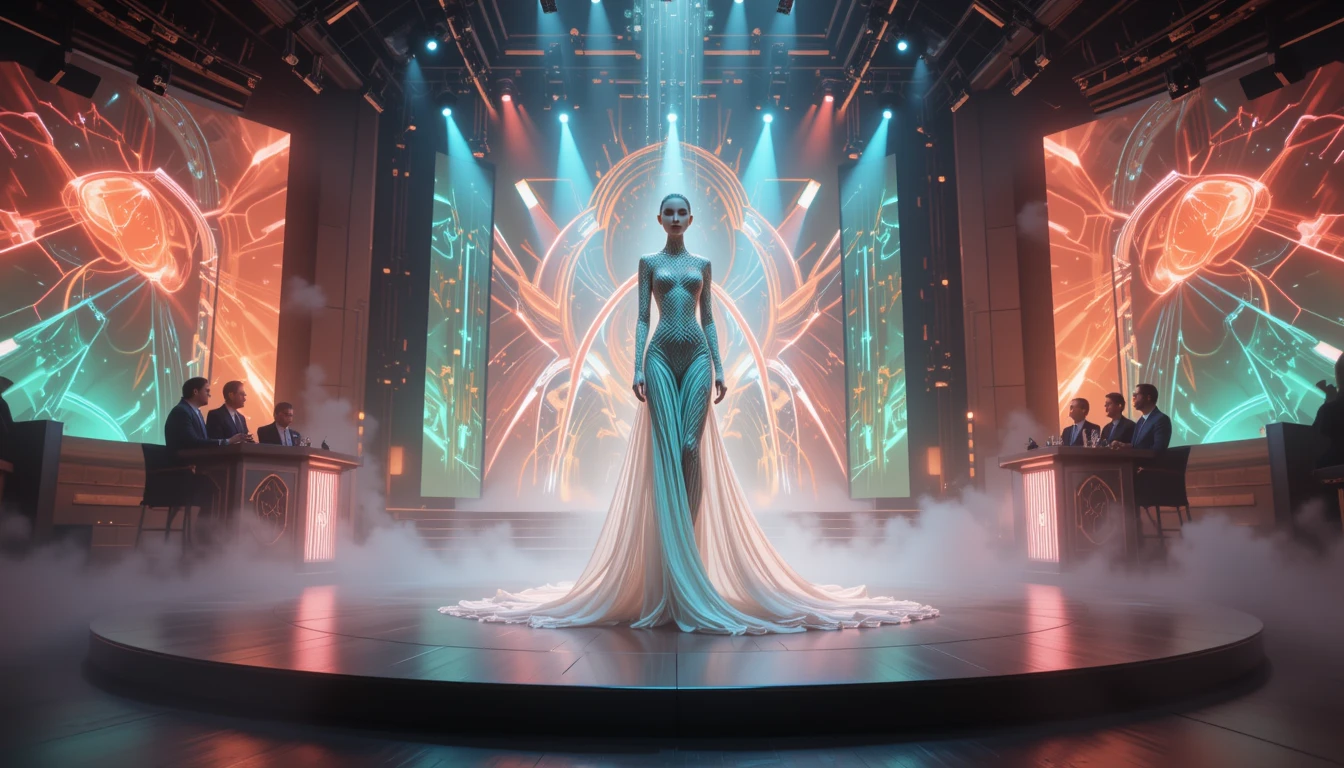
Miss AI and the Future of Beauty Judged by Humans and Algorithms
Miss AI: The Future of Beauty with Human and Algorithmic Judging
Explore Miss AI, a groundbreaking pageant that fuses human subjectivity with algorithmic precision, redefining beauty standards for the modern era.
This article will explore the revolutionary concept behind Miss AI—a beauty pageant where computer-generated women compete using both aesthetic appeal and visionary ideas. The event challenges traditional beauty contests by merging artificial intelligence with time-honored human judgments. Discover how this fusion of human and machine collaboration is pushing the boundaries of beauty and technology, prompting a reevaluation of what truly defines elegance in our society.
🎯 ## 1. Innovative Beginnings: The Emergence of Miss AI
Imagine a beauty pageant where algorithms replace makeup, where digital influencers shine in a realm that challenges everything previously accepted as “beautiful.” This isn’t science fiction—it’s the groundbreaking reality of Miss AI. In an era when human boundaries are constantly being redefined by technology, Miss AI made a splash as the world’s first beauty pageant featuring computer-generated women. As society grapples with the rapidly expanding frontier of artificial intelligence, this event is a symbolic and strategic milestone that reflects both technological and cultural evolution. Rather than simply a contest of aesthetics, Miss AI is a celebration of visionary potential, blending art, technology, and a reimagined idea of what beauty can be.
Miss AI emerged from the innovative platform known as the Fan View World AI Creator Awards—a gathering that celebrated pioneering uses of AI in creative endeavors. Far beyond a token demonstration, this contest established digital influencers as serious contenders, thrusting them into the spotlight with a grand prize of $20,000. The vision behind this audacious challenge was to create a domain where the definitions of beauty, intelligence, and creativity were no longer constrained by human form. Contestants were judged not only on their visual aesthetics but also on their ability to represent a futuristic narrative of possibility. Such events embody how artificial intelligence is no longer confined to laboratories and tech hubs but is permeating cultural dialogues, challenging traditions, and shaping future norms.
🧠 A New Lens on Beauty
To appreciate how revolutionary Miss AI is, one must understand the broader context of AI-driven transformation in various sectors—from finance to healthcare. Just as Wired illuminates breakthroughs in digital technology, Miss AI signals a paradigm shift in how beauty and creativity are valued. Typically, beauty pageants have depended on human features and conventional aesthetics. But by introducing computer-generated contestants who draw on vast pools of data and creative algorithms, the contest pushes us to reconsider the role of technology in art and culture. The event invites an inquiry: When perfection is engineered, how do we then define authenticity?
In this vibrant tapestry of digital prowess, Miss AI stands out not only as an engineering marvel but also a cultural artifact. It breaks free from the shackles of tradition by emphasizing a blend of objective technical precision and visionary forward-thinking. With every pixel and algorithmic brushstroke, the contest underscored the idea that beauty isn’t static—it’s dynamic and intricately linked with innovation. This freshness was met with both acclaim and controversy. Critics questioned whether digital perfection might entrench unrealistic standards, while enthusiasts heralded the contest as a harbinger of a more inclusive and multifaceted understanding of beauty.
🚀 The Catalyst for a Broader Dialogue
Miss AI is not just a one-off spectacle; it is part of a broader conversation about technology’s influence on society. The contest has sparked debates reminiscent of those found in academic discussions on technology ethics and future societal models. Platforms such as The Verge have discussed similar intersections of art and tech, where the integration of AI pushes the boundaries of human creativity. As AI systems continue to evolve and generate visually and intellectually striking outputs, the very notion of what constitutes a “contestant” or even “beauty” is called into question. This ongoing discourse mirrors larger narratives in our contemporary culture about the role of digital representation in media and art.
With Miss AI, digital imagery transcends its role as a tool for mass production, stepping into the arena as a creator and critic of its own aesthetics. The event’s innovative spirit is underlined by its grand prize and competitive structure, which motivate creators to blend technology with visionary narratives. The introduction of a substantial monetary incentive—$20,000—shifts the focus from superficial judgment to a deeper consideration of what it means to project a more thoughtful, creative future. As seen in major technology and innovation reports on platforms like Forbes, the incorporation of AI in creative competitions is set to redefine standards not just in beauty, but in numerous fields including design, marketing, and entertainment.
Ultimately, the pioneering nature of Miss AI cannot be overstated. It signifies not only a disruption in traditional beauty contests but also heralds a broader shift in how digital creativity is celebrated. By challenging entrenched norms and merging human subjectivities with machine precision, Miss AI invites society to rethink the essence of aesthetics. This contest becomes a metaphor for the evolving relationship between man and machine—a dynamic interplay that promises to reshape multiple dimensions of life.
🚀 ## 2. Dual Judgment: Combining Human and AI Evaluation Methods
At the heart of Miss AI lies an equally compelling story: the revolutionary judging process that synergizes human sensibilities with cold, calculated AI precision. Picture this: on stage, a panel where seasoned human judges and unbiased AI systems sit side by side, each bringing a unique lens to the evaluation process. This hybrid model is more than a mere gimmick; it is a deliberate methodology that epitomizes the convergence of tradition and innovation.
🧠 The Human Element: Culture, Experience, and Subjectivity
Human judges in the contest bring a rich tapestry of cultural insights and personal experiences to the table. Their assessments aren’t based on algorithms or mathematical equations; they are, instead, interpretative evaluations shaped by years of exposure to myriad aesthetic standards and cultural narratives. As outlined by The New York Times, human perspectives in beauty and art have always been influenced by a blend of history, emotion, and personal bias. In Miss AI, these judges appraise creativity, innovation, and the overall narrative that each computer-generated beauty conveys.
The human judges’ criteria go deep into the artistry behind the digital constructs. They consider:
- Visual Aesthetics: The design and originality of the visual output.
- Cultural Resonance: How well the digital creation speaks to or redefines existing cultural paradigms.
- Innovative Potential: The contestant’s ability to showcase forward-thinking qualities that may shape future artistic trends.
Such qualitative measures are not easily quantified but are essential to comprehending the full depth of a contestant’s vision. The judges’ ability to interpret these elements from multiple perspectives is akin to how art critics evaluate a piece of modern art—searching for meaning behind abstract representations. This approach is echoed in research pieces from BBC Culture, which emphasize the perennial importance of human emotion and experience in evaluating creative works.
🎨 The AI Perspective: Precision, Efficiency, and Unbiased Analysis
On the other side of the judging panel, the AI systems offer an entirely different but complementary perspective. These machines analyze each contestant with a level of precision unattainable by human judges. They operate on a foundation of mathematical algorithms, neural networks, and pattern-recognition technologies. Websites like TechCrunch detail how such AI models can dissect images and data to identify minute details, assess efficiency, and measure technical parameters with cold, clinical accuracy.
The AI judges thoroughly evaluate:
- Algorithmic Efficiency: How effectively the underlying code produces aesthetically pleasing results.
- Technological Precision: The degree of refinement in digital modeling and rendering.
- Unbiased Analysis: A data-driven perspective that removes human subjectivity, offering a “clean” viewpoint of aesthetic metrics.
This mechanism ensures that the evaluation process is not swayed by traditional biases. For example, where human perceptions might laud an image for artistic charm born of cultural heritage, the AI might assign a score based solely on symmetry, color gradients, and optimized pixel placement. Although purely analytical, this approach provides a crucial counterbalance to the fluid, interpretative judgments made by human evaluators.
🌐 Merging Perspectives: A Dynamic Interplay
The true magic of Miss AI’s judging process lies in the interplay between these disparate evaluative methods. This coexistence of subjectivity and objectivity does more than simply select a winner—it sparks a broader dialogue about the nature of beauty and creativity in a technologically advanced society. A balanced perspective emerges, where metrics and artistic expression are not mutually exclusive but rather two sides of the same coin.
For instance, when a contestant receives a high score from both human and AI judges, it signifies a rare instance of harmony between creativity and precision. Conversely, if a contestant impresses the human judges with creative depth but scores lower in algorithmic efficiency, the divergence itself becomes a point of discussion. This dialogue is essential in reflecting the ongoing debate about what constitutes beauty in the digital age. Publications such as Forbes and CNBC have reported on similar hybrid models in evaluating digital platforms and artistic outputs, highlighting the necessity of balancing technical precision with human creativity.
🧐 Bridging Two Worlds: Lessons for Future Integrations
The dual-judging system of Miss AI is emblematic of a larger shift towards the integration of human and machine assessments in various fields—from hiring processes to art evaluations. By having AI work alongside experienced human judges, the contest offers a microcosm of how future decision-making processes in society might function. In realms ranging from academic grading to performance art, this balanced approach is paving the way for transformative practices. The Harvard Business Review has even touched upon the growing trend of integrated evaluation models in modern workplaces, elucidating how similar methodologies are finding applications far beyond the realm of beauty contests.
Key lessons emerge from this dualistic judging mechanism:
- It enhances objectivity by countering human bias with data-driven analysis.
- It preserves emotional intelligence by valuing cultural context and personal insight.
- It inspires innovation by encouraging a dialogue about what constitutes excellence in a digitally advanced society.
Much like how modern medical diagnostics combine human expertise with sophisticated imaging technology—a strategy lauded by platforms like WebMD—the dual judgment in Miss AI signals how partnerships between human intuition and artificial insight can lead to richer, more inclusive evaluations. This synthesis is not only strategic but also a necessary evolution in decision-making models as our world becomes increasingly digitized.
🧠 ## 3. Redefining Beauty and Shaping Future Standards
Miss AI is more than a pageant—it is a profound statement about the evolution of cultural norms and the redefinition of beauty. In traditional beauty contests, physical appearance has long been the primary metric; however, this event discards those conventional criteria and instead pioneers a realm where intelligence, creativity, and efficiency are at the forefront. As technology continues to drive the transformation of many societal sectors, Miss AI acts as a herald of change, demonstrating how advanced digital methods can redefine what we consider beautiful.
🌟 Challenging Established Notions: New Metrics for Beauty
Historically, beauty pageants have focused on human attributes such as poise, symmetry, and charisma. Miss AI disrupts this narrative by introducing criteria that are both technologically quantifiable and culturally resonant. Beauty in this contest is no longer about how well an image conforms to traditional standards; it is about intelligent design and creative thought. Contestants are evaluated on the robustness of their digital architecture, the originality of their creative expression, and the efficiency with which their underlying algorithms perform.
This recalibration of beauty brings to the forefront important discussions on the impact of technology on our cultural perceptions. Sources like BBC Technology and The Guardian have documented how AI and digitization challenge our traditional ideas of art and beauty. By shifting the focus to both aesthetic and technical attributes, Miss AI not only redefines standards but also sets the stage for further innovations that could eventually influence a wide array of creative industries.
🎨 Cultural and Social Implications
The debates sparked by Miss AI extend far beyond the realm of aesthetics. This contest has challenged audiences to question longstanding stereotypes about beauty and gender norms. Critics have raised concerns that computer-generated perfection might enforce new forms of unrealistic standards. Yet, many experts argue that by embracing the fluidity of digital creativity, society can move towards a more inclusive model of beauty. The conversation mirrors broader social discourses seen in forums like McKinsey Insights and scholarly analyses on platforms such as ScienceDirect, where discussions on diversity, inclusivity, and futuristic aesthetics are shaping industry narratives.
Miss AI’s emphasis on “visionary potential” means that a contestant’s worth isn’t measured solely by traditional beauty standards but also by its capacity to spark innovation and foster progressive thinking. This duality in evaluation demonstrates how the convergence of art and technology can create dynamic cultural shifts. A more diversified standard of beauty not only celebrates technical excellence but also cherishes creative risk-taking and innovative perspectives—qualities that are becoming increasingly essential in an interconnected world defined by rapid technological progress.
🚀 The Road Ahead: Transforming Events and Societal Norms
As AI continues to infiltrate various aspects of everyday life, events like Miss AI set significant precedents for future cultural and technological integrations. The dual judgment system showcased in the contest offers a model for how future competitions—and perhaps many decision-making processes—might harness the best of both human intuition and machine precision. Think of it as an evolving blueprint: one where emotional intelligence is enhanced by data-driven insights. Financial and strategic analyses by institutions like Bloomberg frequently underscore the potential of such integrated approaches to reshape industries ranging from finance to media.
The implications of embracing AI in redefining beauty extend well beyond pageantry. Consider how fields like advertising, design, and even interpersonal communications might evolve when conventional biases are supplemented with digital metrics. In a world where technology is continuously questioning and transforming our inherited norms, the Miss AI contest serves as an emblematic case study. It poses thought-provoking questions such as: How will the fusion of human perception and digital precision influence our aesthetic standards? Can a competition that celebrates both algorithmic efficiency and creative ingenuity pave the way for broader social acceptance of technology-driven standards?
Moreover, the contest encourages a vibrant discussion on inclusivity and diversity. By breaking away from the idea that beauty is a monolithic concept defined solely by human physicality, Miss AI opens the door to a wider variety of expressions. This modernized view of beauty significantly shifts the paradigm from superficial traits to a combination of visible artistry and the underlying intelligence that drives digital excellence. Organizations such as World Economic Forum have extensively discussed how technological progress can drive inclusivity, and Miss AI serves as an accessible representation of these complex dynamics at work.
🧐 Shaping the Future of Competitions
Looking to the future, the format pioneered by Miss AI might very well become the benchmark for how creative and competitive events are conducted. The contest highlights that when technology and human creativity coalesce, the potential for innovation is astronomical. Whether it is in the realms of beauty, art, or even entrepreneurship, the evolving method of dual judgment provides a strategic template. By embracing both human subjectivity and AI objectivity, future competitions can achieve a level of fairness and inclusivity that was previously unimaginable.
The transformative potential of AI-driven events is not limited to niche areas like digital beauty pageants. Major industries are beginning to integrate similar models to assess performance, creativity, and innovation. For example, leading technology companies have started using AI to evaluate employee performance and creativity, as noted by Harvard Business Review. Adapting this model, future contests in diverse sectors might allow for both qualitative insights from experienced professionals and quantitative data from intelligent machines, resulting in a more holistic appraisal of talent and innovation.
🌐 A Future Defined by Integration
The legacy of Miss AI extends far beyond its immediate impact on beauty contests. It serves as a microcosm of the future where humans and machines collaborate as partners, each complementing the other’s strengths. This integration is key to unlocking the full potential of AI-driven innovation, as seen in recent technological breakthroughs reported by National Geographic. In many ways, Miss AI is a metaphor for our evolving relationship with technology, one that hints at a future where inclusivity, creativity, and methodical precision coexist harmoniously.
By redefining beauty standards and encouraging a broader dialogue about what makes something truly exceptional, this contest paves the way for a revolution in both cultural discourse and technological innovation. It challenges long-held assumptions and pushes us to embrace a future where judging excellence involves not just human taste but also the unyielding precision of artificial intelligence. This is a future where our understanding of aesthetics is enriched by diverse perspectives and where technology serves not only to automate but also to inspire and elevate.
🔍 Reflecting on the Broader Impact
The competitive model introduced by Miss AI also raises important questions and opportunities for broader discussions—questions such as: How will society balance the scale between human subjectivity and machine objectivity in other critical domains? And what are the ethical implications when AI begins to influence cultural values? These questions are at the forefront of debates happening in academic circles and policy think tanks, with institutions like Oxford Martin School exploring the societal impacts of rapid technological evolution.
For instance, if digital assessments start influencing essential aspects of social behavior—from art to hiring practices—then understanding the interplay between technology and human intuition becomes vital. The hybrid evaluation model witnessed in Miss AI might just be the early prototype of future systems that combine human empathy with algorithmic fairness. In many ways, this intersection is reminiscent of discussions on ethics in AI and its transformative role in modern society, as explored in detail by MIT Sloan Management Review.
🌟 Concluding Thoughts: Embracing a New Aesthetic Paradigm
Miss AI is an invitation—a call to reimagine the boundaries of beauty and redefine the criteria we use to measure excellence. As this transformative model melds both primarily human insights and the relentless objectivity of AI computation, it challenges societies to rethink what they value. In an era where technological trends and innovation continuously disrupt the status quo, embracing such hybrid models is not just a strategic choice; it’s a necessity.
The contest’s groundbreaking approach is a reflection of a broader movement that values intelligence, creativity, and efficiency over conventional visual appeal alone. It suggests that future competitions, creative industries, and even societal standards will be increasingly defined by the seamless integration of human ingenuity and digital acumen. In this light, Miss AI is more than a pageant—it is a harbinger of transformative change, a beacon illustrating the path towards a future where technology empowers humanity to continuously redefine excellence and reimagine beauty.
This narrative of transformation resonates across industries and borders, prompting global audiences to re-evaluate conventional aesthetics and embrace a more inclusive, dynamic understanding of what it means to be truly beautiful. As humanity navigates the complexities of the digital age, events like Miss AI serve as strategic milestones, guiding collective evolution and inspiring a future where the synthesis of art and technology is celebrated.
In conclusion, the emergence of Miss AI, its dual-judgment system, and its bold redefinition of beauty collectively signal not just a new aesthetic paradigm, but also a broader cultural and technological revolution. As this pioneering contest continues to spark discussion and inspire innovation, it stands as a powerful example of how artificial intelligence is not merely a tool of automation—it is a transformative force redefining our world.