Create Stunning AI Images and Videos for Free with Flora AI
Stunning AI Creations: Free Image and Video Generation with Flora AI
Learn how to generate captivating AI images and videos using Flora AI’s intuitive flows and nodes—completely free and easy to use.
This article provides an in-depth guide on using Flora AI, a powerful free tool for generating stunning images and videos through simple flows and nodes. The guide covers every feature—from describing images with elegant prompts to crafting cinematic video scenes with detailed models. Discover how Flora AI flows, creative image generation, and flexible video editing come together in one user-friendly platform.
🎯 Exploring the Flora AI Interface and Features
Imagine a futuristic workbench—a digital atelier where creativity meets automation, making the creation of art and ideas as seamless as sketching on a notepad. This is precisely the promise heralded by the Flora AI interface. With a design that resonates with modern minimalism and the spirit of innovation, Flora AI offers users a structured yet flexible environment to maneuver through a universe of assets, historical records, interactive flows, and a palette of creative tools. The strategic vision behind this interface isn’t just about aesthetics; it manifests a paradigm shift in how automation meets human creativity, echoing insights from Wired and MIT Technology Review.
At the outset, the main panel presents three primary capabilities: image description, idea combination, and video creation. This design draws parallels with the classic switchboard of radio pioneers—each button unlocking a new method of exploration and expression. On the left, the interface houses asset management and history logs, providing both an archive of past activities and a quick launchpad for creative reuse. By organizing the vast array of creative outputs and interactive elements, Flora AI ensures that the creative process remains both intuitive and inspiring.
The Beauty of “Describe an Image”
One of Flora AI’s most captivating features is the “Describe an Image” function. When invoked, this feature displays a luminous, almost ethereal, glowing glass flower paired with a descriptive text output such as “A luminous flower blooms delicately.” The juxtaposition of a striking visual with succinct textual description exemplifies the creative synergy between visual art and language processing. This mirroring of nature and digital output is reminiscent of the deliberate clarity and strategic insight found in The New York Times feature stories and is ideal for sparking the imagination of those who appreciate the blend of art and technology.
Here, the descriptive language isn’t merely ornamental; it guides a user’s experience into a realm where every element is thoughtfully designed to provoke reflection and innovation. This feature enables a dynamic interchange between human intuition and AI precision—demonstrating how artificial intelligence can enhance creative decision-making. For those intrigued by the interplay of art and technology, further exploration on platforms such as Fast Company can provide additional context on creative automation’s rising trends.
Comparing the AI Models: GPD4, Gemini, and Claude
Flora AI empowers its users with the choice of multiple AI models at the helm of text and image generation. Among these, GPD4, Gemini, and Claude each offer distinct advantages. Strategically, while the tool default might encourage the use of GPD4 due to its well-rounded performance, it leaves the ultimate decision in the hands of the user. This flexibility ensures that diverse creative needs and resource considerations are met, much like the strategic decision-making models discussed in Harvard Business Review articles on technology integration in creativity.
Every model operates under the same credit system and time constraints, making the selection process one of personal or project-specific nuance rather than a race for speed alone. For instance, the decision to use Gemini might be informed by recent comparative insights drawn from TechCrunch in discussions about model efficiency and output quality. Meanwhile, references like Forbes further underscore the trend toward user-defined customization in the AI landscape—a trend Flora AI taps into with its multi-model offering.
Nodes, Flows, and the Innovative System
In navigating the concise yet robust design of Flora AI, the innovative system of flows and nodes stands out. Think of flows as intelligent pathways through which a creative idea is transformed from a simple text prompt into a fully fledged digital output. Each node acts as a decision point—a creative intersection where multiple ideas merge, split, or evolve. This system is engineered to streamline diverse generation tasks, making it easier for users to toggle between creating still images, combining conceptual ideas, or even transitioning an image into a dynamic video format.
Pre-made flows in Flora AI further exemplify this modular design. These structured pathways cater to specific creative projects such as:
- Gaming Scenarios: Setting the stage with immersive game environments, drawing inspiration similar to the narrative depth in Polygon reviews, where the ambiance of forgotten urban landscapes stokes the imagination.
- Detailed Urban Environments: Building intricate cityscapes and story-driven visuals that reflect the complexity of modern metropolises, akin to the immersive storytelling found in Architectural Digest.
- Character Creation: Offering a starting point for dynamic characters that can be integrated into broader narratives, echoing the narrative richness celebrated by Variety in film and television.
These flows are not only a testament to the flexibility of Flora AI but also a demonstration of how AI can simplify complex creative processes. The flows are designed to be both innovative and accessible, inviting users from various backgrounds—whether seasoned digital artists or newcomers exploring the world of AI-driven creativity—to produce art that is both visually and contextually impactful.
🚀 Generating Stunning AI Images with Ease
Stepping into the realm of AI image generation with Flora AI is akin to unlocking a digital art studio where every idea is transformed into a visual masterpiece. The process is designed to be intuitive, yet it embeds a depth that mirrors the sophistication of traditional art creation methods. The interface provides a step-by-step pathway that guides users from an initial prompt to a finalized image—each step peppered with interactive choices and creative flexibility.
A Step-by-Step Journey into Creative Imagery
The process begins with a simple yet powerful action: clicking on the plus icon. This signal launches the creative journey by offering a selection between generating text, images, or even videos. For users inclined to create a static image, the option is clearly labeled “Image.” Once selected, the user is presented with a menu of AI models, including Flux, Def, Flux Pro, and DogGram. Among these, the Flux model is particularly noted for its rapid output, making it an excellent choice when speed is at a premium. This mirrors trends highlighted by The Verge in discussions about the importance of efficiency in digital creative workflows.
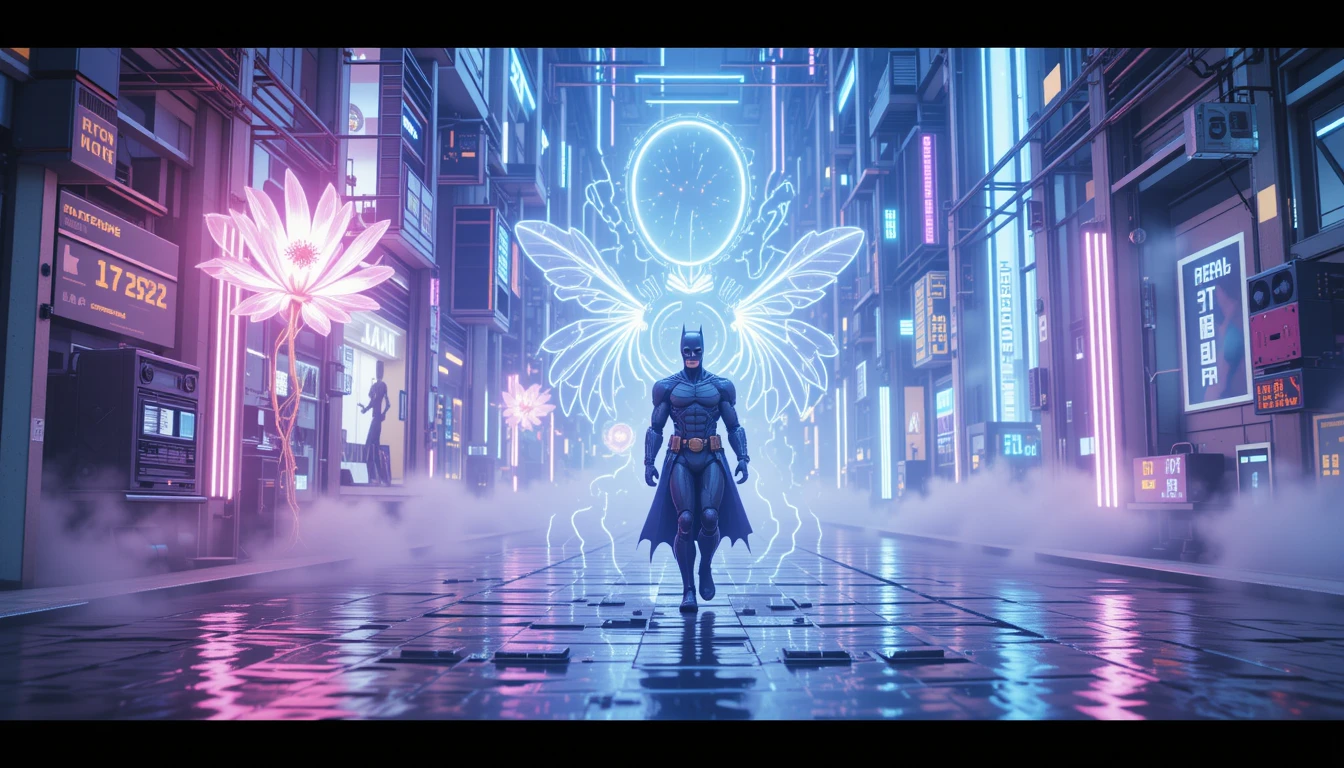
After selecting the desired model, the process is as simple as typing a prompt into the natural language text box followed by clicking the arrow button to initiate generation. For instance, a prompt such as “neon Batman” sets into motion an algorithmic journey that transforms the descriptive narrative into a dynamic visual output. This transformation isn’t merely the automated execution of a task; it is a curated experience where every click builds anticipation, much like the carefully orchestrated reveals in modern cinematic trailers discussed by IndieWire.
Refining Creative Outputs with Ease
The beauty of Flora AI’s image generation process is its innate flexibility. Suppose the initial neon Batman emerges with a pink hue, but the creative vision calls for a purple variant. The adjustment is straightforward: the user simply clicks the plus button again to modify the color specification. This dynamic prompt engineering is a nod to iterative design methodologies found in Creative Bloq and Smashing Magazine, where tweaking and refinement lead to the perfect design.
Through such modifications, Flora AI enables a dialogue between the user’s creative intent and the algorithm’s output. The system is designed to be forgiving and adaptable, akin to a seasoned artisan who welcomes adjustments in the middle of crafting a masterpiece. This iterative approach empowers users to explore myriad permutations until the output resonates with the envisioned concept.
Rich and Diverse Prompts That Spark Imagination
Flora AI thrives on the diversity of creative prompts it can interpret. Users have reported generating images that range widely in subject matter and style, such as:
- A ‘90s retro computer setup with a vintage CRT monitor, evoking nostalgia and bridging technological eras.
- A surreal desert landscape replete with a floating pyramid under the gaze of a gigantic moon—a scene that might feel at home in a Salvador Dalí painting.
- A hyperrealistic glass city suspended in the clouds, showcasing the tool’s capacity to blend the ethereal with the concrete.
- A whimsical image of a cat holding a council meeting in a castle, tapping into a humorous yet visually captivating narrative.
- A candid snap of a street magician in Paris, rendered in a stark black and white theme that calls to mind old-world photography.
- Vivid depictions of an overhead shot capturing the vibrant energy of an Indian festival with dancing and brilliant colors.
- A macro shot where a solitary raindrop rests on a leaf, capturing the interplay of light and reflection in a moment of quiet beauty.
Each of these prompts is not just a test of the tool’s technical capabilities but an exploration of how creative narratives can be embodied visually. The capabilities of the Flora AI echo the dynamic storytelling techniques detailed in publications like Bloomberg and The Wall Street Journal, where innovation meets narrative form.
The Power of Interactivity in Image Refinement
Flora AI’s interface facilitates an ongoing dialogue between the digital tool and the user’s imagination. This interaction is a form of creative empowerment, where the system’s iterative approach invites users to continually refine and redefine their visions. Consider the following practical application:
- An initial neon-themed character image is generated.
- The user then opts to change the color palette, prompting a re-generation of the image into a “purple neon Batman” scenario.
- This simple yet effective method encourages a form of exploratory design that mirrors the agile development processes found in tech startups, as discussed in Inc. magazine.
The ease with which one can modify outputs and experiment with visual effects ensures that creativity is never restricted by technical limitations. Instead, it transforms into an iterative playground where every tweak leads to a more refined final product—a process reminiscent of the continuous improvement strategies praised in McKinsey & Company research on innovation.
🚀 Crafting Engaging Videos with Flora AI
Flora AI isn’t just limited to generating stunning still images—it extends its creative prowess into the realm of video generation. This feature opens up a new frontier where the static and dynamic converge, allowing users to translate their visual art into moving narratives that brim with cinematic potential.
From Image to Cinematic Storytelling
At its core, the video creation process in Flora AI begins with the simple conversion of an image into a video, enhanced by descriptive prompts that guide the narrative. Imagine a scene of a robot trudging through a flooded street rendered in slow-motion cinematic style. This isn’t just a sequence of frames—it’s the unfolding of a visual story, replete with intentional camera movements, environmental details, and atmospheric cues.
The process starts much like the image generation tool: a prompt is entered, and then the user selects the appropriate video model. In Flora AI, this choice is critical. Two primary models stand out:
- LTX Model: Offers quick video generation, producing outputs in around 10 seconds. However, the speed might come at the expense of high-quality resolution. This model is ideal for rapid prototyping and scenarios where time is of the essence.
- Minimax Model (with Vani as an alternative): Although it takes approximately 3 to 5 minutes to render, the quality of the visuals is markedly superior, making it suitable for projects where precision and detail are paramount.
This dichotomy between speed and quality is reflective of real-world decision-making in creative production, a topic explored extensively by Adweek and DesignBoom.
Strategic Considerations in Video Output
Choosing the right model for video generation is not merely a technical decision but a strategic one. Users must weigh factors such as quality requirements, timing constraints, and cost considerations. For instance, a creator tasked with producing a cinematic commercial might lean toward the Minimax model for its enhanced visual fidelity, whereas a social media manager looking for quick, engaging content might opt for the LTX model. This need for strategic alignment between tools and objectives mirrors the approach championed by business strategy thinkers like Ben Thompson.
The detailed control afforded by Flora AI’s video creation process empowers users to fine-tune every facet of their project. Whether it’s adjusting the camera angles, modifying environmental details, or tweaking the pacing of the scene, every decision contributes to a richer, more immersive narrative experience. This level of creative control and flexibility is increasingly essential in today’s fast-paced digital environment, where every frame counts—a trend also highlighted by Digital Trends.
Exciting Use Cases and Creative Examples
Flora AI’s video creation capabilities extend the canvas of creative expression far beyond what conventional tools offer. A few standout examples include:
- Cinematic Robot Narratives: Creating a slow-motion video of a solitary robot navigating a flooded street conjures images reminiscent of dystopian futures in blockbuster films. Here, the details of water dynamics and subtle camera movements weave a narrative full of introspection—a testament to the innovative spirit underscored by Vice.
- Ferrari Poster Videos: Imagine a video that combines high-octane visual motion with the sleek design of a mid-engine Ferrari sports car. This technique melds product storytelling with cinematic artistry, echoing the sophisticated advertising narratives found in Campaign Live.
- Anime-Inspired Character Videos: Videos that capture the dynamism and expressiveness of anime create an engaging experience that resonates with fans of animated genres. This approach aligns with the creative trends discussed on Anime News Network.
- Adorable Puppy Playdates: For a lighter, crowd-pleasing application, Flora AI can generate videos of playful puppies enjoying a sunny park. The playful interaction, dynamic angles, and engaging camera movements transform a simple scene into one with mass appeal—a concept widely promoted by Goodnet on inspirational storytelling.
Integrating Images and Video for a Holistic Narrative
One of the most fascinating features of Flora AI is its ability to integrate images and video into a cohesive creative narrative. The process can involve taking a still image, such as a manga-inspired character or an urban landscape, and transforming elements of that image into moving sequences. This integration creates a narrative continuity that serves as a digital storyboard, merging static design with kinetic storytelling.
For example, the flow might proceed as follows:
- Creation of a Still Image: Start with a dynamic image prompt like “a futuristic urban landscape with glass structures floating in the clouds.”
- Transition to Video: Use a descriptive prompt that adds movement—“a robot walks solo through a flooded street, with dynamic camera pans capturing the fluid environment.”
- Model Selection for Video: Decide between the speed of the LTX model and the quality of the Minimax (or Vani) model based on the project requirements.
The resultant narrative is not just a collection of disparate outputs; it becomes a story with beginning, middle, and an eventual climax that captures the viewer’s attention. For those who wish to delve deeper into the strategy of integrated digital storytelling, The New York Times’ interactive features provide an excellent case study.
The Economics of Free Creativity
Perhaps one of the most notable aspects of Flora AI is that it offers these robust creative tools entirely free of cost. The democratization of high-quality digital creation is a game-changer for independent creators, small businesses, and large-scale enterprises alike. This free-of-cost model not only lowers the barrier to entry but also inspires a community of shared innovation—a concept frequently lauded by outlets like The Guardian in discussions of open-source creativity and accessible design platforms.
The advantage of using a free platform that is so powerful is multifold. It allows artists and innovators to experiment without the constraints of a hefty investment in proprietary software, thus fostering a space where creative risk is celebrated and innovation is the norm. In light of this, Flora AI stands as a testament to the transformative potential of democratized technology in advancing creative and strategic endeavors across sectors.
🧠 Crafting Engaging Videos with Flora AI
In an era defined by visual storytelling, video remains one of the most potent mediums to convey emotion, narrative depth, and brand identity. Flora AI’s video generation capabilities epitomize the convergence of technology and art, enabling creative professionals to weave narratives that are cinematic, engaging, and organizationally impactful.
The Video Creation Process: A Cinematic Blueprint
The process begins with the seamless conversion of detailed prompts into a moving image narrative. For example, consider the evocative scene of a robot walking alone in a flooded street. This simple visual concept can be expanded into a full cinematic experience by thoughtfully orchestrating elements such as camera movement, environmental mood, and narrative pacing.
- Prompt Engineering: The creative prompt is the backbone of any video in Flora AI. Detailed instructions like “a slow-motion cinematic style, with atmospheric lighting and precise camera sweeps” transform an ordinary scene into an engaging story snippet.
- Model Selection: As noted, the tool provides options between video models that prioritize speed (LTX) and those that emphasize quality (Minimax and Vani). The LTX model quickly churns out videos in about 10 seconds, making it ideal for quick prototyping or social media snippets. In contrast, the Minimax model, which may require 3 to 5 minutes, is best suited for projects where high fidelity and meticulous detail are paramount.
- Iterative Refinement: Much like in image generation, the video creation process is iterative. If the initial sequence doesn’t fully capture the intended vision, the prompt can be refined and re-run until it meets the creative benchmarks. This iterative process is reminiscent of agile methodologies in video production, which are widely discussed in industry reports by Variety.
Strategic Implications for Business and Creativity
Beyond the technicalities, the strategic implications of using Flora AI for video generation are profound. For brands and creative professionals, the ability to quickly generate high-quality videos can revolutionize marketing strategies, product launches, and even internal communications. The choice between speed and quality (LTX vs. Minimax/Vani) allows organizations to optimize their output based on specific campaign requirements—an approach that aligns with the strategic frameworks outlined by McKinsey & Company.
For instance, a marketing team might use the rapid turnaround of the LTX model to churn out multiple short-form videos for a product teaser, while reserving the higher-quality Minimax model for the main campaign video. This dual approach ensures that every facet of the creative process is both flexible and strategically aligned with broader business goals. Detailed studies on video performance and audience engagement have been featured in Forbes Technology Council, further underscoring the importance of strategic tool selection in digital content creation.
Diverse Creative Use Cases in Video Form
Flora AI’s flexibility in video generation opens up a wide array of use cases, each of which exemplifies the tool’s versatility and creative reach. Some compelling examples include:
- Cinematic Solo Journeys: A video of a robot navigating a flooded street in slow-motion offers an emotionally charged narrative that can evoke personal reflection or futuristic dystopian themes.
- Ferrari Poster Narratives: This involves generating a dynamic video that pairs the sleek design of a mid-engine Ferrari with compelling motion graphics. Such videos are perfect for luxury brands looking to combine aesthetics with storytelling—a theme frequently explored in Luxury Daily.
- Anime-Inspired Character Videos: Videos capturing the essence of anime with sharp, angular features and dynamic expressions cater to a niche audience that values both artistic sophistication and narrative fluidity. Industry discussions on this subject can be found at Anime News Network.
- Adorable Pet Videos: A delightful example involves creating a video of two playful puppies—Max and Bella—frolicking in a sunlit park. These videos blend engaging visuals with a sense of warmth and authenticity, aligning with successful strategies seen in social media campaigns highlighted by Social Media Examiner.
In each of these cases, the video generation process leverages the strengths of Flora AI to push creative boundaries. The ability to seamlessly incorporate camera movements, environmental nuances, and even text overlays transforms a simple video sequence into a multi-layered narrative journey.
Integrating Video with Broader Creative Flows
Beyond standalone video projects, Flora AI’s design allows for seamless integration of both still and moving images within a unified creative flow. For projects that demand a holistic narrative—spanning from a static storyboard to fully animated sequences—the system’s nodes and flows ensure continuity and coherence. A single creative project can begin with still image generation, proceed through iterative refinements, and ultimately culminate in a video montage that captures the full spectrum of the narrative’s evolution.
This integrated approach is highly strategic in digital advertising and storytelling. It provides creators with a comprehensive toolkit that addresses every facet of content production, from ideation and prototyping to final execution. Such an all-encompassing method resonates with the current trends in multimedia content creation as outlined by Adweek and Inc..
The Democratization of High-Quality Video Creation
Perhaps the most compelling aspect of Flora AI’s video capabilities is that these tools are available completely free of cost. In an industry often dominated by expensive software and exclusive licenses, Flora AI democratizes access to high-quality video production. This empowerment of creators aligns with the global movement towards open-access creative tools, as chronicled on platforms such as The Verge and Digital Trends.
By lowering the barriers to entry, Flora AI invites a diverse set of users—from hobbyists and independent video makers to large creative agencies—to explore the full potential of AI-driven video production. The implications of this for creative innovation, market disruption, and the broader digital economy are profound, echoing the strategic insights found in Business Insider analyses on technology trends.
Flora AI emerges as a transformative platform that seamlessly blends technical sophistication with artistic freedom. Whether through the meticulously crafted interface for describing images, the dynamic process of iterating on creative prompts, or the innovative flows that merge static visuals with cinematic storytelling, Flora AI heralds a new era of digital creativity. Its intuitive design and free-of-cost model ensure that anyone with a creative vision can harness the power of advanced AI without compromise.
In exploring the interface, generating stunning images, and crafting engaging videos, the tool exemplifies how artificial intelligence can empower humanity to innovate and thrive in an ever-changing technological landscape. For further exploration of how AI is reshaping the creative process and driving productivity, consider following industry analyses on platforms like Harvard Business Review and Forbes.
By transforming every prompt into a narrative journey—whether it’s a glowing glass flower, a neon Batman, or a cinematic robot in a flooded street—Flora AI creates an environment where creativity is not only unleashed but also strategically guided. The future of creative AI is here, and it is as expansive and dynamic as the human imagination itself.