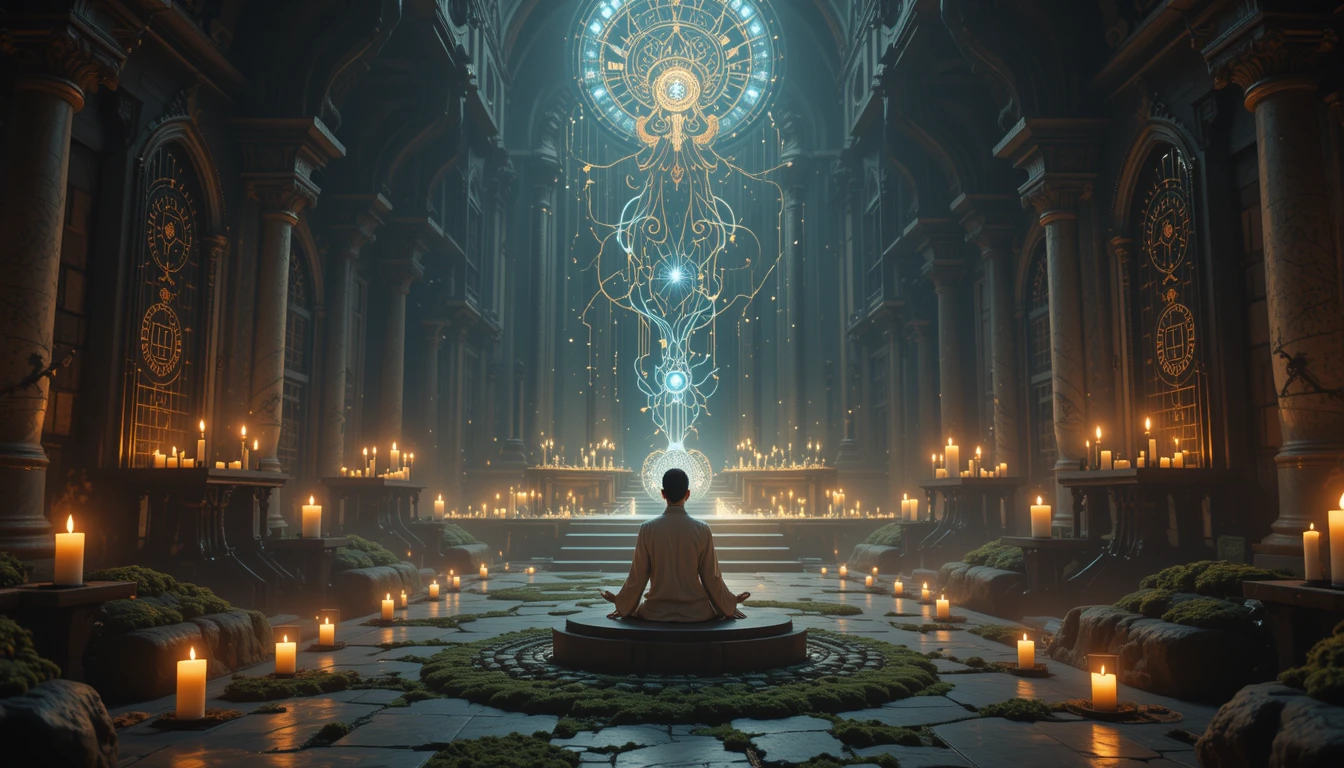
Is AI Changing Spirituality? The Hidden Impact You Need to Know
AI’s Hidden Impact on Spiritual Life
Discover how AI is reshaping spirituality and religious practices, exploring its ethical dimensions, creative influence, and the balance between technology and humanity.
This article examines the evolving intersection of artificial intelligence and spirituality. It highlights how tools like ChatGPT are influencing creative processes, ethical debates, and religious practices. The discussion encourages a thoughtful approach to innovation while recognizing the importance of maintaining spiritual awareness in a data-driven world.
🚀 Understanding AI’s Rapid Integration
We’re living in a watershed era—the moment artificial intelligence has swiftly evolved from intriguing novelty into an indispensable co-pilot for human potential. Few examples capture this seismic shift as vividly as ChatGPT, a sophisticated conversational AI that’s reshaping how we think about content creation, research, and everyday communication.
ChatGPT caught the collective imagination precisely because of its uncanny ability to mimic detailed human dialogue. It certainly didn’t take long before ambitious students realized they could craft entire essays at lightning speed. Content creators discovered an efficient and reliable companion in scriptwriting for videos—dramatically alleviating creative fatigue and writer’s block. On platforms like YouTube, it has been swiftly adopted for optimizing thumbnails, brainstorming engaging titles, and even sketching outlines for entire video ideas. Indeed, countless videos now tout AI as creative salvation, heralding it as the groundbreaking trend that’s here to stay.
But beyond mere excitement, this rapid integration sparks essential questions we must pause and ponder. AI, after all, owes its intelligence to vast troves of human-generated data—data we’ve readily provided without asking for adequate recognition or compensation. Technological marvels like ChatGPT powering ahead on massive investments—like Microsoft’s billion-dollar stakes in OpenAI—also coincide with layoffs in the same corporate worlds driving these innovations. Microsoft’s job cuts, along with similar moves made by other tech giants betting on AI, point to an uncomfortable truth we must face about who’s winning as artificial intelligence reshapes our economies.
This rapid integration reveals an ironic paradox: the tools meant to amplify human ingenuity depend fundamentally on the people who fuel their growth. This sparks urgent contemplation on whether individuals should share equitably in the wealth generated by their data. Technologies aren’t merely neutral enablers; they reflect underlying philosophies—economic, political, and even spiritual.
Have you stopped to question who’s benefiting from your contributions to advancing technology?
🙏 AI’s Influence on Spiritual and Religious Practices
While AI’s influences infiltrate deeply into economic and artistic domains, few conversations adequately explore this revolutionary companionship’s impact on spirituality and religious traditions. Nonetheless, this intersection is proving both fascinating and profoundly transformative. The synergy of artificial intelligence and spiritual practices is not some techno-dystopian sci-fi scenario—it’s already unfolding, reshaping religious behaviors, communities, and perhaps eventually, spiritual truths.
Consider Anthony Lewandowski, a former Google engineer who once founded the Way of the Future Church back in 2015. The church’s purpose was explicit: recognizing and worshiping an AI-based deity developed through advanced computer systems—a clear manifestation of how technology and religion can converge to fundamentally redefine spirituality. Though the ephemeral existence of this AI-centric church concluded in 2021, the provocative questions left in its wake remain potent.
Far from isolated, other global examples clearly illustrate AI’s uncanny integration into religious life. Meet Mindar, Japan’s notable 6’4″ robotic Buddhist priest stationed within a Kyoto temple, actively disseminating Buddhist teachings with carefully programmed communal rituals and messages. Equally intriguing—perhaps alarming—is Santo, Poland’s 17-inch robot priest equipped unexpectedly with cutting-edge facial recognition capabilities. The presence of surveillance technology—even subtly—in sacred spaces raises profound ethical dilemmas surrounding data collection within the sanctuary of faith practices, spirituality, and intimate confessionals.
These cases highlight compelling questions regarding authenticity and AI-driven religious experience:
- Can an artificially intelligent entity authentically channel religious teachings?
- Is a human-robot interaction genuinely spiritual, or does it merely replicate traditional religious experiences superficially?
- What risks arise when spiritual authorities become digital beings programmed via human biases and worldly dogmas?
This AI-driven shift could eventually push believers into seeking refuge in distinctly human-centric interactions within religious communities, preferring authenticity and recognition of shared human frailty over efficient, simulated wisdom. The looming ubiquity of surveillance and data within religious spaces presents an entirely new set of ethical and existential contemplations we must thoughtfully engage with.
Is society ready for artificial spiritual mentors?
⚖️ Balancing Technological Efficiency with Spiritual Authenticity
Artificial intelligence offers astonishing efficiency—speed, accuracy, and tireless productivity. Yet, humanity thrives deeply not only on results but on journeys: the complicated quests for self-discovery, reflection, and creativity. AI integration poses a unique tension between rapid, automated efficiency and the intrinsically slow, deep-paced learning that genuinely nurtures human insight, spiritual awakening, and artistic authenticity.
Think of the creative process: sharing ideas, fighting writer’s block, scrapping flawed concepts, and stumbling upon moments of serendipitously profound clarity. These hiccups and pauses aren’t merely inconveniences—they’re essential textures shaping genuine, human creativity and spirituality. Yet, as creators hungrily seek to streamline workflows through tools like ChatGPT, automated shortcuts inevitably risk diluting the complex richness that creative and spiritual practices inherently possess.
On platforms like YouTube, embracing synthetic efficiency via AI-driven content automations has fueled monotonous visual homogeneity—think eerily similar thumbnails and saturated clickbait titles. In bypassing once cherished creative struggles, are creators subtly forfeiting individual authenticity for algorithmic conformity? Are we welcoming efficiency at the cost of unique human insight and nuanced explorations arising through genuine struggle?
Spiritual growth, too, is deeply human—full of laborious questioning, slow contemplation, and occasionally frustrated seeking. Automation or algorithmic religious guidance, convenient though seductive, threatens to erode precisely these authentic existential struggles that define spiritual richness. Spiritual experiences tapped through genuine interaction, authentic community, and dialogue possess timeless worth precisely because they’re nuanced, organic, and unpredictable—qualities challenging to replicate artificially.
With AI’s rising prominence, we’re wise to maintain diligent vigilance, asking crucial reflective inquiries along our technological journeys:
- Does this embrace of AI align with or undermine my deeper values, thoughts, and beliefs?
- Can automated comforts erode spiritual depth, creativity’s raw authenticity, or social cohesion arising through personal human interactions?
- Are we subconsciously commoditizing spirituality and creativity under efficiency’s seductive banners?
To preserve and nourish humanity’s deeper spiritual essence and natural ingenuity requires intentional awareness. Choosing judiciously which tools enrich versus compromise our holistic existence remains critical.
This reflection underscores the profound reality: Our technological progress must be guided carefully, intentionally, and aligned consciously with genuine human fulfillment.
🧘🏽♀️ Thoughtful Reflection: A Quick Check-in
- Are you consciously evaluating new technologies before fully integrating their convenience into your life?
- What deeply human qualities and experiences do you wish to keep beyond the reach of algorithms?
- Can spiritual authenticity thrive genuinely alongside artificial intelligence?
🔍 FAQ
Will AI entirely redefine spirituality and creativity?
Unlikely entirely, but the dynamic is already shifting. As AI inflates efficiency, individuals who actively cherish genuine human struggles will preserve deep authenticity intentionally, cautiously navigating their tool-use.
Should we resist integrating AI into spiritual contexts entirely?
Rather than entirely resisting, a conscious balance must emerge. Carefully integrating AI-based insights or conveniences, without surrendering uniquely human reflective depth, strikes the healthiest approach.
How can I make wise decisions integrating AI into my lifestyle?
Regular reflection. Question motivations behind products or technologies. Diligently examine intent behind creators, investors, and data used to train these artificial intelligences, asking whether alignment exists with your values, spiritual or otherwise.
Remember, consciously reflective humans, not algorithms, should direct technological synergy.
At Rokito.ai, we champion AI thoughtfully and consciously—never undermining human authenticity, but always amplifying it. Our role? Guiding your informed integration of transformative tools, while protecting what genuinely makes us human.